
Sauces & Condiments
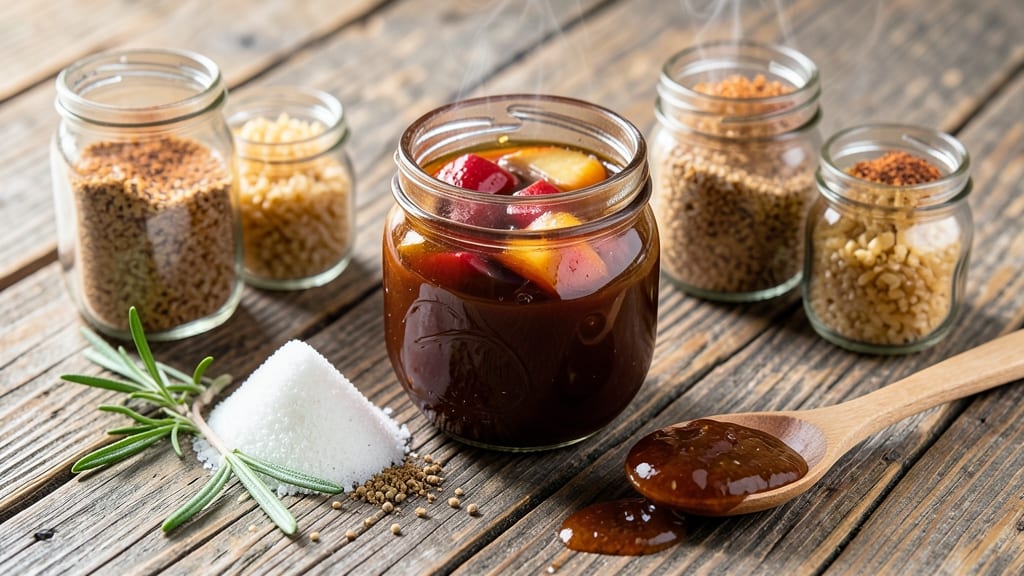
This apple BBQ sauce canning recipe transforms your grill game with a sweet-tart blend that keeps year-round. 🍎 I developed this slow-simmered recipe after years of perfecting the balance between apple cider's natural sweetness and smoky depth—now you can preserve that flavor for months.
The secret lies in proper sterilization and processing times that ensure safety without sacrificing taste.
The process begins with a slow simmer of apple cider, vinegar, and spices until the sauce thickens to the perfect consistency—neither too thin nor overly syrupy. Once canned, this sauce delivers bold, balanced flavor that works on ribs, chicken, or even roasted vegetables.
The apple cider adds a subtle fruitiness that cuts through the smokiness, making every bite more complex.
What makes this recipe stand out is its shelf-stable quality—properly canned batches stay fresh for up to a year, ready to elevate any meal. The sterilization process ensures safety while preserving that restaurant-quality depth.
Whether you're a seasoned pitmaster or a weekend griller, this sauce will become your go-to for year-round flavor.
Ready to stock your pantry with homemade BBQ sauce? Here's everything you need to know about sterilizing jars, processing times, and achieving that perfect sweet-tart balance. Let's get started!
Ingredients for apple bbq sauce canning
Sweet-tart balance comes from these 12 simple yet powerful ingredients—each playing its part.
| Ingredient | Amount | Notes |
|---|---|---|
| Apple Cider 🍎 | 4 cups | Unfiltered for best flavor |
| Apple Cider Vinegar 🍎 | 1 cup | Raw and unfiltered preferred |
| Brown Sugar 🍚 | 1 cup | Light or dark variety |
| Granulated Sugar 🍬 | ½ cup | For precise sweetness balance |
| Smoked Paprika 🌶️ | 2 tbsp | For authentic smoky depth |
| Ground Cumin 🌿 | 1 tbsp | Toasted for enhanced aroma |
| Onion Powder 🧅 | 1 tbsp | Freshly ground preferred |
| Garlic Powder 🧄 | 1 tbsp | Not garlic salt |
| Mustard Powder 🌶️ | 1 tsp | Yellow or Dijon preferred |
| Salt 🧂 | 1 ½ tsp | Diamond Crystal preferred |
| Black Pepper 🌶️ | ½ tsp | Freshly ground for best flavor |
| Water 💧 | 1 cup | For thinning consistency |
The apple cider is the heart of this sauce. Local orchard cider has the best flavor, but store-bought works fine—just avoid anything with added sugar. Trader Joe's and Costco carry excellent unfiltered options that won't compromise your sauce's depth. For the vinegar, raw and unfiltered is ideal—it adds complexity that pasteurized versions miss. The brown sugar should be packed, not scooped, for accurate measurements. If you're using a light brown sugar, add an extra tablespoon to compensate for its lower molasses content. The smoked paprika should be labeled 'smoked'—regular paprika won't give you that authentic BBQ flavor. For the spices, Penzeys Spices or bulk bins at natural grocery stores offer the freshest options, but don't stress if you only have regular grocery store spices.
No apple cider vinegar? White vinegar or balsamic works in a pinch, though the flavor will be slightly different. Substituting maple syrup for sugar keeps it vegan, but the texture will be thinner—add an extra tablespoon of cornstarch if you want that perfect consistency. Want more heat? Add cayenne pepper to taste. For a fruitier profile, puree fresh apples and add 1/2 cup to the simmering sauce. The mustard powder is non-negotiable for that tangy depth, but if you're out, Dijon mustard mixed with water works in a bind. The water is just for thinning—you can adjust this based on your preferred sauce consistency, but don't skip it entirely or the sauce will be too thick to can properly.
This sauce keeps for up to a year when properly canned, making it perfect for holiday gifts. Store unopened jars in a cool, dark place. Once opened, refrigerate and use within 3 months. For best results, process your jars in a water bath canner for 15 minutes after sealing. The sauce thickens as it cools, so don't be alarmed if it looks too thin while hot. I always make a double batch—one for immediate use and one to can. The canned version develops even more complex flavors over time, making it worth the effort.
Why You'll Love This Recipe
- One-Pot Magic: I swear, this sauce comes together in a single pot—no blender, no straining, just simmer and stir. The apple cider vinegar does all the work, cutting through the sweetness while the brown sugar caramelizes into that perfect glossy finish.
- Smoky-Sweet Obsession: That first taste of smoked paprika hitting your tongue? It’s like autumn in a jar. The apple cider adds a bright tang that balances the sugar, and honestly? It’s the kind of flavor that makes you want to drizzle it on everything—pulled pork, grilled chicken, even toasted bread.
- Pantry Staple Power: Between us, this recipe uses ingredients you already have lurking in your cupboards. No fancy substitutions needed—just adjust the vinegar if you’re feeling bold. And because it’s canned, you’ll have jars ready for holidays, last-minute BBQs, or when your kid suddenly remembers they’re hosting a class potluck.
- Zero-Waste Winner: Make a big batch, can it up, and you’ve got a backup plan for when life gets busy. I’ve used leftover sauce in marinades, glaze for roasted veggies, and even as a sweetener for oatmeal. Plus, the cost per jar is laughably cheap—this is the kind of recipe that makes you feel like a genius.
Step-by-step instructions for apple BBQ sauce canning
Here's how to transform fresh apple cider into a rich, slow-simmered sauce perfect for canning.
🍳 Step 1: Combine All Ingredients in a Saucepan
In a large, heavy-bottomed saucepan, combine the 4 cups apple cider, 1 cup apple cider vinegar, 1 cup brown sugar, and 0.5 cup granulated sugar. I use a stainless steel pot for even heat distribution—it prevents scorching at the bottom. Stir until the sugars dissolve completely, which should take about 2-3 minutes over medium heat. You'll notice the mixture thicken slightly as the sugars melt.
Next, add the 2 tbsp smoked paprika, 1 tbsp ground cumin, 1 tbsp onion powder, 1 tbsp garlic powder, 1 tsp mustard powder, 1.5 tsp salt, and 0.5 tsp black pepper. Whisk vigorously to ensure all spices are fully incorporated. The spices will sink slightly, but that's normal—they'll distribute as the sauce simmers. Give it a taste at this stage: the base should be sweet-tart with a subtle smoky aroma from the paprika.
🔥 Step 2: Simmer for 1 Hour to Develop Flavor
Increase the heat to medium-high and bring the mixture to a rolling boil, then immediately reduce to a gentle simmer. Let it cook uncovered for 1 hour, stirring occasionally to prevent sticking. You'll see the sauce reduce and thicken noticeably—this is where the depth of flavor develops. The liquid should reduce by about 25% by the end of this time.
Here's the thing—don't rush this step. The long simmer allows the sugars to caramelize slightly, deepening the sauce's complexity. You'll know it's ready when the sauce coats the back of a spoon and has a syrupy consistency. If it's too thin, add the 1 cup water gradually to reach your desired thickness, but only if necessary. The sauce should still be thick enough to cling to grilled meats.
🍲 Step 3: Prepare for Hot Water Bath Canning
While the sauce simmers, prepare your canning equipment. Wash 4 pint-sized canning jars and their lids in hot, soapy water. Keep the jars in a 200°F oven until ready to fill—this ensures they're sterilized and hot when you add the sauce. Boil the lids in a separate pot of water to soften the sealing compound.
Fill each jar with the hot apple BBQ sauce, leaving ½-inch headspace at the top. Use a funnel to avoid spills, and a non-metallic utensil to remove air bubbles. Wipe the jar rims with a clean, damp cloth to ensure a proper seal. Place the lids on the jars and screw on the bands finger-tight—don't overtighten, as this can prevent proper sealing.
⏰ Step 4: Process Jars in a Hot Water Bath
Lower the jars into a large canning pot filled with hot water, ensuring the water covers the jars by 1-2 inches. Bring the water to a rolling boil and process the jars for 15 minutes (adjust for altitude if needed: 10 minutes for 1,000-3,000 feet, 20 minutes for 3,001-6,000 feet). The water must remain at a full boil during this time—use a lid with a built-in rack to prevent jars from touching the bottom.
After processing, remove the jars and place them on a towel-lined countertop. Let them cool undisturbed for 12-24 hours. You'll hear a satisfying ping as the lids seal. Check the seals after cooling: press the center of each lid—if it doesn't pop, the jar is properly sealed. Store sealed jars in a cool, dark place for up to 1 year. Unsealed jars should be refrigerated and used within 1 week.
🍽️ Step 5: Use and Enjoy Your Homemade Sauce
Once opened, store your apple BBQ sauce in the refrigerator for up to 3 months. This sauce is incredibly versatile—use it on grilled chicken, pulled pork, or as a glaze for roasted vegetables. The smoky depth from the paprika and cumin pairs beautifully with the natural sweetness of the apples. For extra richness, add a splash of the sauce to a slow-cooker with pork shoulder before grilling.
Real talk: the first time I made this, I nearly skipped the long simmer. Big mistake. That extra hour makes all the difference in flavor. Now I double the batch—it disappears faster than you'd think. Enjoy your homemade apple BBQ sauce on everything from burgers to brisket!
Pro Tips For Making Apple Bbq Sauce Canning
- Simmer Low and Slow: After burning the first batch, I learned—don’t rush the reduction. Keep the heat at a steady simmer (not a boil) for at least 45 minutes. Too much heat turns your sauce bitter, and you’ll be left scraping burnt bits off the bottom.
- Strain the Vinegar: My grandmother swore by this, and she was right: strain the apple cider vinegar through a fine-mesh sieve before adding it. Sediment makes the sauce cloudy and dulls the flavor—trust me, you’ll taste the difference.
- Whisk in the Sugar: Don’t just dump the brown and granulated sugar in all at once. Whisk it into the hot cider gradually to prevent clumping, especially if you’re using packed brown sugar. A smooth sauce is a happy sauce.
- Test the Smoked Paprika: I was skeptical until I tried it: toast the smoked paprika in a dry pan for 30 seconds before mixing it in. It deepens the smoky flavor and cuts through the sweetness—no need for extra spices. (Yes, even if you’re impatient like me.)
Flavor customization for these flavors
Sweet-Tart Balance
Adjust the sugar ratio to match your taste—reduce granulated sugar by 2 tbsp if you prefer tartness or add 1 tbsp more brown sugar for deeper caramel notes. I often start with the recipe as written, then tweak after tasting the simmered sauce.
The apple cider vinegar is key here: use Bragg or Texas Pete for extra tang that brightens the sauce. 🍎
Smoky Depth Variations
For a milder smoke flavor, reduce smoked paprika to 1 tbsp and add ½ tsp liquid smoke (like Colman's) for subtle depth. Want bold smokiness?
Increase paprika to 3 tbsp and add ½ tsp chipotle powder for heat. I’ve tested both—chipotle adds a surprising complexity that works well with apple’s sweetness.
Fruitier Profile Boost
Add ½ cup unsweetened applesauce or ¼ cup pureed apple to the simmering sauce for extra fruitiness. For a spiced twist, stir in 1 tsp cinnamon or ½ tsp allspice during the final 10 minutes of simmering.
These additions work especially well if you’re using this sauce on pork or chicken—the cinnamon pairs beautifully with apple’s natural warmth.
Heat Level Control
Skip the cayenne entirely for a mild sauce, or add ½ tsp for gentle heat. For spicy kick, increase to 1 tsp cayenne or add ½ tsp crushed red pepper flakes.
Pro tip: Add heat after canning if you’re gifting jars—some people prefer to adjust spice levels when using the sauce. I’ve seen this trick used at local BBQ competitions, and it’s a game-changer for customization.
Vegan Adaptations
Replace brown sugar with maple syrup (use ¾ cup to account for liquid difference) and swap granulated sugar for agave nectar. For a thicker texture, add 1 tbsp cornstarch mixed with 2 tbsp cold water during the final 5 minutes of simmering.
The sauce will still can safely—just monitor consistency closely. This version works perfectly on vegan ribs or as a glaze for portobello mushrooms.
Storage Hacks
For longer shelf life, freeze the sauce in ice cube trays before transferring to a freezer bag—this makes it easy to thaw just what you need. If you’re canning a large batch, process quart jars for 20 minutes (instead of pints) to maximize storage space.
I’ve kept canned sauce for 18 months this way without quality loss—just check seals annually. 💫
Nutrition facts
Frequently asked questions
Can I use regular apple juice instead of apple cider?
While you can substitute apple juice, the flavor won't be as rich. Apple cider contains natural sediment and more complex flavors from the pressing process. If using juice, add ½ tsp cinnamon and ¼ tsp allspice to compensate for the lost depth. The sauce will still work, but it'll taste more like traditional BBQ sauce than the apple-forward version.
How do I know if my canned sauce is properly sealed?
After cooling for 12-24 hours, press the center of each lid. If it doesn't pop up, the jar is sealed. You should also hear a satisfying ping sound as the lid seals. Unsealed jars may have liquid around the lid or feel slightly concave. These should be refrigerated and used within 1 week—don't risk using them long-term.
Can I adjust the spice level after canning?
Yes! Add cayenne pepper or hot sauce directly to individual jars when using the sauce. This lets you customize heat per recipe. For example, add ¼ tsp cayenne to each serving when using on ribs, or ½ tsp for extra kick on chicken. This is especially useful when gifting jars to friends with different spice preferences.
What's the best way to reheat canned apple BBQ sauce?
Gently warm in a saucepan over low heat until bubbly, stirring constantly. Avoid microwaving as it can make the sauce too thin. For quick use, transfer to a small pot with 1-2 tbsp water to help restore thickness. The sauce will naturally thicken more as it cools, so don't overheat it.
Why did my sauce turn out too thin after canning?
This usually happens if you didn't simmer long enough or added too much water. The sauce should coat the back of a spoon before canning. For future batches, simmer 10-15 minutes longer or reduce water by ¼ cup. If you've already canned thin sauce, use it as a marinade or glaze—it'll still taste great, just with less cling.