
Main Courses
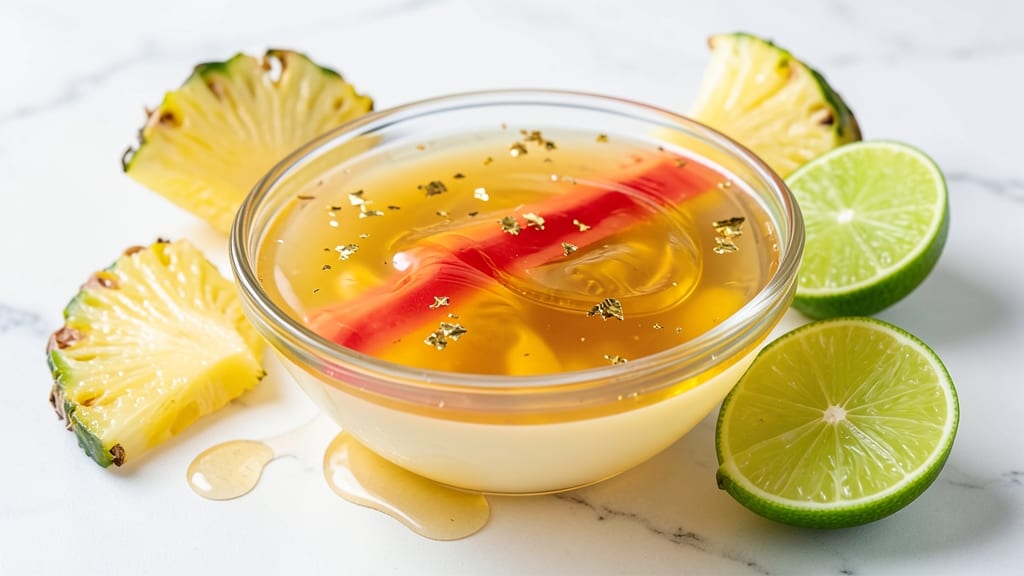
This pineapple gelatin recipe transforms simple ingredients into shimmering tropical bites that look like edible jewels. ✨ The secret lies in balancing sweet pineapple juice with unflavored gelatin, creating a firm yet delicate texture that sets perfectly in layers.
I developed this recipe after years of experimenting with fruit-based desserts—it’s the one that finally delivers that restaurant-quality wobble without requiring fancy equipment.
The process is beginner-friendly, with just 5 ingredients and 10 minutes of active prep time. You’ll start with a warm pineapple mixture that infuses the gelatin, then layer it in a dish for a marbled effect.
Chilling for 4 hours (or overnight) ensures clean slices every time. The result? A vibrant, translucent dessert that’s refreshing enough for summer but elegant enough for holiday tables.
What makes this recipe special is how it combines bright tropical flavors with a silky, jewel-like appearance. The gelatin sets into perfectly firm cubes that hold their shape when sliced, while the pineapple keeps the texture tender.
Top with whipped cream or toasted coconut for extra flair—though honestly, it’s delicious plain.
Perfect for potlucks, dessert buffets, or a special treat when you want something light yet impressive. The recipe scales easily, so you can make a single serving or a crowd-pleasing platter. Let’s get started!
Ingredients for pineapple gelatin
Five ingredients create this jewel-like dessert with restaurant-quality texture and vibrant tropical flavor.
| Ingredient | Amount | Notes |
|---|---|---|
| Unflavored Gelatin Powder 🍬 | 1 ½ tbsp | High-quality powder for firm set |
| Canned Pineapple Juice 🍍 | 1 ½ cups | 100% pineapple, no additives |
| Granulated Sugar 🍚 | ½ cup | Fine grain preferred |
| Fresh Lime Juice 🍋 | 1 tbsp | Bright, freshly squeezed |
| Light Corn Syrup 🍯 | 1 tbsp | For smooth texture |
| Red Food Coloring 🎨 | ¼ tsp | Optional for marbled effect |
| Granulated Sugar 🍚 | ¼ cup | For dusting top layer |
| Toasted Coconut Flakes 🥥 | ¼ cup | For garnish (optional) |
| Heavy Whipping Cream 🥛 | ½ cup | For topping (optional) |
The gelatin is the foundation—Knox brand or Great Value powder works best for a clean set. Store it airtight in a cool, dark place, as humidity weakens its binding properties. Pineapple juice should be 100% pure, with no added sugars or preservatives. Dole or Del Monte brands consistently deliver bright flavor without bitterness. For the lime juice, Mexican limes have the most intense zing, but regular key limes work too. If you're using food coloring, Wilton or America's Test Kitchen brands offer vibrant, stable hues perfect for marbling.
No gelatin powder? Agar-agar can substitute at half the amount, though the texture will be firmer. Short on pineapple juice? Fresh pineapple purée works beautifully—just strain out the pulp. The corn syrup can be swapped for maple syrup at a 1:1 ratio, though it adds a subtle caramel note. For a sugar-free version, reduce the granulated sugar by half and add 1 tbsp of powdered erythritol, though the set may be slightly softer. The red food coloring is optional but essential for that classic marbled effect—if you skip it, use raspberry purée instead for natural color.
This gelatin sets best in a shallow glass dish (like a 9x5-inch loaf pan) for clean slices. Chill for at least 4 hours—overnight is ideal. Store leftovers in the fridge for up to 5 days, covered tightly with plastic wrap pressed directly on the surface to prevent drying. For a festive touch, dust the top with sugar and toasted coconut before serving. The whipped cream topping adds richness but isn’t necessary—this dessert shines on its own with just the vibrant pineapple flavor.
Why You'll Love This Recipe
- Five-Ingredient Magic: I swear by this recipe because it’s the kind of thing you can pull off with ingredients you already have—no fancy shopping required. Just gelatin, pineapple juice, a splash of lime, and a little sweetness. That’s it. No stress, no last-minute grocery runs.
- Tropical in Minutes: The lime juice cuts through the sweetness just right, and the corn syrup keeps it silky instead of grainy. It tastes like a vacation in a glass—bright, refreshing, and just sweet enough to make you want seconds.
- Party Ready: I’ve used this for everything from potlucks to kids’ birthday tables. Pour it into clear cups, add a pineapple wedge on top, and boom—you’ve got a showstopper that costs pennies. (Yes, even on a Tuesday night.)
- No-Waste Winner: That can of pineapple juice? You’ll use it all. The leftovers keep for days in the fridge, and I’ve even frozen portions to toss into smoothies later. Plus, the sugar and corn syrup stretch your budget without sacrificing taste.
Step-by-step instructions for pineapple gelatin
Transform simple ingredients into jewel-like gelatin cubes with vibrant color and tropical flavor.
👨🍳 Step 1: Bloom the Gelatin for Perfect Texture
In a medium bowl, sprinkle the 1.5 tbsp unflavored gelatin powder evenly over the 1.5 cups canned pineapple juice. This prevents clumping and ensures even distribution throughout the mixture. Let it sit for 5 minutes—you'll see the powder absorb the liquid and form tiny granules.
I always use a glass or stainless steel bowl for this step because plastic can sometimes react with acidic ingredients. The gelatin needs to fully hydrate before heating, which guarantees a smooth, wobbling texture rather than grainy pockets. If you're in a hurry, you can microwave the mixture for 10 seconds after blooming to speed up the process, but blooming at room temperature gives the best results.
🍳 Step 2: Heat and Sweeten the Mixture
Place the bloomed gelatin mixture over a saucepan filled with 2 inches of simmering water (double boiler method). Heat gently, stirring constantly with a silicone spatula, until the mixture reaches 160°F and the gelatin is completely dissolved. This should take about 5-7 minutes—you'll know it's ready when the mixture becomes clear and glossy.
Remove from heat and stir in the 0.5 cup granulated sugar, 1 tbsp fresh lime juice, and 1 tbsp light corn syrup. The sugar will dissolve completely, and the lime juice will add that bright, tangy note that cuts through the sweetness. If using, add the 0.25 tsp red food coloring now and stir until evenly distributed. Let the mixture cool to 110°F—it should be warm to the touch but not hot.
🥘 Step 3: Pour and Set the Gelatin
Pour the warm gelatin mixture into a 4x4-inch loaf pan or individual molds (like silicone cupcake liners). Tap the pan gently on the counter to remove any air bubbles that might create weak spots in the gelatin. Cover the pan with plastic wrap and refrigerate for 4-6 hours or until fully set. The gelatin should have a firm, jiggly consistency that holds its shape when gently shaken.
Here's the thing—patience is key. If you rush this step, the gelatin won't set properly and will turn out mushy. I like to set mine overnight for an extra-firm texture, especially if I'm making it ahead of time. The colder your refrigerator, the faster it will set, but don't overdo it or the texture will become rubbery.
🔪 Step 4: Create the Marbled Effect (Optional)
Once the gelatin is fully set, remove it from the mold and cut it into 1-inch cubes using a sharp, wet knife. For the marbled effect, take half of the cubes and stir them into 0.5 cup heavy whipping cream until fully coated. Return these cream-coated cubes to the mold and refrigerate for another 2 hours to allow the cream to set.
This step is where the magic happens—when you cut into the final gelatin, you'll see beautiful pink and white swirls throughout. If you're not using the cream topping, simply dust the surface of the gelatin with the 0.25 cup granulated sugar and sprinkle with 0.25 cup toasted coconut flakes for a tropical finish. The sugar adds a delicate crunch, while the coconut flakes bring a nutty contrast to the sweet pineapple flavor.
⏰ Step 5: Serve Chilled and Enjoy
Serve the pineapple gelatin chilled, straight from the refrigerator. The cubes should be firm enough to hold their shape when lifted with a fork but still have that delightful wobble. For an extra-special presentation, arrange the cubes on a platter with fresh pineapple slices or lime wedges on the side.
This dessert is perfect for summer gatherings or as a refreshing finish to a tropical-themed meal. The combination of pineapple's tangy sweetness, lime's bright acidity, and the creamy texture makes it a crowd-pleaser. Store any leftovers in an airtight container in the refrigerator for up to 5 days, though I doubt they'll last that long!
Pro Tips For Making Pineapple Gelatin
- Bloom the Gelatin Right: Sprinkle that powder over cold pineapple juice first, then let it sit for 5 full minutes before heating—no stirring yet. I learned this the hard way when my gelatin turned grainy because I rushed the bloom. Patience here makes all the difference.
- Strain the Juice: Skip the canned pineapple’s pulp—it’ll sink to the bottom and make your gelatin look cloudy. Strain it through a fine-mesh sieve or cheesecloth into your mixing bowl. Trust me, your wobbly final product will thank you.
- Heat Slow and Low: Warm the liquid on medium-low heat—high heat kills gelatin’s ability to set. If you’re impatient like me, you’ll end up with a sad, runny mess. A gentle simmer keeps the texture perfect.
- Chill the Mold First: Pop your gelatin mold in the freezer for 10 minutes before pouring—it’ll set faster and stay firmer. I used to skip this, and my gelatin would always leak out like a sad puddle. (Yes, even if you’re in a hurry.)
Perfect pairings for this dish
Tropical Fruit Plating
Serve your pineapple gelatin alongside fresh pineapple slices and lime wedges for a vibrant, tropical presentation. I like to arrange the cubes on a platter with a few slices of mango or kiwi for extra color contrast.
The acidity from the lime brightens the gelatin’s flavor, while the other fruits add freshness. 🌴
Creamy Toppings
Whipped cream is a classic pairing—Cooper’s or Land O’Lakes heavy whipping cream whipped to soft peaks adds a light, airy contrast. For a richer option, try coconut whipped cream (whip ½ cup coconut cream with 1 tsp powdered sugar).
Drizzle with honey or caramel sauce for extra decadence. If you prefer something lighter, toasted coconut flakes or crushed macadamia nuts add crunch.
Beverage Pairings
A piña colada or mojito complements the pineapple gelatin perfectly. For a non-alcoholic option, try sparkling limeade or coconut water with a splash of grenadine. The effervescence cleanses your palate between bites, while the citrus notes enhance the gelatin’s tropical profile. 🍹
Savory Contrasts
For a surprising twist, pair with lightly salted pretzels or crackers to balance the sweetness. The salty crunch contrasts beautifully with the gelatin’s smooth texture. Another fun option is grilled ham or prosciutto—the savory, salty flavors make the dessert taste even more luxurious.
This works especially well for brunch or holiday gatherings.
Seasonal Variations
In summer, add fresh berries like strawberries or raspberries to the platter. For winter, swap the pineapple for cranberry juice (reduce the sugar slightly) and top with white chocolate shavings and candied ginger. The warm spices add a festive touch. 🎄
Nutrition facts
Frequently asked questions
Why does my pineapple gelatin turn out too soft?
Overheating the mixture or insufficient chilling time are the most common causes. Always heat the gelatin to 160°F (not boiling) and let it cool to 110°F before pouring. Chill for at least 4 hours—overnight is ideal. If it's still too soft, try adding an extra 0.5 tbsp gelatin powder next time.
Can I make this recipe without gelatin?
Yes, but the texture will differ. For a vegan option, replace gelatin with 1.5 tsp agar-agar powder (simmered in 1 cup pineapple juice for 5 minutes). The result will be firmer and slightly chewier. Alternatively, use 1 cup coconut milk + 1 tbsp chia seeds (soaked for 10 minutes) for a dairy-free but softer version.
How do I get clean slices every time?
Use a sharp, wet knife and dip it in hot water between cuts to prevent sticking. A 4x4-inch loaf pan works best for uniform cubes—tap it gently on the counter after pouring to remove air bubbles. If the gelatin shrinks from the sides, chill it in the freezer for 30 minutes before unmolding to help it release cleanly.
What’s the best way to store leftovers?
Wrap the gelatin tightly in plastic wrap (pressed directly on the surface) and store in an airtight container. It keeps for 5 days in the fridge. For longer storage, freeze the cubes for up to 3 months, but thaw them in the fridge overnight to preserve texture. Avoid freezing the liquid mixture—it won’t set properly after thawing.
Can I use fresh pineapple instead of juice?
Blend 2 cups fresh pineapple chunks with 1 tbsp lime juice and strain through a fine-mesh sieve to remove pulp. Use the purée as a 1:1 replacement for canned juice. For extra brightness, add 1 tsp pineapple juice concentrate to compensate for the natural water content in fresh fruit.