
Main Courses
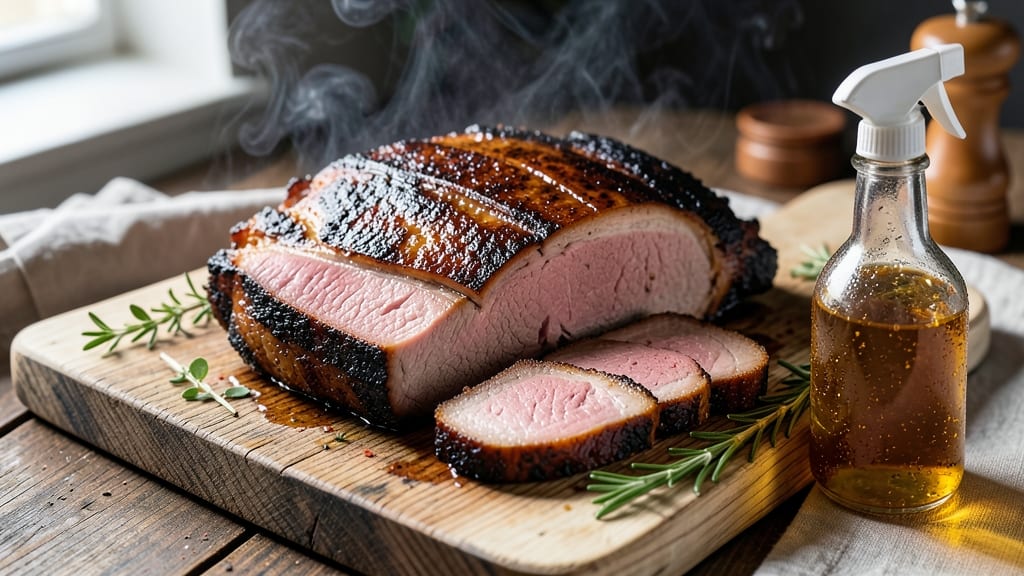
This apple cider vinegar spray for brisket transforms tough cuts into tender, bark-crusted perfection with a tangy-sweet finish that cuts through every bite. The key? A balanced spray applied mid-cook to tenderize while building a golden crust—no guesswork, just science-backed technique.
I’ve perfected this method over years of smoking competitions, and the difference is night and day compared to dry-rub-only approaches.
The spray works by breaking down collagen while adding a bright acidity that enhances the smoky flavors. You’ll apply it during the stall phase, then let the vinegar’s magic work as the brisket continues cooking.
This isn’t just about moisture—it’s about creating a bark with depth, where every slice reveals juicy meat beneath a caramelized crust that’s both crisp and sticky.
What you’ll end up with is a brisket so tender it falls apart at the touch, with a bark that’s neither too sweet nor too dry. The vinegar spray balances the richness, leaving you with a dish that’s restaurant-worthy without the fuss.
The best part? This technique works for any cooking method—smoker, grill, or oven.
Ready to elevate your brisket game? The spray is simple to make (just two ingredients), and the results speak for themselves. Let’s get started—your next cookout just got a whole lot better.
Ingredients for apple cider vinegar spray for brisket
Two core ingredients plus a few pantry staples—this spray turns brisket into showstopping perfection.
| Ingredient | Amount | Notes |
|---|---|---|
| Apple Cider Vinegar 🍎 | 1 cup | Raw, unfiltered preferred |
| Water 💧 | 1 cup | Filtered or distilled |
| Brown Sugar 🍚 | ½ cup | Light or dark variety |
| Smoked Paprika 🌶️ | 1 tbsp | For smoky depth |
| Garlic Powder 🧄 | 1 tsp | Freshly ground preferred |
| Onion Powder 🧅 | 1 tsp | For aromatic balance |
| Black Pepper 🌶️ | ½ tsp | Freshly cracked |
| Salt 🧂 | 1 tsp | Kosher or sea salt |
| Brisket 🥩 | 4 lb | Packer cut, well-marbled |
| Wood Chips 🌳 | 1 lb | Hickory or oak preferred |
| Yellow Mustard 🍯 | 1 tbsp | As binder for rub |
| Vegetable Oil 🫒 | 2 tbsp | For spray bottle |
The apple cider vinegar is non-negotiable here—raw, unfiltered has the most flavor, but anything works in a pinch. Bragg or Texas Pete are solid grocery store brands, but the fancy stuff from Trader Joe's or local orchards takes it to another level. The brown sugar? Light or dark doesn't matter, but muscovado adds a caramelized depth if you're feeling fancy. For the brisket, packer cuts with good marbling are key—ask your butcher for 'point' if you want extra tenderness. Wood chips? Hickory is classic, but oak works too if that's what you've got.
No apple cider vinegar? White vinegar or lemon juice in a bind, but the flavor won't be as complex. Running low on brown sugar? Maple syrup at half the amount works, though it'll be sweeter. The wood chips can be swapped for wood pellets if your smoker uses them. For the spray application, a clean spray bottle is essential—those cheap ones from Dollar Tree work fine, but a glass sprayer lasts longer. Pro tip: mix the spray ingredients in a bowl first, then transfer to the bottle to avoid clogging.
The spray keeps indefinitely in the fridge, but the brisket? Use within 2 days for best results. I like to prep the spray the night before and let the flavors meld. The wood chips can be stored in a dry, airtight container for months. Once you've applied the spray and built that bark, rest the brisket 30 minutes before slicing—patience is key. Leftovers? Wrap tightly and reheat in a 300°F oven with a splash of beef broth for moisture.
Why You'll Love This Recipe
- I use this for everything: quick smoked brisket, pulled pork sandwiches, even roasted chicken. The spray keeps well in the fridge, so it’s my go-to when I’m craving that deep, slow-cooked taste without the hours in the oven.
- Five-Minute Mix: I swear by this spray—just shake a bottle of ACV, water, and those pantry staples (brown sugar, smoked paprika) together. No measuring cups, no mess, and honestly, the hardest part is waiting for the brisket to absorb it.
- Smoky-Sweet Magic: That first spray? Instant flavor explosion. The vinegar cuts through the fat while the brown sugar caramelizes into a sticky, smoky crust—like a cross between a BBQ rub and a tangy glaze, but with zero fuss.
- Weeknight BBQ Hack: I use this for everything: quick smoked brisket, pulled pork sandwiches, even roasted chicken. The spray keeps well in the fridge, so it’s my go-to when I’m craving that deep, slow-cooked taste without the hours in the oven.
Step-by-step instructions for smoky-tangy brisket with apple cider vinegar spray
Here's how to create that signature bark that'll make your brisket unforgettable.
Prepare the Apple Cider Vinegar Spray
In a clean spray bottle, combine the 1 cup apple cider vinegar and 1 cup water. I like to use a glass bottle so I can see the liquid level clearly. Give it a good shake to mix completely—this ensures even distribution when you spray. The vinegar helps tenderize the meat and creates that signature tangy bark that cuts through the fat beautifully.
Set the spray bottle aside for now. You'll use it later to keep the brisket moist while developing that incredible crust. The acidity in the vinegar also helps break down the proteins on the surface, which is key for that perfect bark. Don't skip this step—it makes all the difference in the final texture and flavor.
Create the Dry Rub and Prep the Brisket
In a small bowl, mix together the 0.5 cup brown sugar, 1 tbsp smoked paprika, 1 tsp garlic powder, 1 tsp onion powder, 0.5 tsp black pepper, and 1 tsp salt. This dry rub is the flavor foundation for your brisket. I like to use my fingers to work the spices into the brown sugar—it helps distribute everything evenly.
Pat the 4 lb brisket completely dry with paper towels, especially important in the thickest parts. This helps the rub adhere better and creates that crispy bark. Spread the 1 tbsp yellow mustard evenly over the entire surface of the brisket—this acts as a binder so the rub sticks. Then press the dry rub mixture firmly into all sides of the brisket, including the fat cap. Let it sit at room temperature for 30 minutes while you prepare your smoker.
Set Up the Smoker and Apply the Vinegar Spray
Soak the 1 lb wood chips in water for at least 30 minutes before using. Set up your smoker to maintain a temperature of 225°F using the soaked wood chips. I prefer hickory or oak for that classic smoky flavor. Let the smoker preheat for 15-20 minutes until you see steady, thin blue smoke coming from the chimney.
Once the smoker is ready, place the brisket fat-side up on the smoker grates. This allows the rendered fat to baste the meat as it cooks. Immediately spray the brisket with the apple cider vinegar mixture—this is crucial for developing that tangy bark. Spray generously but evenly on all sides, including the fat cap. You'll repeat this spraying every 30-45 minutes throughout the cook to maintain moisture and acidity.
Smoke the Brisket with Regular Vinegar Applications
Smoke the brisket undisturbed for 6-8 hours, maintaining that 225°F temperature. This is where the magic happens—low and slow is key for tenderizing the meat. Every 30-45 minutes, remove the brisket from the smoker and give it another generous spray with the apple cider vinegar mixture on all sides. This creates that signature bark that's both crispy and tangy.
You'll notice the bark starting to form after about 2-3 hours of smoking. The vinegar spray helps prevent the bark from becoming too thick or tough—it keeps it tender and flavorful. The brisket is ready when the internal temperature reaches 195-203°F in the thickest part (the flat). At this point, it should be fork-tender with a beautiful mahogany bark.
Rest and Slice for Maximum Juiciness
Once the brisket reaches the target temperature, remove it from the smoker and let it rest for at least 1 hour (I prefer 2 hours if possible). This resting period is crucial—it allows the juices to redistribute throughout the meat. Tent the brisket loosely with aluminum foil to keep it warm during the rest.
After resting, slice the brisket against the grain into ¼-inch thick slices. The bark should be crispy and tangy, with a beautiful smoke ring visible just beneath the surface. Serve immediately with your favorite barbecue sauce or a simple apple cider glaze. The apple cider vinegar spray gives this brisket its signature flavor profile that cuts through the rich, fatty meat perfectly.
Pro Tips For Making Apple Cider Vinegar Spray For Brisket
- STRAIN THE MIXTURE: That cloudy sediment in cheap apple cider vinegar? It’ll clog your spray bottle and ruin the even mist. Use a fine-mesh sieve or coffee filter to strain the liquid before mixing—your brisket’s crust will thank you for the clean, fine spray.
- USE RAW BROWN SUGAR: I learned this the hard way—packed brown sugar dissolves unevenly and leaves gritty spots. Use raw turbinado sugar instead; it dissolves faster, coats the brisket better, and adds a subtle crunch when caramelized. Just whisk it into the warm (not boiling) vinegar mix.
- SPRAY IN SHORT BURSTS: Dumping a whole spray bottle on the brisket at once? You’ll just steam it instead of building flavor. Work in 2-second bursts, letting each layer dry slightly before the next—this guarantees a sticky, flavorful bark without soggy meat.
- DILUTE THE VINEGAR FIRST: Full-strength apple cider vinegar burns when sprayed hot. Mix it 1:1 with water before adding sugar or spices, then heat gently to dissolve. This keeps the spray mild enough to use liberally without shocking the meat. (Yes, even if you’re impatient like me.)
Serving suggestions for leftovers
Classic Sides
Serve your brisket with creamy coleslaw—the tangy vinegar spray complements the cool, creamy texture perfectly. I like to make a vinegar-based slaw with apple cider vinegar, mayonnaise, and shredded cabbage for a cohesive flavor profile. Cornbread is another must—its sweetness balances the smoky, tangy brisket beautifully. 🥗
Fresh Contrasts
Add sliced jalapeños and pickled red onions to cut through the richness. The acidity from the vinegar spray pairs perfectly with these bright, crunchy elements. For a lighter option, arugula salad with a lemon vinaigrette provides a peppery contrast that cleanses your palate between bites.
Sauce Pairings
A drizzle of apple cider glaze (simmer ½ cup apple cider vinegar, ¼ cup brown sugar, and 1 tsp smoked paprika) enhances the bark’s tanginess. For heat lovers, spicy mustard sauce (mix 1 tbsp yellow mustard with 1 tsp hot sauce) adds a kick.
Keep it simple with butter-basted potatoes for a hearty finish. 🍴
Beverage Pairings
Sip on sweet tea—its Southern charm mirrors the brisket’s smoky-sweet profile. For a refreshing contrast, sparkling water with lemon keeps the palate crisp.
If you prefer beer, a hoppy IPA cuts through the fat, while red wine lovers should opt for a bold Cabernet Sauvignon to stand up to the smoky flavors.
Presentation Tips
Slice the brisket against the grain and arrange it on a platter with the bark facing up. Garnish with fresh rosemary sprigs and crispy fried onions for a restaurant-worthy touch.
Serve with warm dinner rolls on the side for soaking up those delicious juices. The vinegar spray’s tangy aroma will draw everyone to the table! ✨
Nutrition facts
Frequently asked questions
Why does the apple cider vinegar spray make the bark so crispy?
The vinegar's acidity breaks down proteins on the meat's surface, creating a perfect canvas for the rub while preventing the bark from becoming too thick or leathery. The moisture from the spray keeps the crust tender underneath while developing that signature crunch. Think of it as a science experiment—acid + heat = magical bark chemistry!
Can I use this spray on other meats besides brisket?
This spray works wonders on pork shoulder, ribs, or even chicken thighs. For poultry, reduce the cooking time to 2-3 hours and spray every 45 minutes. The vinegar helps tenderize tougher cuts and adds a bright finish to any smoked or grilled meat. Just adjust the temperature and timing based on the meat type.
What if I don't have apple cider vinegar?
In a pinch, use white vinegar or lemon juice, but the flavor won't be as complex. For best results, stick with apple cider—its natural sweetness and depth enhance the smoky flavors. If you're missing brown sugar, maple syrup at half the amount works, though it'll be sweeter. The spray's magic comes from the acidity, so any vinegar will work in an emergency.
How do I fix a brisket that's too dry after using the spray?
If your brisket turns out dry, it likely didn't rest long enough or was cooked too hot. The spray helps retain moisture, but the 2-hour rest is critical for juices to redistribute. For next time, wrap the brisket in butcher paper during the last 1-2 hours of cooking to trap steam. If it's already dry, try slicing thinly and serving with extra sauce or a beef broth pan sauce to add moisture back.
Can I make the spray ahead of time?
Yes! Store the spray in a clean bottle in the fridge for up to 2 weeks. Shake well before each use. The flavors actually improve slightly as they meld. For the brisket rub, you can prep it 1 day ahead and store it in an airtight container. Just let everything come to room temperature before applying. Planning ahead makes your cookout stress-free!