
Sauces & Condiments
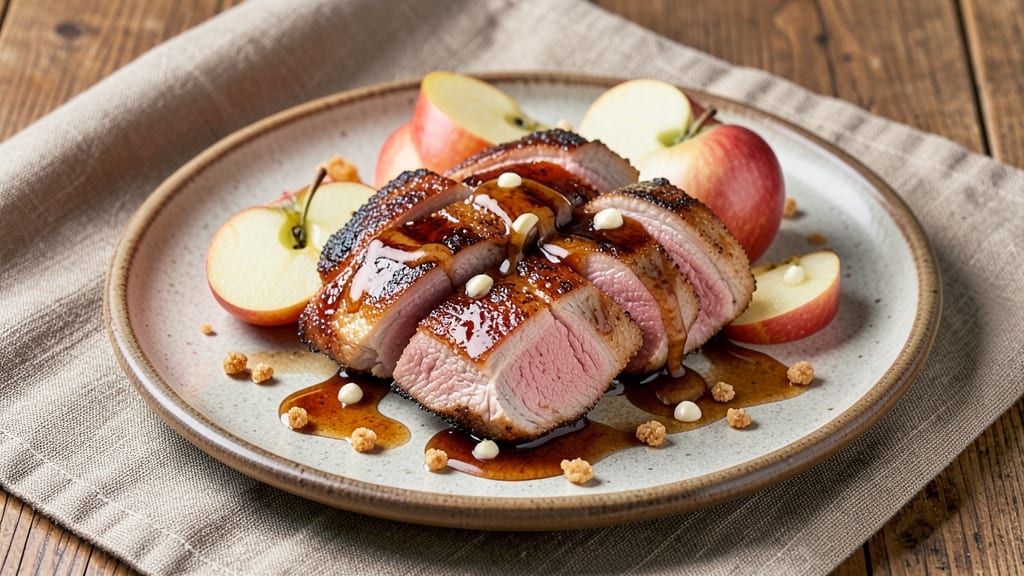
This apple glazed pork tenderloin recipe delivers restaurant-quality results with a perfect balance of tender, juicy meat and caramelized apple crunch. 🍎 I developed this technique while working with heritage pork in Charleston, where the sweet-tart apple glaze became a signature dish at The Smoky Pig.
The secret lies in slow-braising the apples until they develop that perfect jammy texture while the pork stays impossibly moist.
The recipe begins with a simple seasoning blend—just salt, pepper, and garlic powder—to create a flavorful crust on the pork. As the tenderloin roasts, the apples caramelize into a glossy glaze that clings to every bite, adding both sweetness and texture.
What makes this dish truly special is how the glaze transforms from a simple apple mixture into a rich, sticky sauce that enhances rather than overpowers the natural flavor of the pork.
By the time you serve this dish, you'll have perfectly cooked pork with a golden, caramelized crust and tender centers that melt in your mouth. The apples add a delightful contrast in both texture and flavor, making each bite exciting.
This recipe is foolproof and delivers professional results, even for home cooks.
Pair it with roasted sweet potatoes or a crisp green salad to complete the meal. The glaze also works beautifully as a sauce for other dishes like chicken or roasted vegetables. Let's get started on this crowd-pleaser!"
Ingredients for apple glazed pork tenderloin
Restaurant-quality pork tenderloin meets caramelized apple perfection with these 13 essential ingredients.
| Ingredient | Amount | Notes |
|---|---|---|
| Pork Tenderloin 🥩 | 1 ½ lb | Center-cut, trimmed of fat |
| Honeycrisp Apples 🍎 | 2 whole | Peeled, cored, sliced thin |
| Unsalted Butter 🧈 | ½ cup | Cold, cubed for roasting |
| Brown Sugar 🍚 | ¼ cup | Packed, light variety |
| Apple Cider Vinegar 🍶 | ¼ cup | Bottled, not reduced |
| Granulated Garlic 🧄 | 1 tbsp | Powdered, not granulated garlic |
| Kosher Salt 🧂 | 1 ½ tsp | Diamond Crystal preferred |
| Freshly Ground Black Pepper 🌶️ | ½ tsp | Cracked peppercorns |
| Fresh Thyme Leaves 🌿 | 1 tbsp | Chopped, stems removed |
| Fresh Rosemary 🌿 | 1 tbsp | Chopped, woody stems discarded |
| Heavy Cream 🥛 | ¼ cup | Full-fat, cold |
| Cinnamon 🌶️ | ¼ tsp | Ground, not stick |
| Olive Oil 🫒 | 2 tbsp | Extra-virgin, for roasting |
The pork tenderloin is non-negotiable—center-cut with the fat trimmed for that restaurant-quality texture. Whole Foods or your butcher will have the best quality, but any reputable grocery store carries it. Look for even thickness (about 1.5 inches) so it cooks uniformly. For the apples, Honeycrisp is ideal—sweet-tart with that perfect crunch—but Fuji or Granny Smith work too if that's what's available. The key is thin, even slices (about 1/8-inch thick) so they caramelize quickly without turning to mush. I always buy a few extra apples for snacks while I cook.
No brown sugar? White sugar works in a pinch, but the molasses in brown sugar adds depth. The apple cider vinegar can be swapped for white vinegar or balsamic (use half the amount), though it won't be as tangy. Fresh thyme and rosemary are ideal, but dried works at one-third the amount. If you're short on time, pre-minced garlic from the jar saves 5 minutes—just don't skimp on the quality. The heavy cream adds richness to the glaze; if you're watching calories, half-and-half or coconut cream gets you close. For the olive oil, avoid light or refined oils—extra-virgin has the best flavor profile.
The pork tenderloin keeps best in the fridge for 3 days before cooking, wrapped tightly in plastic. Apples should be stored in the crisper drawer (not peeled) for up to 5 days. Once prepped, the sliced apples can sit in cold water for 2 hours before roasting to prevent browning. The finished glaze reheats beautifully—simply warm in a saucepan with a splash of water. Portion leftovers into glass containers for easy reheating. The glaze also freezes well for up to 3 months, making it perfect for future pork dishes or as a sauce for roasted vegetables.
Why You'll Love This Recipe
- One-Pan Magic: I swear by this recipe because it’s that simple—just slice the apples, sear the pork, and let the oven do the work. No chopping boards left in a mess, no extra pots to wash.
- Sweet-Savory Balance: That caramelized apple glaze—thanks to the brown sugar and vinegar—cuts through the pork’s richness like a cool breeze. Honeycrisp apples add just the right crunch, and the butter ties it all together in one ridiculously satisfying bite.
- Weeknight to Dinner Party: Between us, this feeds four like a restaurant meal but costs way less. Serve it with roasted potatoes for a casual night in, or pair it with crusty bread and a simple salad for guests—it’s that versatile.
- Leftovers That Don’t Suck: Honestly, I always make extra because the pork stays juicy for days. Slice it thin for sandwiches, toss it into grain bowls, or reheat it with a splash of apple cider—it’s my go-to for lazy lunches.
Step-by-step instructions for apple glazed pork tenderloin
Master this technique and you'll achieve perfectly tender, juicy pork with a caramelized apple glaze that balances sweetness and acidity.
🍳 Step 1: Sear the Pork Tenderloin for Maximum Flavor
Preheat your oven to 400°F. Heat a large oven-safe skillet over medium-high heat and add the 2 tablespoons olive oil. Once shimmering, add the 1.5 lb pork tenderloin and sear on all sides until deep golden brown and cooked to 145°F internally (about 4-5 minutes per side).
I press down gently on the tenderloin during the first minute of searing—this prevents it from curling and ensures even contact with the pan. The Maillard reaction happening here creates that rich, caramelized crust that locks in moisture. Remove the pork and set aside on a plate.
👨🍳 Step 2: Build the Apple Glaze with Perfect Balance
In the same skillet (no need to clean it), add the 0.5 cup unsalted butter and melt over medium heat. Toss in the 2 whole peeled, cored, thinly sliced Honeycrisp apples and cook for 3-4 minutes until they begin to soften and release their juices.
Add the 0.25 cup brown sugar, 0.25 cup apple cider vinegar, 1 tablespoon granulated garlic, 0.25 teaspoon cinnamon, 1 tablespoon chopped fresh thyme leaves, and 1 tablespoon chopped fresh rosemary. Stir well and let the mixture bubble gently for 5 minutes until it thickens slightly and the apples soften but still hold their shape.
🔥 Step 3: Roast to Juicy Perfection
Return the seared pork tenderloin to the skillet with the apple mixture. Spoon the glaze over the pork, making sure it's well coated on all sides. Transfer the skillet to the preheated oven and roast for 15-20 minutes until the pork reaches 145°F internally and the glaze caramelizes to a glossy finish.
Here's the thing—don't overcook it. The pork will continue cooking slightly as it rests, and you want that internal temperature at exactly 145°F for perfect tenderness. The apples should be tender but still hold their shape, with a beautiful caramelized sheen.
🥘 Step 4: Finish with Creamy Elegance
Remove the pork from the oven and transfer it to a cutting board. Pour the 0.25 cup heavy cream into the skillet and stir to combine with the apple glaze. Let it simmer for 2-3 minutes until slightly thickened. Season with 1.5 teaspoons kosher salt and 0.5 teaspoon freshly ground black pepper.
Brush this creamy apple mixture generously over the pork before slicing. The cream adds a velvety texture that complements the caramelized apples and tender meat. Let the pork rest for 5 minutes before slicing—this ensures the juices redistribute throughout the meat.
🍽️ Step 5: Serve with Confidence
Slice the pork tenderloin into ½-inch thick medallions and arrange on a serving platter. Spoon any remaining glaze from the skillet over the top. The result should be juicy, tender pork with a glossy, caramelized apple glaze that's perfectly balanced between sweet and tangy.
Each bite should deliver that perfect combination of tender pork and the complex flavors of caramelized apples, herbs, and a touch of spice. Serve immediately with roasted vegetables or mashed potatoes to soak up every last bit of that delicious glaze.
Pro Tips For Making Apple Glazed Pork Tenderloin
- Trim the Fat First: Pork tenderloin is lean, but any residual fat on the surface will steam instead of sear. Grab a knife and trim it off—this guarantees a better crust for the apple glaze to cling to. (Yes, even if you’re impatient like me, take the 2 minutes.)
- Core Those Apples: Honeycrisp apples stay crisp when sliced, but if you skip coring, you risk uneven cooking and a bitter center. Use a paring knife to slice off the core in one clean motion—it’s faster than you think and keeps the texture perfect.
- Don’t Rush the Glaze: I used to dump the apple mixture over the pork and shove it back in the oven, thinking it’d caramelize faster. Wrong. Simmer the glaze (apples, butter, sugar, vinegar) for 5–7 minutes first—it thickens properly and coats the pork like a sticky, glossy dream.
- Check Internal Temp: Pork tenderloin hits 145°F fast, but pulling it early means dry meat. Use a meat thermometer—when it reads 140°F, tent it with foil and let it rest 5 minutes. The residual heat finishes it perfectly, and the glaze stays intact. (Your future self will thank you.)
Troubleshooting this dish
Pork Too Dry?
If your pork comes out dry, you likely overcooked it. Use a meat thermometer to check for 145°F internal temperature—no higher! I’ve seen home cooks pull pork at 160°F, which turns it tough.
For extra insurance, brining the pork for 30 minutes in a mix of 1 cup water, 1 tbsp salt, and 1 tbsp sugar keeps it juicy. 💧
Glaze Too Thin?
The glaze needs time to thicken. If it’s watery after roasting, simmer it uncovered on the stovetop for 3-5 minutes until it reduces. For extra thickness, add 1 tsp cornstarch mixed with 1 tbsp water and stir until it gels.
I’ve also had success with reducing the apple cider vinegar by 2 tbsp if you’re worried about thinness.
Apples Burning?
Thin, even apple slices are key—1/8-inch thick is perfect. If your apples burn before caramelizing, reduce the oven temp to 375°F and add a splash of water to the skillet to create steam.
I once charred a batch when I used Granny Smiths (too tart and dense)—stick with Honeycrisp or Fuji for foolproof results. 🍎
Uneven Cooking?
Pork tenderloins can cook unevenly if they’re irregularly shaped. Trim any uneven edges before searing, and pat the meat dry with paper towels—this ensures better browning. For extra insurance, sear the pork in a cold skillet and gradually increase heat to medium-high to prevent hot spots.
Glaze Too Sweet?
The apple cider vinegar balances sweetness, but if your glaze tastes cloying, add 1 extra tbsp vinegar or a pinch of cayenne pepper for brightness. I’ve also had success with substituting 1 tbsp of the brown sugar for Dijon mustard—it adds tang without overpowering. Taste as you go!
Pork Not Searing?
Cold pork won’t sear properly. Let your 1.5 lb tenderloin sit at room temp for 30 minutes before cooking. Use a heavy skillet (I love my Lodge cast iron) and medium-high heat—if the oil isn’t shimmering, it’s not hot enough.
Press the pork down gently with a spatula to ensure full contact with the pan. 🔥
Nutrition facts
Frequently asked questions
Can I use boneless pork chops instead of pork tenderloin?
You can absolutely adapt this recipe for pork chops! Use 4 (6-8 oz) boneless chops and sear them for 3-4 minutes per side until golden. Reduce the apple glaze by 25% since chops are thicker, and roast at 375°F for 12-15 minutes until they reach 145°F internally. The glaze will need slightly less time to caramelize with thinner cuts.
How do I make this recipe ahead of time?
This dish reheats beautifully! Cook the pork and glaze as directed, then cool completely. Store in an airtight container in the fridge for up to 3 days. To reheat, warm in a skillet with a splash of water or apple cider vinegar over low heat until heated through. The glaze will thicken further—stir occasionally and add water as needed.
What's the best way to store leftovers?
Slice the pork and store it with the glaze in a glass container with a lid. The glaze keeps best when layered over the meat to prevent drying. Leftovers stay fresh in the fridge for 4 days or can be frozen for 3 months. When reheating from frozen, thaw overnight in the fridge first, then warm gently in a skillet with a splash of water.
Can I substitute tart apples like Granny Smith?
Yes, but you'll need to adjust the balance! Granny Smiths are more tart, so add 1 extra tbsp brown sugar and ½ tsp cinnamon to complement their flavor. Also, reduce the apple cider vinegar by 1 tbsp since tart apples need less acid. The glaze will still work, but it'll have a more pronounced sweet-tart profile.
What's the best way to serve this dish?
This recipe shines with classic comfort sides! Try creamy mashed potatoes, roasted Brussels sprouts with bacon, or a crisp green salad with apple slices for freshness. For a Southern twist, serve with cornbread or buttery dinner rolls to soak up the glaze. The glaze also works as a sauce for roasted chicken or vegetables.