
Sauces & Condiments
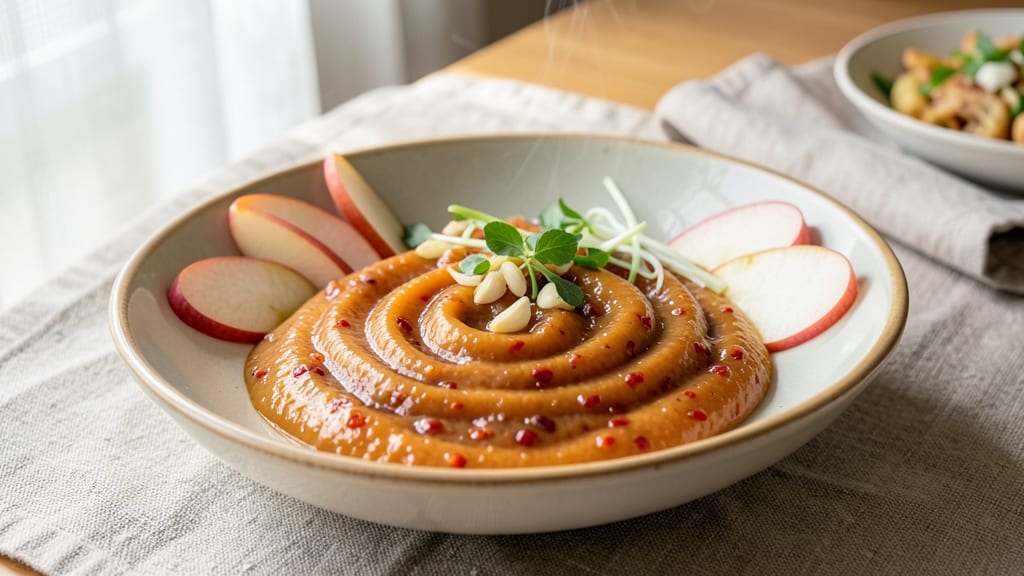
This apple kimchi sauce recipe transforms simple stir-fries into flavor-packed masterpieces with its perfect sweet-spicy balance. The fermentation process develops deep umami and tangy notes that cut through rich dishes, while apple adds natural sweetness that brightens every bite.
What makes this sauce special is how it elevates ordinary ingredients—think crispy tofu, grilled meats, or roasted vegetables—into restaurant-quality meals.
The beauty of this sauce lies in its versatility. Use it as a dipping sauce for spring rolls, a marinade for chicken or pork, or a glaze for roasted vegetables.
The fermentation process (if you choose to ferment) deepens the flavor profile over time, but even the quick version delivers bold, complex taste. With just a few simple ingredients—kimchi, apple, vinegar, and a touch of sweetener—you create a sauce that's impossible to resist.
What you'll end up with is a glossy, aromatic sauce that's tangy, slightly sweet, and packed with fermented depth. The texture is smooth yet clings beautifully to food, making every bite more flavorful.
This sauce keeps well in the refrigerator for up to two weeks, so you can make a big batch and enjoy it throughout the week.
Whether you're serving it over rice, drizzling it on noodles, or using it as a marinade, this apple kimchi sauce is a game-changer for any meal. Let's get started on creating this flavorful addition to your cooking repertoire.
Ingredients for apple kimchi sauce
Simple ingredients for a sauce that transforms ordinary meals into flavor bombs.
| Ingredient | Amount | Notes |
|---|---|---|
| Kimchi 🥬 | 1 ½ cups | Unpasteurized for best flavor |
| Honey 🍯 | ¼ cup | Or maple syrup for vegan option |
| Rice Vinegar 💧 | ¼ cup | White or seasoned variety |
| Apple Cider Vinegar 🍎 | 2 tbsp | For extra tanginess |
| Soy Sauce 🍜 | 2 tbsp | Light or dark preferred |
| Garlic Cloves 🧄 | 3 cloves | Minced for smooth texture |
| Fresh Ginger 🌿 | 1 tbsp | Grated, for zesty kick |
| Green Onion 🧅 | 2 whole | Sliced, for freshness |
| Sesame Oil 🫒 | 1 tbsp | Toasted for nutty aroma |
| Gochujang 🌶️ | 1 tbsp | Korean chili paste optional |
The kimchi is the heart of this sauce—look for unpasteurized at Korean markets or the international aisle for that authentic funk. Honey is key for balancing the heat; if you prefer vegan, maple syrup works perfectly. Rice vinegar adds brightness, but apple cider vinegar gives it extra depth. For garlic and ginger, fresh is non-negotiable—dried won't cut it here. I always grab a small bag of Korean gochujang at Trader Joe's if I'm making a big batch, but regular chili paste works too.
No kimchi? Substitute 1 cup sauerkraut plus 1 tsp red pepper flakes for tang and heat. Running low on honey? Brown sugar dissolved in water works in a pinch. Sesame oil can be swapped for toasted peanut oil if you're allergic. The green onion is optional but adds freshness—skip it if you're serving this over something already packed with herbs. For extra umami, add 1 tbsp fish sauce (vegan? Use soy sauce instead).
This sauce gets better with time—ferment it 3-5 days in the fridge for deeper flavor. Keeps for 2 weeks refrigerated, or 3 months frozen in ice cube trays. Thin with water if it gets too thick. I always double the batch—one for stir-fries, one for marinades. The gochujang keeps for 6 months unopened, so buy extra if you love it.
Why You'll Love This Recipe
- Five-Ingredient Magic: I swear, this sauce comes together with what’s already in my fridge. No fancy prep—just chop kimchi (if it’s not pre-chopped), toss in honey and vinegars, and let the flavors meld. That’s it. The soy sauce ties it all together without overpowering, and honestly? It’s the kind of thing I make when I’m too tired to think.
- Sweet-Savory Wake-Up: The apple cider vinegar cuts through the kimchi’s heat while the honey rounds it out—like a hug for your taste buds. It’s bright, tangy, and just a little funky, but in the best way. I drizzle it over grilled chicken or toss it with noodles, and suddenly everything tastes like a food truck special.
- Meal Prep MVP: This sauce keeps for weeks in the fridge, and it’s my go-to for lazy nights. Slather it on sandwiches, mix it into fried rice, or use it as a marinade—it’s that versatile. Between us, I’ve even used it to glaze roasted carrots when I was out of maple syrup. (Don’t judge.)
- Budget Brightener: Kimchi’s already affordable, and the rest of the ingredients? Pantry staples. A little goes a long way, so I stretch it across multiple meals without breaking the bank. Plus, the honey and vinegars are cheap enough that I don’t stress if I overdo it. It’s my secret for making simple meals feel fancy without the price tag.
Step-by-step instructions for apple kimchi sauce
This sweet-spicy glaze comes together in minutes with bold flavors that elevate any dish.
Sauté Aromatics Until Fragrant
Heat a small saucepan over medium heat and add the 1 tablespoon sesame oil. Once shimmering, add the 3 minced garlic cloves and 1 tablespoon grated fresh ginger. Cook for 1-2 minutes until the garlic turns golden and the ginger becomes aromatic—you'll notice the kitchen smells wonderfully zesty.
Here's the thing—don't walk away. Garlic burns faster than you think, and you want that nutty aroma without bitterness. If it starts to darken too quickly, reduce heat to low immediately. Remove the pan from heat once the aromatics are fragrant but not browned.
Simmer Kimchi and Vinegars
Return the saucepan to medium heat and add the 1.5 cups kimchi, breaking it up with a wooden spoon. Stir in the 0.25 cup rice vinegar and 2 tablespoons apple cider vinegar, then bring to a gentle simmer. Let it cook uncovered for 5-7 minutes, stirring occasionally, until the kimchi softens and releases its tangy juices.
You'll see the mixture reduce slightly and develop a glossy sheen—that's when you know the acidity is mellowing out. The sauce should smell complex, with bright kimchi notes mingling with vinegar sharpness. If it looks too thick, add 1-2 tablespoons water to help it blend smoothly later.
Sweeten and Season
Reduce heat to low and stir in the 0.25 cup honey, 2 tablespoons soy sauce, and 1 tablespoon gochujang. Let the sauce simmer gently for 3-4 minutes, stirring constantly, until the honey dissolves completely and the sauce thickens slightly. The color will deepen to a rich amber with red highlights from the gochujang.
Taste and adjust seasoning—you might want to add a pinch more soy sauce for saltiness or a drizzle of honey if it needs more sweetness. The sauce should balance sweet, spicy, salty, and tangy flavors. Remove from heat once it reaches your preferred consistency, which should coat the back of a spoon.
Finish and Rest
Add the 2 sliced green onions to the sauce and stir gently to incorporate. Let the sauce sit off heat for 5 minutes to allow all the flavors to meld together. This resting period is crucial—it lets the heat from cooking dissipate slightly and the sauce develop its full complexity.
For best results, use the sauce immediately over stir-fries, grilled meats, or noodles. If storing, transfer to an airtight container and refrigerate for up to 5 days. The flavors actually improve overnight as the ingredients continue to marry. When ready to use, gently reheat over low heat and adjust consistency with a splash of water if needed.
Pro Tips For Making Apple Kimchi Sauce
- STRAIN THE KIMCHU FIRST: Drain your kimchi thoroughly—don’t just skim off the liquid. The leftover brine muddies the sauce with bitterness, and you’ll end up with a gloppy mess instead of a glossy, balanced glaze. I learned this after making a batch that tasted like kimchi soup by accident.
- COMBINE VINEGARS LAST: Add rice and apple cider vinegars together after heating the honey and soy sauce. If you mix them in too early, the acidity will make the honey crystallize or turn cloudy—ruining the smooth, golden finish. Stir them in when the sauce is just off the heat.
- SIMMER LOW AND SLOW: Keep the heat at a gentle simmer (not a boil) to avoid burning the honey. I used to rush this, and the sauce would taste bitter. Five minutes of steady, low heat is enough—just long enough for the flavors to meld without turning acrid.
- USE GRANULATED HONEY: Skip the thick, comb honey if you’re in a hurry—it takes forever to dissolve. Granulated honey blends into the sauce smoothly and cuts through the kimchi’s funk without clumping. (Yes, even if you’re impatient like me.)
Make-ahead tips for this dish
Batch Prep Strategy
Make a double batch—this sauce is too good to waste! Store one portion in a glass airtight container in the fridge for 5 days, and freeze the other in ice cube trays for 3-month use.
The frozen cubes thaw perfectly in 10 minutes on the stovetop, ready to drizzle. 💫
Fermentation Boost
For deeper flavor, ferment the sauce for 3-5 days in the fridge before using. Transfer to a clean glass jar, seal tightly, and let the probiotics work their magic. This transforms it into a probiotic-rich condiment—great for gut health! Taste daily to monitor tanginess development. ⏳
Freezer-Friendly Tips
Portion into small glass jars (like 4-ounce mason jars) for easy grab-and-go use. Leave ½-inch headspace to prevent ice crystals from breaking the seal. Label with dates—3 months max for best quality. Thaw overnight in the fridge for gentle flavor integration. ❄️
Reheating Perfection
Always reheat gently over low heat—never microwave! Add 1 tablespoon water per ½ cup sauce to restore glossiness. Stir constantly to prevent scorching. If too thick after reheating, thin with rice vinegar (½ tsp at a time).
The sauce should coat the back of a spoon but remain pourable. 🔥
Marinade Hack
Use ½ cup sauce as a marinade for chicken, pork, or tofu—let it work for 1-2 hours (no longer) to tenderize without overpowering. Store leftover marinade in a sealed container for 3 days in the fridge. Discard after marinating meat to avoid cross-contamination. 🍗
Long-Term Storage
For beyond 3 months, transfer to a vacuum-sealed bag and freeze. This preserves texture and prevents freezer burn. When ready to use, transfer directly to the fridge to thaw—no microwave needed.
The sauce keeps its vibrant color and bold flavors for up to 6 months this way. 📅
Nutrition facts
Frequently asked questions
Can I make this sauce without kimchi?
Yes! Substitute 1 cup sauerkraut plus 1 teaspoon red pepper flakes for the tang and heat. For extra depth, add 1 tablespoon fish sauce (or soy sauce for vegan). The apple and vinegars will still provide the sweet-tart balance, though the texture may be slightly thicker.
How spicy will this sauce be?
The heat level depends on your kimchi and gochujang choice. Store-bought kimchi varies from mild to fiery—check the label first. For control, reduce gochujang to ½ tablespoon or skip it entirely. If you love spice, add ½ teaspoon cayenne or extra kimchi (which is naturally spicy). Taste as you go!
Can I use this sauce as a marinade?
Use ½ cup sauce for 1 pound of protein (chicken, pork, or tofu). Marinate for 1-2 hours max—longer can make meat mushy. Store leftover marinade in a sealed container for 3 days in the fridge. Never reuse marinade that touched raw meat.
Why does my sauce look too thick?
This happens when the kimchi releases excess liquid during cooking. Thin with 1-2 tablespoons water or rice vinegar (½ teaspoon at a time). For a glossier finish, simmer uncovered for 2-3 extra minutes to reduce naturally. The ideal consistency coats the back of a spoon but remains pourable.
How long does it keep in the fridge?
This sauce stays fresh for 5 days refrigerated in an airtight container. For longer storage, freeze in ice cube trays (thaws in 10 minutes) or glass jars (up to 3 months). The flavors actually improve slightly after 24 hours of refrigeration as the ingredients meld. Always reheat gently over low heat before using.