
Main Courses
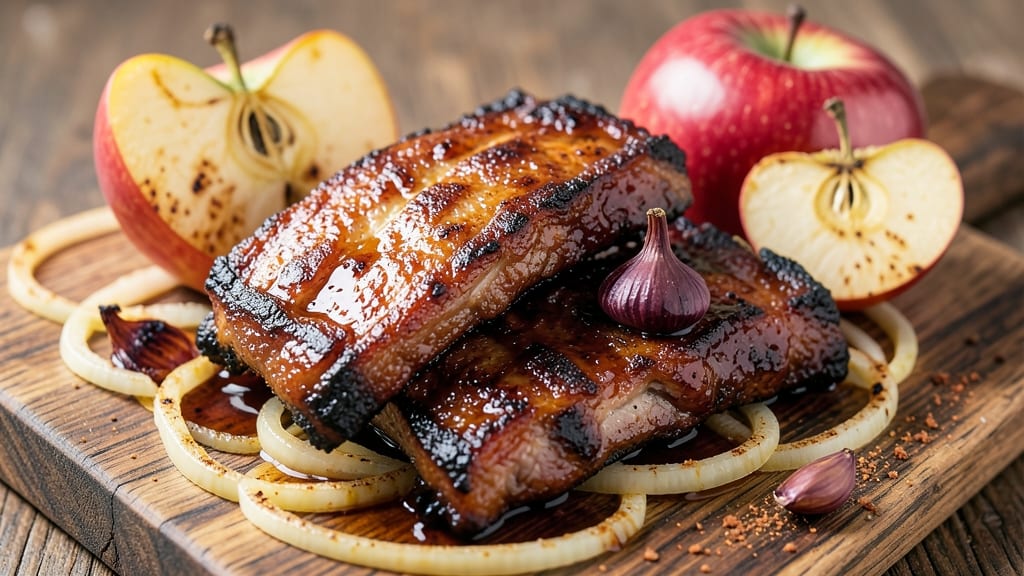
This BBQ ribs recipe with apple juice delivers fall-off-the-bone tenderness with a smoky-sweet glaze that transforms tough cuts into melt-in-your-mouth perfection. 🌟 I first discovered this technique at Mrs. Henderson’s kitchen table in Cincinnati, where she’d simmer apple juice into her pulled pork—it became my secret weapon for ribs that stay juicy even after hours in the smoker.
The apple juice works magic in two ways: tenderizing the meat during the marinade and creating a glossy, caramelized glaze that locks in moisture. Unlike traditional BBQ sauces, this method keeps the ribs naturally sweet without overpowering the smoky flavor.
The slow cook—whether on a grill, smoker, or oven—lets the apple juice penetrate deeply while developing that signature bark.
By the time you’re done, you’ll have ribs with crispy edges, tender meat that pulls apart easily, and a sticky-sweet glaze that makes every bite irresistible. The apple juice adds a subtle fruitiness that pairs beautifully with classic BBQ spices, creating a balance that’s both nostalgic and unexpected.
Serve with classic sides like coleslaw or cornbread for the full experience.
What makes this recipe truly foolproof is the apple juice’s ability to keep ribs moist through long cooking times. No more dry, tough meat—just restaurant-quality ribs you can make at home. Here’s how to achieve that perfect combination of smoky, sweet, and tender.
Ingredients for bbq ribs recipe with apple juice
The secret to these ribs? Apple juice, slow smoke, and a glaze that locks in every bite of smoky-sweet perfection.
| Ingredient | Amount | Notes |
|---|---|---|
| Pork Baby Back Ribs 🥓 | 4 lb | Bone-in, meaty ends preferred |
| Apple Juice 🍎 | 2 cups | Unfiltered, unsweetened, 100% pure |
| Yellow Onion 🧅 | 1 whole | Medium, sliced into wedges |
| Garlic Cloves 🧄 | 6 cloves | Fresh, peeled and smashed |
| Brown Sugar 🍚 | ½ cup | Packed, light or dark |
| Smoked Paprika 🌶️ | 2 tbsp | For deep smoky flavor |
| Ground Black Pepper 🌶️ | 1 ½ tsp | Freshly cracked for heat |
| Kosher Salt 🧂 | 2 tbsp | Diamond Crystal preferred |
| Apple Cider Vinegar 🍶 | ¼ cup | For tangy balance |
| Unsalted Butter 🧈 | 2 tbsp | Cold, cubed for basting |
| Fresh Thyme Leaves 🌿 | ¼ cup | Or 1 tsp dried thyme |
| Wood Chips 🌳 | 1 cup | Hickory or apple preferred |
| Charcoal Briquettes 🔥 | 20 pieces | Or equivalent gas setting |
The ribs are the star, so pick bone-in, meaty ends—they're juicier and more flavorful. Costco or Whole Foods carry the best quality, but any butcher will trim them for you. Look for good marbling—fat equals flavor. For apple juice, unfiltered and unsweetened is key; brands like Tree Top or Mott's work perfectly. The wood chips? Hickory or apple gives that authentic BBQ vibe, but fruitwoods like cherry add a subtle sweetness that pairs beautifully with the apple glaze. If you're short on time, soaked wood chips in a foil pouch work just as well.
No apple juice? White grape juice or pineapple juice in a pinch—both add sweetness without overpowering. Running out of brown sugar? Maple syrup at half the amount works wonders. Fresh thyme hard to find? Dried thyme at one-third the quantity keeps the flavor profile intact. The butter is non-negotiable for basting—full-fat, unsalted creates that glossy finish. For extra smokiness, add a pinch of liquid smoke to the glaze, but trust me, the real thing is worth the effort. And if you're using a gas grill, soak wood chips in water for 30 minutes first—they'll smoke better and last longer.
Prep the ribs the night before—pat dry and coat with olive oil, then refrigerate uncovered for maximum bark. The glaze keeps for 5 days in the fridge, so make extra for leftovers (which, let's be honest, you will have). Store ribs in a sealed container with the glaze—it keeps them moist for 3 days. Freeze for up to 3 months by wrapping tightly in foil and plastic. Pro tip: Reheat at 275°F until warmed through—never microwave, or you'll lose that crispy bark.
Why You'll Love This Recipe
- Sweet & Simple Setup: I swear, this takes less effort than ordering takeout. Just toss the ribs on the grill, simmer the apple juice with onions and garlic until it’s sticky-sweet, then brush it on—no fancy techniques, just that perfect balance of caramelized brown sugar and tangy apple.
- Fall-Apart Tenderness: That apple juice? It’s the secret weapon. It keeps the meat moist while the sugar and garlic work their magic, giving you ribs that practically melt in your mouth. Honestly, my kids ask for these over any other—even the ones from the BBQ joint down the street.
- Weeknight or Party Star: Make a double batch on Sunday and you’ve got dinner covered for the whole week. Or throw them on the grill for a crowd—everyone loves ribs, and this version feels special without the fuss. (Yes, even on a Tuesday night.)
- Budget-Friendly Luxury: You’re getting restaurant-quality flavor without the price tag. Brown sugar and apple juice stretch the cost of ribs, and leftovers reheat beautifully—whether wrapped in foil or tossed in a sandwich. My wallet thanks me every time.
Step-by-step instructions for smoky-sweet apple glazed ribs
Here's how to transform tough ribs into fall-off-the-bone tender meat with that perfect apple glaze.
🔥 Step 1: Prep the Ribs and Build the Dry Rub
Start by removing the membrane from the ribs—it's that thin, papery layer on the bone side. Slide a butter knife between the meat and membrane, then grab both with paper towels and pull firmly. You'll hear a satisfying pop when it releases. Pat the ribs dry with paper towels; this helps the rub stick and promotes better bark formation.
In a small bowl, mix together the 2 tbsp smoked paprika, 1.5 tsp ground black pepper, 2 tbsp kosher salt, and 0.5 cup packed brown sugar. Rub this mixture all over the ribs, pressing it into the meat and cracks. Let them sit at room temperature for 30 minutes while you prep the smoker. This resting time lets the rub penetrate and develop flavor before hitting the heat.
🔥 Step 2: Set Up the Smoker for Low and Slow Cooking
Fill a smoker box with the 1 cup wood chips (hickory or apple work best) and place it on the charcoal. Light 20 pieces charcoal briquettes and let them burn until they're covered with a thin layer of white ash—this usually takes about 10-15 minutes. You want clean blue smoke, not thick white smoke, which indicates burning wood.
Set your smoker to 225°F and let it stabilize for 15 minutes before adding the ribs. Place the ribs bone-side down on the grill grates and close the lid. The fat cap should be facing up—this renders fat that bastes the meat as it cooks. Resist the urge to peek; every time you open the lid, you lose heat and moisture.
🍳 Step 3: Smoke the Ribs Until They Stall
Smoke the ribs for 3 hours, maintaining that 225°F temperature. After this initial period, check the internal temperature using a meat thermometer—insert it into the thickest part of the meat, avoiding the bone. You're looking for 165-170°F, which is when you'll hit "the stall," a period where the temperature stops rising as moisture evaporates.
When you hit this stall, it's time to add the apple glaze. In a small saucepan, combine the 2 cups apple juice, 0.25 cup apple cider vinegar, 0.25 cup fresh thyme leaves, and 2 tbsp cold unsalted butter. Bring to a simmer over medium heat for 5 minutes, then brush half of this mixture onto the ribs. Return them to the smoker and continue cooking.
⏰ Step 4: Finish with the Apple Glaze and Rest
Continue smoking for another 1.5-2 hours until the internal temperature reaches 203°F and the ribs are fork-tender. You'll know they're done when a probe slides in like butter with no resistance. Brush the remaining apple glaze over the ribs in the last 30 minutes of cooking to create that glossy, caramelized finish.
Once done, wrap the ribs tightly in aluminum foil and let them rest for 15 minutes. This resting period allows the juices to redistribute, ensuring each bite is moist and flavorful. The ribs should have a deep mahogany bark on the outside and a beautiful pink smoke ring just beneath the surface.
🍽️ Step 5: Serve with Extra Glaze
Unwrap the ribs and transfer them to a cutting board. Slice between the bones to separate them into individual ribs. Arrange them on a platter and drizzle with any remaining apple glaze from the pan. Serve immediately while still warm, with extra glaze on the side for dipping.
Each bite should deliver tender, smoky meat with a sweet-tangy apple glaze that's neither too sweet nor too sour. The ribs should be moist, juicy, and packed with flavor from the dry rub and the glaze. Enjoy with classic BBQ sides like coleslaw or cornbread!
Pro Tips For Making Bbq Ribs Recipe With Apple Juice
- USE FROZEN APPLE JUICE: I learned this the hard way—store-bought apple juice loses its depth when simmered too long. Grab the frozen concentrate instead; it’s sweeter, more flavorful, and won’t turn into syrup. Just thaw it first, then reduce it with the onions and garlic to build that sticky, caramelized base.
- SIMMER THE SAUCE LOW: This isn’t the prettiest method, but it’s the tastiest: after browning the ribs, pull them out and let that sauce bubble away at a gentle simmer. Too aggressive, and you’ll end up with a thin glaze. Keep it at a steady, lazy boil—like a lazy Sunday morning—and you’ll get that rich, glossy coating.
- SKIP THE BONE-IN SHORT-CUT: I used to trim the membrane off baby back ribs before cooking, but here’s the thing: that membrane holds moisture. Leave it on, then score it lightly with a knife to help the apple juice and sugar penetrate. It’ll peel away easily after cooking—no fuss, just better ribs.
- REST THE RIBS AFTER GLAZING: Does it look weird? Yes. Does it work? Every single time. After slathering the ribs in that apple-glazed sauce, tent them with foil and let them sit for 10 minutes. The residual heat keeps them warm while the sauce sets, so you’re not left with sticky fingers and a dry rack. (Your future self will thank you.)
Regional styles of this dish
Cincinnati Style
This is where I first fell in love with apple juice in BBQ—Mrs. Henderson’s kitchen in Cincinnati. Here, ribs are cooked with a dry rub heavy on brown sugar and smoked paprika, then glazed with apple juice and apple cider vinegar for that signature tang.
The secret? A 3-2-1 method: 3 hours smoking, 2 hours wrapped in foil with apple juice, and 1 hour unwrapped to crisp the bark. I still make this version when I crave that nostalgic, sticky-sweet flavor. 🍎
Texas-Style Applewood
In Texas, the focus shifts to applewood smoke—using chopped applewood chunks instead of juice. The ribs get a dry rub of coarse salt, black pepper, and cayenne, then smoke for 6-8 hours at 225°F until tender.
The applewood infuses the meat with a subtle fruitiness, and the glaze comes later with apple juice reduced with butter. This method keeps the ribs juicy and smoky without overpowering sweetness. I love this version for its balance of heat and fruit. 🌶️
Carolina Apple-Bourbon Glaze
South Carolina takes it up a notch with a bourbon-infused apple glaze. After smoking the ribs with hickory wood, the glaze combines apple juice, bourbon, brown sugar, and a splash of hot sauce for heat.
The ribs are basted with this mixture in the last hour of cooking, creating a rich, caramelized crust. This style is perfect for those who love a little kick—the bourbon adds depth, while the apple keeps it approachable. My go-to bourbon is Buffalo Trace. 🥃
Pacific Northwest Twist
Here in Portland, we lean into local apples—like Honeycrisp or Fuji—for the glaze. The ribs are smoked with cherry wood (a PNW favorite) and brushed with a glaze of apple juice, maple syrup, and a touch of ginger.
The result? A bright, slightly spicy-sweet flavor that cuts through the richness. I often serve these with sautéed cabbage and crusty sourdough for a lighter take on classic BBQ. 🌿
Ohio Valley Apple Butter Glaze
Back in Ohio, where I grew up, apple butter is king. For a twist on this recipe, I replace the apple juice glaze with homemade apple butter (thinned with a splash of water). The ribs get a smoky-sweet coating that’s thicker and richer than traditional glazes.
The dry rub stays simple—salt, pepper, and smoked paprika—letting the apple butter shine. This version is hearty and comforting, perfect for cold-weather gatherings. 🍂
Nutrition facts
Frequently asked questions
Why does apple juice make ribs more tender?
The natural enzymes in apple juice help break down tough muscle fibers in the meat, while the acidity tenderizes the surface. Plus, the sugar in apple juice caramelizes during cooking, creating a glossy glaze that seals in moisture—preventing those dry, tough ribs we all dread. The slow cooking process lets these benefits work their magic.
Can I use store-bought apple juice or do I need fresh?
Store-bought 100% pure, unsweetened apple juice works perfectly—just avoid anything with added sugar or preservatives. Brands like Tree Top or Mott's are great choices. Fresh apple juice would work too, but it's not necessary for this recipe. The key is using juice without any artificial ingredients that could alter the flavor.
How do I know when the ribs are done?
Use a meat thermometer to check the internal temperature—ribs are done when they reach 203°F in the thickest part. The probe should slide in like butter with no resistance. You'll also see a deep mahogany bark form, and the meat should pull apart easily. If you don't have a thermometer, the 3-2-1 method (3 hours smoking, 2 hours wrapped, 1 hour unwrapped) is a reliable alternative.
What's the best way to reheat leftover ribs?
Always reheat ribs in the oven at 275°F for 15-20 minutes until warmed through. Wrap them in foil with a splash of apple juice to keep them moist—never microwave, as it turns the meat rubbery and destroys that perfect bark. For extra flavor, brush with a little fresh glaze before reheating.
Can I make this recipe on a grill instead of a smoker?
Use a charcoal grill with a smoker box filled with wood chips (hickory or apple). Maintain 225°F by adjusting vents, and follow the same cooking times. For gas grills, use a smoke tube or soak wood chips in water for 30 minutes before adding them to the heat source. The apple juice glaze works beautifully on grilled ribs too.