
Sauces & Condiments
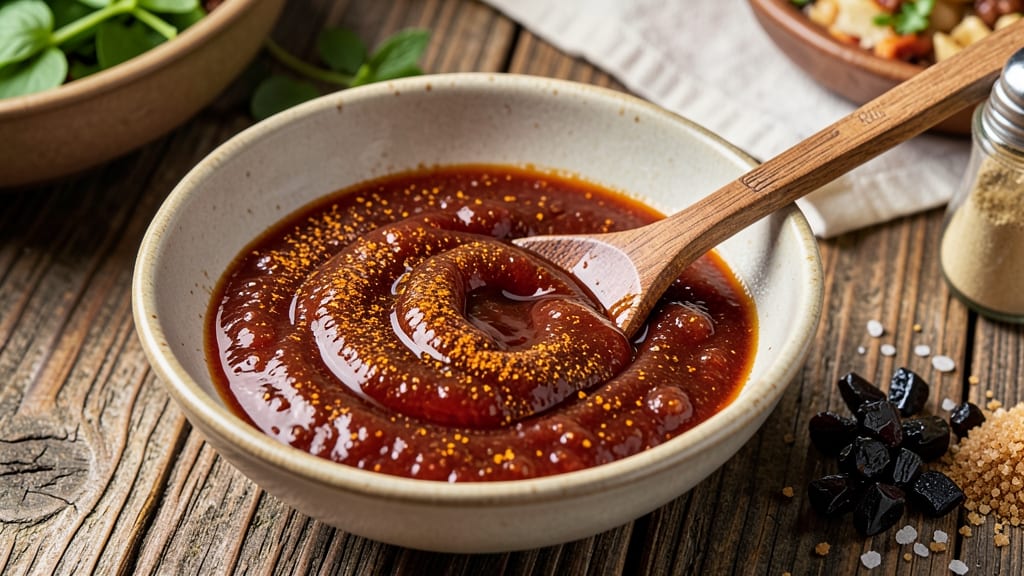
This bbq sauce recipe no apple cider vinegar replaces it with white vinegar for a bold, balanced flavor that delivers deep molasses richness and just the right tang. 🔥 The secret lies in slow simmering—reducing ketchup, vinegar, and spices until thick and glossy, with a touch of brown sugar to caramelize the edges for that signature smokiness.
I developed this after realizing apple cider wasn’t always available, and the results surprised even my most critical BBQ-loving friends. The beauty of this sauce is its versatility—whether you're slathering it on ribs, drizzling over pulled pork, or using it as a marinade, the flavors develop beautifully.
White vinegar provides the necessary acidity without overpowering the molasses and spices, while a pinch of smoked paprika adds that unmistakable BBQ aroma. The sauce thickens as it simmers, creating a glossy finish that clings perfectly to any protein.
What sets this apart is the balance: sweet from molasses and brown sugar, smoky from paprika, and a subtle heat from cayenne that builds gradually. The result is a sauce that’s rich enough for slow-cooked meats but still bright enough to cut through fatty cuts.
It stores well in the fridge for up to two weeks, so you’ll have extra for future grilling sessions. For customization, swap white vinegar for red wine vinegar for a deeper fruitiness or malt vinegar for a sharper tang.
Adjust the sweetness by adding more brown sugar if you prefer it richer, or reduce it slightly for a more traditional tang. This sauce is your ticket to restaurant-quality flavor without the fuss.
Ingredients for bbq sauce recipe no apple cider vinegar
Nine simple ingredients transform into smoky, sweet BBQ sauce without apple cider vinegar.
| Ingredient | Amount | Notes |
|---|---|---|
| Ketchup 🍅 | 1 ½ cups | High-quality, no sugar added preferred |
| White Vinegar 💧 | ½ cup | Distilled or white vinegar works best |
| Molasses 🍯 | ½ cup | Unsulphured for deeper flavor |
| Brown Sugar 🍚 | ½ cup | Light or dark, packed firmly |
| Smoked Paprika 🌶️ | 2 tbsp | For authentic BBQ smokiness |
| Garlic Powder 🧄 | 1 tbsp | Freshly ground preferred |
| Ground Black Pepper 🌶️ | ½ tsp | Freshly cracked for better flavor |
| Cayenne Pepper 🔥 | ½ tsp | Adjust for heat preference |
| Salt 🧂 | 1 ½ tsp | Diamond Crystal preferred |
| Water 💧 | ½ cup | For thinning if needed |
The ketchup is the base here, so Heinz or Hunt's are solid choices—they're consistent and widely available. For molasses, Gotham or Brer Rabbit brands give you that deep, rich flavor without the sulphur taste. Smoked paprika is non-negotiable for that authentic BBQ aroma—Penzeys or McCormick are great options. White vinegar might sound weird in BBQ sauce, but trust me, it delivers that perfect tang without overpowering the molasses. I usually grab the white vinegar from Trader Joe's—it's strong enough to cut through the sweetness beautifully.
No white vinegar? Red wine vinegar or malt vinegar work in a pinch, but adjust the amount—start with half and taste as you go. Want more depth? Add a splash of Worcestershire sauce (check for vegan if needed). The brown sugar can be swapped for maple syrup or honey if you prefer, but molasses gives that classic BBQ richness. If your sauce isn't thick enough after simmering, add water one tablespoon at a time—it's easier to fix than over-thinning. And if you're sensitive to heat, cut the cayenne in half or use red pepper flakes instead.
This sauce keeps for up to 2 weeks in the fridge, sealed tightly in a jar. For longer storage, freeze it in ice cube trays—perfect for future BBQ sessions. I always make a double batch because it disappears fast. The flavor actually improves after a few days as everything melds together. If it thickens too much, just add a splash of water when reheating. And if you're feeling fancy, add a dash of liquid smoke for extra smokiness—just don't overdo it.
Why You'll Love This Recipe
- Pantry Magic: I swear by this sauce because it uses what’s already in my cupboard—no last-minute store runs. The white vinegar cuts through the molasses sweetness while the smoked paprika adds that smoky punch without needing specialty jars.
- Deep Smoky Kick: That first taste? Rich, caramelized, and just a little tangy from the brown sugar and vinegar combo. It’s the kind of sauce that makes grilled chicken or baked beans taste like you spent hours over a smoker.
- Weeknight Workhorse: I keep a jar in the fridge for everything—slathered on burgers, drizzled over fries, or tossed with roasted veggies. Honestly, it’s the one sauce I never skip when I’m too tired to think.
- Stretches Every Dollar: A single batch lasts me weeks, and it’s cheaper than buying pre-made sauce. The molasses gives it that luxurious depth, but the ketchup keeps it approachable—no fancy ingredients, just pure flavor.
Step-by-step instructions for smoky BBQ sauce without apple cider vinegar
Here's how to blend bold flavors into a rich, balanced sauce that delivers authentic BBQ taste.
🍳 Step 1: Combine Wet Ingredients in a Saucepan
In a medium saucepan, pour in the 1.5 cups ketchup and let it warm over medium-low heat for 2-3 minutes. You'll see it start to bubble gently—this helps dissolve any sugar crystals and activates the flavors. Stir occasionally so it heats evenly.
Next, add the 0.5 cup molasses and 0.5 cup brown sugar while stirring constantly. The molasses will thicken the mixture slightly, giving that deep, caramelized BBQ character. Let this simmer for 3-4 minutes until the sugars dissolve completely and the mixture becomes smooth. Here's the thing—molasses can be thick, so don't rush this step or you'll end up with grainy sauce.
🥘 Step 2: Add Vinegar and Spices for Depth
Pour in the 0.5 cup white vinegar and immediately stir vigorously. You'll notice the sauce bubble up and sizzle slightly—this is normal and helps blend all the ingredients. The vinegar cuts through the sweetness and adds tangy brightness that balances the molasses.
Now add the 2 tbsp smoked paprika, 1 tbsp garlic powder, 0.5 tsp ground black pepper, 0.5 tsp cayenne pepper, and 1.5 tsp salt. Stir everything together and let the mixture simmer for 5-7 minutes on medium heat. You'll see the spices disperse and the sauce start to thicken slightly. I like to taste it at this point—it should be sweet, smoky, and slightly spicy, but still need some depth.
🔥 Step 3: Simmer and Thicken to Perfection
Reduce the heat to low and let the sauce simmer uncovered for 20-25 minutes. You're looking for the sauce to reduce by about ¼ of its original volume—this concentrates the flavors and gives it that perfect BBQ consistency. Stir occasionally to prevent sticking, and watch for the sauce to coat the back of a spoon.
If the sauce gets too thick before reaching the 20-minute mark, add the 0.5 cup water in 1-tablespoon increments until you reach your desired consistency. The sauce should be thick enough to coat the back of a spoon but still flow smoothly. This is where you'll notice the molasses working its magic—it adds that rich, almost buttery depth that sets this sauce apart from others.
⏰ Step 4: Cool and Adjust Seasoning
Remove the saucepan from heat and let the sauce cool for 10-15 minutes. This cooling period is crucial—it allows the flavors to meld together and gives you a chance to taste and adjust. I always let it cool slightly before tasting because hot sauce can be misleading about the final flavor.
Once cooled, give it a final taste and adjust the seasoning if needed. If it needs more heat, add a pinch more cayenne pepper. If it needs more depth, add a splash of white vinegar or a teaspoon more smoked paprika. The goal is a balance of sweet, smoky, and tangy flavors with just the right amount of heat. Once you're happy with the flavor, transfer the sauce to a clean jar and let it sit at room temperature for at least 1 hour before using—this lets all the flavors fully develop.
Pro Tips For Making Bbq Sauce Recipe No Apple Cider Vinegar
- Simmer Low and Slow: I used to rush this sauce, thinking high heat would cut the cooking time. Wrong. Simmer on medium-low for at least 20 minutes—it thickens properly and lets the smoked paprika’s flavor meld instead of burning. (Yes, even if you’re impatient like me.)
- Balance the Molasses: Molasses is where things go wrong fast. Start with 1/4 cup and taste as you go—too much makes it taste like syrup. If it’s still too sweet after simmering, add a splash of white vinegar (1 tsp at a time) to cut through it. Trust me, you’ll regret overdoing it.
- Skip the Pre-Mixed Ketchup: Store-bought ketchup is fine, but homemade or high-quality brands (like Heinz or Hunt’s) make a noticeable difference. If you’re in a pinch, thin a spoonful of tomato paste with a little water first—it’s richer and won’t water down the sauce.
- Strain the Paprika: Smoked paprika clumps like crazy, and those little gritty bits are the last thing you want on your ribs. After mixing it in, strain the sauce through a fine-mesh sieve before serving. It’s a 30-second step that keeps your sauce smooth every time. (Your guests will notice.)
Essential equipment for this recipe
Saucepan Essentials
Start with a medium-sized stainless steel saucepan—I use my All-Clad 3-quart because it distributes heat evenly and prevents scorching. Avoid nonstick pans for this recipe; they can't handle the prolonged simmering without releasing harmful fumes.
If you don't have stainless steel, a heavy-bottomed enamel pan works well too. The key is even heat distribution to prevent burning the molasses and sugar. 🔥
Heat Control Tools
A candy or deep-fry thermometer ($10-$15) is my secret weapon for perfect BBQ sauce. Insert it into the simmering sauce to monitor temperature—ideal range is 180-190°F for proper reduction. Without one, watch for gentle bubbling and frequent stirring.
For precise heat adjustment, I keep a silicon spatula nearby to scrape the sides and prevent sticking during the 20-25 minute simmer.
Mixing & Stirring Gear
Use a wooden spoon for stirring during the initial stages—it won't scratch your pan like metal utensils. Once the sauce thickens, switch to a heat-resistant silicone spatula for better scraping and smoother texture.
I also keep a fine-mesh strainer handy if you prefer ultra-smooth sauce (though I find the slight texture adds character). For tasting, a small silicone spatula works perfectly—it's easy to clean and won't contaminate your sauce.
Storage Containers
Transfer finished sauce to glass mason jars with airtight lids for fridge storage—Ball or Le Parfait brands are my go-to. For freezer storage, I use silicone ice cube trays (like OXO Good Grips) to portion single servings.
The glass preserves flavor better than plastic over time, and the silicone trays prevent freezer burn while making thawing easy. Label everything with dates—this sauce keeps for 2 weeks refrigerated or 3 months frozen.
Optional Pro Tools
For next-level results, consider an immersion blender ($20-$30) to achieve silky smoothness if you prefer ultra-fine texture. I also keep liquid smoke ($5) on hand for extra smokiness—just add ½ teaspoon during the final simmer.
A digital scale helps measure molasses and brown sugar precisely (they pack differently), though I often eyeball it when in a hurry. These tools aren't mandatory, but they elevate the sauce from good to restaurant-quality. 💡
Nutrition facts
Frequently asked questions
Can I substitute white vinegar with another type?
For a fruitier profile, use red wine vinegar (reduce by 10% since it's milder). Malt vinegar adds a sharper tang, perfect for bold flavors. Avoid balsamic—it's too sweet. Always taste as you go and adjust other spices to balance.
Why does my sauce get too thick too fast?
Molasses and brown sugar concentrate quickly during simmering. Add water or vinegar in 1-tablespoon increments while heating. For next time, reduce simmer time to 15 minutes and check consistency earlier. A splash of vinegar also thins while adding tang.
How can I make this sauce spicier?
Double the cayenne pepper to 1 teaspoon or add ½ teaspoon crushed red pepper flakes. For smoky heat, swap ½ teaspoon smoked paprika for chipotle powder. Always taste before adding—heat builds during cooling!
Can I use this sauce as a marinade?
Yes! Thin it with ¼ cup water or vinegar before marinating. The acidity helps tenderize meat, while molasses adds caramelized depth. Marinate for 2-4 hours (never overnight—vinegar can toughen proteins). Perfect for chicken or pork!
What if I don't have molasses?
Swap with maple syrup or honey (reduce other liquids by 2 tablespoons to maintain balance). For depth, add 1 teaspoon coffee granules (dissolved in the vinegar) to mimic molasses' complexity. The sauce will be slightly less rich but still flavorful.