
Main Courses
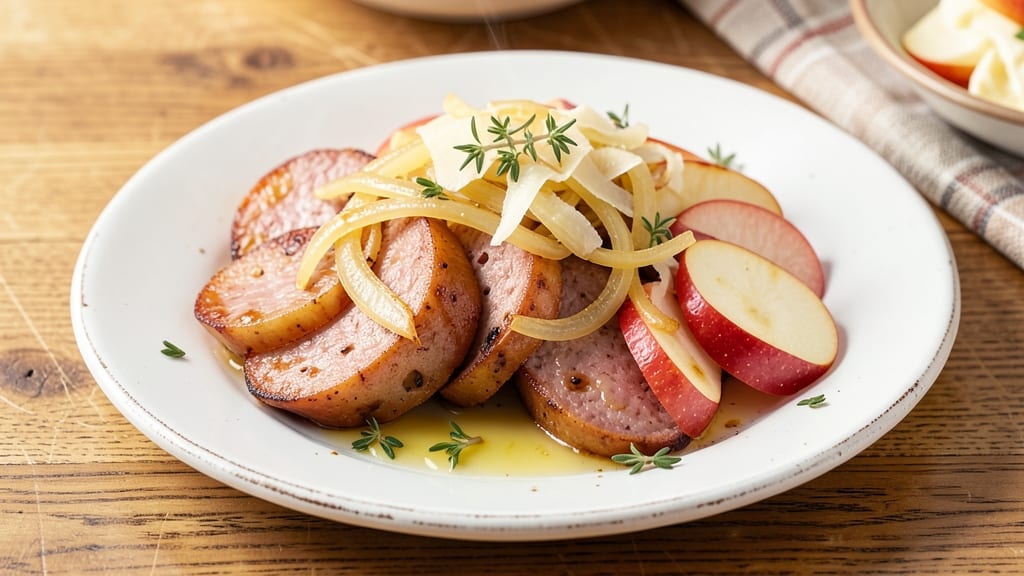
This ButcherBox apple gouda sausage recipe delivers restaurant-quality flavor in a single skillet, blending sweet, smoky, and savory notes into one unforgettable dish.
The secret lies in caramelizing apples and onions until they're tender and golden, then pairing them with smoky ButcherBox sausage and melty Gouda for a rich, balanced bite. I developed this recipe after realizing how much better homemade versions taste compared to takeout—no shortcuts, just deep, layered flavor.
The beauty of this dish is its versatility—it works as a hearty weeknight meal or an impressive dinner party centerpiece. The sausage provides protein and smoky depth, while the apples add natural sweetness that balances the Gouda's richness.
A touch of thyme and a splash of apple cider vinegar elevate the flavors without overpowering them, creating harmony in every bite. This recipe also highlights how simple ingredients can create something extraordinary when cooked with intention.
By the time you're done, you'll have a skillet filled with caramelized apples, crispy sausage, and melted Gouda that pulls into strings. The aroma alone will have everyone gathering around the table, and the first bite delivers that perfect balance of sweet, smoky, and cheesy.
This dish pairs beautifully with a crisp white wine or a cold beer, making it the ideal meal for any occasion.
Whether you're feeding a family or hosting guests, this recipe delivers foolproof results with minimal effort. The one-skillet method ensures easy cleanup, while the combination of flavors ensures maximum satisfaction. Let's get cooking—your taste buds will thank you.
Ingredients for butcherbox apple gouda sausage
Restaurant-quality flavor starts with these carefully selected ingredients blending sweet apples, smoky sausage, and rich Gouda.
| Ingredient | Amount | Notes |
|---|---|---|
| ButcherBox Smoked Sausage 🥓 | 1 lb | Pre-sliced or cut into half-moons |
| Honeycrisp Apples 🍎 | 4 medium | Peeled, sliced into 1/4-inch wedges |
| Yellow Onions 🧅 | 1 whole | Thinly sliced, about 2 cups |
| Applewood-Smoked Gouda Cheese 🧀 | 1 cup | Shredded, aged 18 months preferred |
| Unsalted Butter 🧈 | 3 tbsp | European-style preferred for flavor |
| Fresh Thyme Leaves 🌿 | ¼ cup | Chopped, stems removed |
| Apple Cider Vinegar 🍶 | 1 tbsp | Bragg preferred for authenticity |
| Granulated Sugar 🍚 | 1 tbsp | Light brown preferred for caramelization |
| Kosher Salt 🧂 | 1 ½ tsp | Diamond Crystal preferred |
| Freshly Ground Black Pepper 🌶️ | ½ tsp | Cracked peppercorns preferred |
| Extra-Virgin Olive Oil 🫒 | 1 tbsp | For skillet coating |
The ButcherBox sausage is the foundation—its smoky depth comes from real applewood smoke, not artificial seasoning. Honeycrisp apples caramelize best due to their crisp texture and mild sweetness; avoid Granny Smiths. For the Gouda, aged 18 months or longer delivers that perfect balance of nutty and sweet notes. Whole Foods or specialty cheese shops carry the best smoked varieties. Fresh thyme is non-negotiable here—dried lacks the bright aroma that carries through the dish. If using pre-sliced sausage, pat it dry before cooking to ensure crisp edges.
No ButcherBox sausage? Smoked kielbasa or high-quality pork sausage works, but increase cooking time by 3-4 minutes. Substituting apples? Bosc or Fuji hold up well to caramelization, but Honeycrisp remains ideal. Running low on Gouda? Smoked cheddar provides a similar depth, though less sweetness. The apple cider vinegar can be swapped for white wine vinegar in a pinch, though Bragg adds subtle complexity. For sugar, maple syrup works at a 1:1 ratio, but it may darken the apples faster. Always use European-style butter—its higher fat content prevents burning during caramelization.
Prep the apples and onions first—they'll release moisture that needs time to evaporate. Store shredded Gouda in an airtight container with a slice of apple to prevent drying; lasts 2 weeks in the fridge. Fresh thyme keeps for 5-7 days wrapped in damp paper towels. The cooked sausage and apple mixture reheats beautifully—simply add a splash of water or broth to prevent drying. For make-ahead convenience, freeze portions in single-serving containers for up to 3 months; thaw overnight in the fridge before reheating.
Why You'll Love This Recipe
- One-Pan Magic: I swear by this recipe when I’m too tired to wash extra dishes. Slice the sausage, dice the onions and apples, toss everything on a sheet pan with butter and cheese—then let the oven do the work while I pour myself a glass of wine.
- Sweet-Savory Balance: That first bite of caramelized Honeycrisp with smoky sausage and melty Gouda? It’s the kind of harmony that makes you pause mid-bite. The apples add just enough sweetness to cut through the richness—no sugar needed.
- Game for Any Gathering: Bring this to a potluck and watch it disappear. It’s hearty enough for a weeknight dinner but fancy enough for company, and the leftovers reheat like a dream. Honestly, I’ve served it cold in sandwiches and no one complained.
- Budget-Friendly Luxury: You’re using simple ingredients, but the smoked Gouda and ButcherBox sausage make it feel special. A single sheet pan, minimal prep, and no fancy tools—just pure, satisfying comfort food that won’t break the bank.
Step-by-step instructions for caramelized apple Gouda sausage
Here's how to create a perfectly balanced dish where smoky sausage meets sweet caramelized apples and nutty cheese.
Prep Ingredients for Even Cooking
Start by cutting the 1 lb ButcherBox Smoked Sausage into half-moon slices about ¼-inch thick. This ensures even cooking and maximum surface area for flavor absorption. While you work, peel and slice the 4 medium Honeycrisp Apples into ¼-inch wedges—thin slices caramelize faster without turning to mush.
Thinly slice the 1 whole Yellow Onions into half-moons, about ⅛-inch thick. The goal is to create uniform pieces that cook at the same rate. Chop the 0.25 cup Fresh Thyme Leaves finely—this releases more aromatic oils during cooking. Keep all prepped ingredients separate until ready to use; this prevents premature browning or sogginess.
Build Flavor Layers in the Skillet
Heat a large skillet over medium heat and add the 1 tbsp Extra-Virgin Olive Oil. Once shimmering, add the sliced sausage and cook for 4-5 minutes until lightly browned on both sides. Remove the sausage and set aside on a plate, leaving the rendered fat in the pan.
In the same skillet, add 2 tbsp Unsalted Butter and let it melt completely. Add the sliced onions and cook for 5 minutes until softened. Stir in the 1 tbsp Granulated Sugar and 1 tbsp Apple Cider Vinegar, then cook for another 2 minutes until the mixture begins to bubble. This creates a sweet-tangy base that will caramelize beautifully with the apples.
Caramelize Apples to Perfect Tenderness
Add the sliced apples to the skillet and cook for 8-10 minutes over medium heat, stirring occasionally. You want them to soften slightly but still retain their shape—tender-crisp is ideal. The sugar and vinegar mixture will create a glossy, caramelized coating. If the apples aren't releasing their juices after 8 minutes, increase heat slightly to medium-high for an additional 2 minutes.
Here's the thing—don't rush this step. The apples should be soft enough to pierce easily with a fork but still hold their structure. Overcooking turns them mushy, which ruins the texture contrast with the sausage and cheese. Taste a piece—it should be sweet with a hint of tartness from the vinegar.
Combine and Finish with Cheese
Return the sausage to the skillet and stir to combine with the apples and onions. Sprinkle with 1.5 tsp Kosher Salt and 0.5 tsp Freshly Ground Black Pepper, then add the remaining 1 tbsp Unsalted Butter. Cook for another 3-4 minutes until everything is heated through and the butter has melted into a glossy sauce.
Reduce heat to low and stir in the 1 cup Applewood-Smoked Gouda Cheese and 0.25 cup Fresh Thyme Leaves. Let it melt completely, stirring constantly for 1-2 minutes until the cheese forms a creamy, velvety coating over the entire mixture. The thyme should be evenly distributed—this adds an earthy depth that complements the smokiness of the sausage and sweetness of the apples.
Serve Immediately for Maximum Flavor
Transfer the dish to serving plates and let it rest for 2-3 minutes—this allows the cheese to set slightly and the flavors to meld. The dish should have a beautiful contrast of colors: deep brown sausage, golden caramelized apples, and creamy gouda throughout. Taste and adjust seasoning if needed, though the cheese and vinegar should already be well-balanced.
Serve warm with crusty bread or over polenta to soak up the rich, smoky apple sauce. The combination of sweet, savory, and smoky flavors makes this dish incredibly versatile—equally at home as a weeknight dinner or a special weekend meal. The key to success is patience during the caramelization; don't skip that step, no matter how tempting it is to speed things up.
Pro Tips For Making Butcherbox Apple Gouda Sausage
- Slice Sausage Thin: The ButcherBox smoked sausage is already flavorful, but thin slices (¼-inch thick) cook faster and crisp better—no one wants rubbery sausage. Use a sharp knife and cut against the grain if it’s fibrous.
- Core Apples First: Honeycrisp apples stay crisp when cooked if you remove the core before slicing—it’s messy, but it prevents soggy centers. A melon baller works great for even chunks, and skip the peel if you’re in a hurry.
- Don’t Rush the Gouda: Grate the applewood-smoked Gouda yourself (pre-shredded sticks together) and toss it in last minute—just before serving. The heat melts it too fast, and you’ll end up with a gloppy mess instead of a gooey blanket.
- Sear Onions Low: Yellow onions caramelize best at 300°F, not high heat—after 10 minutes, they’ll turn golden without burning. Add a splash of water if they stick; it’s not a failure, just a flavor boost.
Essential equipment for this dish
Skillet Essentials
Start with a 12-inch cast-iron skillet—it retains heat beautifully and creates that perfect caramelized crust. I recommend a Lodge Pre-Seasoned Cast Iron Skillet for its even heating and natural non-stick properties after proper seasoning.
If you don’t have cast iron, a stainless steel skillet with a glass lid works too, though you may need to adjust heat slightly. Avoid non-stick coatings—they can’t handle the high heat needed for proper caramelization. 🔥
Heat Control Tools
A thermometer is non-negotiable for this recipe. I use a Thermoworks Thermapen ONE to monitor skillet temperature—aim for medium heat (325-350°F) when cooking onions and apples. For stovetop control, a silicon spatula (like OXO Good Grips) helps scrape the bottom without scratching your pan.
A small offset spatula is perfect for flipping sausage slices evenly.
Cheese Handling
Shred your Applewood-Smoked Gouda fresh using a microplane or box grater—pre-shredded cheese contains anti-caking agents that prevent proper melting. Store extra cheese in an airtight container with a slice of apple to maintain moisture.
For serving, I love using ceramic ramekins to hold melted cheese on the side, letting guests customize their plates.
Prep Stations
Set up a cutting board station with a sharp chef’s knife (I use Wüsthof) and a mandoline for even apple slices. A small mixing bowl keeps thyme leaves separate until ready to add.
For cleanup, keep a paper towel roll and dish soap (like Dawn Pro) nearby—the skillet will be sticky after cheese melting, but cast iron handles it like a champ.
Serving Accessories
Serve with crusty sourdough bread or creamy polenta to soak up the sauce. I like wooden serving boards for rustic presentation, or white porcelain plates to highlight the dish’s vibrant colors.
For drinks, pair with a chilled glass of Riesling or a local craft beer—both complement the smoky-sweet flavors perfectly. 🍷
Nutrition facts
Frequently asked questions
Can I substitute regular Gouda for the smoked variety?
You can, but the flavor will be less complex. Smoked Gouda adds that essential smoky depth that pairs perfectly with the sausage and apples. For a similar effect, try adding ½ teaspoon of smoked paprika to regular Gouda while shredding. If you're using a mild Gouda, increase the thyme slightly (¼ cup + 1 teaspoon) to enhance the earthy notes.
How do I prevent the apples from turning mushy?
Keep them tender-crisp by cooking them over medium heat (not high) and stirring occasionally. The sugar and vinegar mixture helps create a caramelized crust that locks in moisture. If they start releasing too much liquid after 8 minutes, increase heat slightly to medium-high for 1-2 minutes to evaporate excess juices. Always test with a fork—it should pierce easily but not feel soft.
What's the best way to reheat leftovers?
Reheat in the same skillet over low heat with 1 tablespoon of water or apple cider to prevent drying. Cover with a lid for 3-4 minutes until warmed through. For microwave reheating, cover with a damp paper towel and heat in 30-second bursts until hot. The cheese may separate slightly—just stir vigorously to restore creaminess. Leftovers keep well for 3 days in the fridge.
Can I make this dish ahead of time?
Assemble everything except the cheese and thyme, then refrigerate for up to 24 hours. When ready to serve, simply reheat in the skillet over medium-low heat with 1 tablespoon of butter until warmed through (5-7 minutes). Add the cheese and thyme at the end to melt fresh. For freezing, assemble completely (including cheese), let cool, then freeze in single-serving portions for up to 3 months. Thaw overnight in the fridge.
What's the secret to getting crispy sausage edges?
Pat the sausage slices very dry with paper towels before cooking—this removes moisture that prevents browning. Use a 12-inch cast-iron skillet and heat it until just smoking hot before adding the sausage. Cook undisturbed for 3-4 minutes per side to develop a deep crust. The rendered fat in the pan also helps create crisp edges—don't remove it!