
Sauces & Condiments
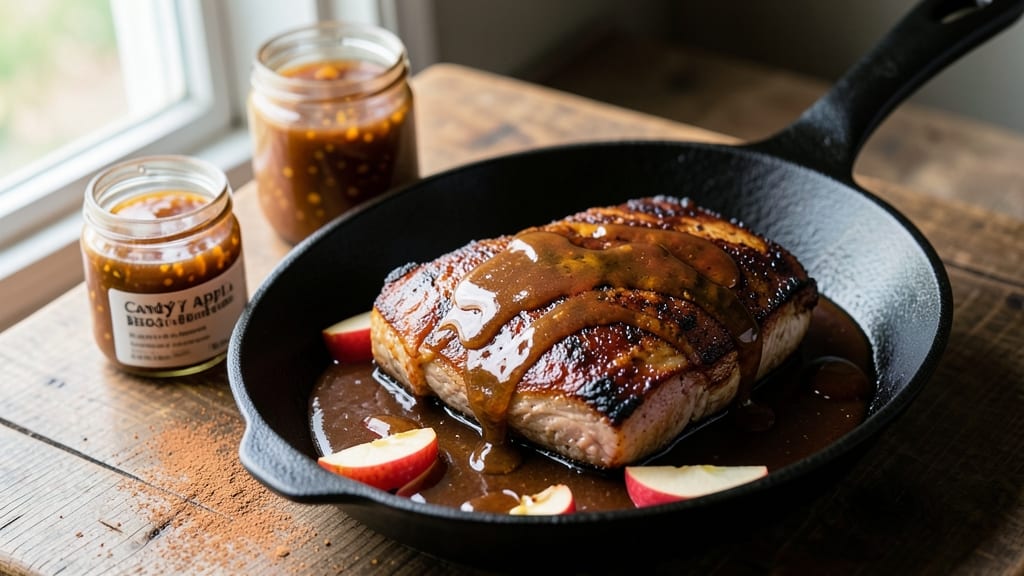
This candy apple BBQ sauce recipe transforms your grill into a fall festival with its signature sweet-tart balance—think crisp apple cider, warm molasses, and a hint of cinnamon that lingers like autumn in a bottle. 🍎✨ The secret lies in simmering the sauce until it thickens just enough to cling to ribs, wings, or even baked potatoes without overwhelming their natural flavors.
I developed this during a coastal ride when I craved that nostalgic candy apple taste but wanted something sophisticated enough for a smoker.
The magic happens in the blend of apple cider vinegar and molasses, which creates depth while keeping the sauce bright and tangy. A touch of cinnamon and cloves nods to classic candy apple seasoning, but the real star is the slow reduction that concentrates flavors into a glossy, sticky glaze.
This isn't your average sweet sauce—it's complex, with a molasses richness that balances the apple's crisp acidity.
What you'll end up with is a versatile sauce that works on everything from smoky brisket to crispy wings, delivering that candy apple nostalgia with professional precision. The sauce thickens beautifully when reduced, creating a glossy finish that caramelizes slightly on hot meat.
Store it in the fridge for up to two weeks or freeze for longer shelf life—perfect for when cravings strike.
Use it as a glaze for grilled meats, a dip for fries, or even a drizzle over apple desserts. The balance of sweet and tart makes it addictive, and the molasses depth ensures it stands up to bold flavors.
Here's how to make it—simple ingredients, but the technique makes all the difference.
Ingredients for candy apple bbq sauce
Nine simple ingredients transform into a sauce that tastes like autumn in every bite.
| Ingredient | Amount | Notes |
|---|---|---|
| Apple Cider 🍎 | 1 cup | Unfiltered for best flavor |
| Molasses 🍯 | ½ cup | Dark molasses preferred |
| Apple Cider Vinegar 🍏 | ½ cup | Raw, unfiltered preferred |
| Brown Sugar 🍚 | ½ cup | Light or dark works |
| Tomato Paste 🍅 | 2 tbsp | Squeeze tube or can |
| Ground Cinnamon 🌿 | 1 tsp | Freshly ground preferred |
| Ground Cloves 🌶️ | ½ tsp | Lightly toasted for warmth |
| Black Pepper 🌶️ | ½ tsp | Freshly cracked preferred |
| Salt 🧂 | 1 tsp | Kosher or sea salt |
| Water 💧 | ½ cup | For thinning if needed |
The apple cider and molasses are the heart of this sauce. Local orchard cider adds depth, but any quality brand works—just avoid anything overly sweet or diluted. Trader Joe's or Whole Foods carry excellent molasses options, but the regular grocery store stuff is fine if it's dark and thick. The tomato paste? Squeeze tubes are perfect for this recipe—no waste, and they last for months. I always grab the San Marzano if I'm using canned, but honestly, any good-quality paste will do. The spices? Penzeys or bulk bins at natural food stores have the freshest, but the regular grocery store stuff works too if it's not ancient.
No apple cider vinegar? White vinegar or balsamic in a pinch, but it won't taste exactly the same. Short on molasses? Maple syrup at half the amount adds sweetness, but you'll lose that deep, caramel-like richness. The brown sugar can be swapped for coconut sugar if you're watching your refined sugar intake. Want more heat? Add a dash of cayenne. This sauce is forgiving—if you mess up the ratios, just taste as you go and adjust. The key is simmering it down until it's thick and glossy, so don't rush that part.
This sauce keeps beautifully. Store it in a sealed jar in the fridge for up to 2 weeks, or freeze for 6 months. I like to make a big batch and portion it into small jars—perfect for quick glaze sessions. It thickens as it cools, so if it seems too stiff, just add a splash of water and reheat. The flavors actually get better the next day as everything melds together. Use it on ribs, wings, or even drizzle it over apple desserts for that nostalgic candy apple taste.
Why You'll Love This Recipe
- Pantry-Friendly Magic: I swear by this sauce because it uses stuff I already have—no special trips to the store. Molasses and apple cider vinegar alone give it that deep, tangy-sweet backbone, so I’m never stuck with a half-empty syrup bottle or a sad jar of paste gathering dust.
- Sweet-Tart Balance: The brown sugar caramelizes just enough to coat your ribs or chicken, while the apple cider keeps it bright—not cloying, not heavy. Honestly, it’s the kind of sauce that makes you lick the pan when you think no one’s watching.
- Tailgate or Tuesday: Slather it on pulled pork for a crowd or drizzle it over grilled chicken for a lazy night in. My college-aged son even slaps it on fries when he forgets to buy ketchup. (Yes, even on a Tuesday night.)
- Make-Ahead Money-Saver: A big batch costs pennies and lasts weeks—freeze half for next month’s BBQ. I’ll be real: that molasses stretch goes a long way, and the vinegar keeps it from spoiling fast. My wallet and future self thank me.
Step-by-step instructions for candy apple BBQ sauce
This sweet-tart glaze comes together in one pot with bold apple flavors and warm spices.
🍳 Step 1: Combine Wet Ingredients in a Saucepan
In a medium saucepan, combine the 1 cup apple cider, 0.5 cup molasses, and 0.5 cup apple cider vinegar over medium heat. Stir gently to mix, then add the 0.5 cup brown sugar and 2 tbsp tomato paste, stirring until the sugar dissolves completely. You'll notice the mixture starts bubbling almost immediately—the molasses and vinegar create a thick, syrupy base.
Let this simmer for 5-7 minutes until the mixture reduces slightly and becomes slightly thicker. You're looking for a consistency that coats the back of a spoon but isn't yet glaze-like. This reduction step develops the sauce's depth of flavor, so don't rush it. If you see the mixture getting too thick too quickly, you can add 1-2 tablespoons of water later to adjust the consistency.
🔥 Step 2: Add Spices and Simmer Until Thickened
Once the wet ingredients are simmering gently, reduce the heat to low-medium and stir in the 1 tsp ground cinnamon, 0.5 tsp ground cloves, 0.5 tsp black pepper, and 1 tsp salt. Let the sauce bubble gently for 10-12 minutes, stirring occasionally to prevent sticking. The spices will infuse the sauce with warm, aromatic notes that complement the apple flavors perfectly.
Here's where you'll notice the sauce transforming. Initially, it'll look like a thin syrup, but as it simmers, it'll gradually thicken into a glossy, glaze-like consistency. You're aiming for a sauce that coats the back of a spoon smoothly but isn't so thick it becomes paste-like. If it's getting too thick before it's fully flavored, add the remaining 0.5 cup water in small increments to reach your desired consistency.
⏰ Step 3: Adjust Consistency and Test the Flavor
After simmering for 10-12 minutes, taste the sauce and adjust the seasoning if needed. You might want to add a pinch more salt or a sprinkle of cinnamon to enhance the flavors. If the sauce is still too thin, return it to heat and simmer uncovered for another 2-3 minutes to reduce further. For a glossier finish, you can add 1 teaspoon of apple cider vinegar at the end to brighten the flavors.
The sauce should have a perfect balance of sweet and tart, with warm spice notes in the background. It should coat your finger with a glossy sheen and have a syrupy but spreadable consistency. If you're using this sauce for glazing meats, it should be thick enough to cling to the surface without dripping excessively. For a smoother texture, strain the sauce through a fine-mesh sieve to remove any lumps from the tomato paste.
🍎 Step 4: Cool and Store for Best Results
Once the sauce reaches your desired consistency and flavor, remove it from heat and let it cool for 10 minutes. As the sauce cools, it will thicken slightly, so don't be alarmed if it looks thicker than expected. Transfer it to a clean jar or airtight container and let it cool completely before sealing. This cooling period allows the flavors to meld together and ensures the sauce has the perfect texture when you're ready to use it.
Store the sauce in the refrigerator for up to 2 weeks or in the freezer for up to 6 months. When you're ready to use it, give it a quick stir to re-emulsify any separated ingredients. This sauce is incredibly versatile—use it as a glaze for grilled chicken, pork, or even as a dipping sauce for fries or pretzels. The warm spices and sweet-tart balance make it a crowd-pleaser for any occasion.
Pro Tips For Making Candy Apple Bbq Sauce
- Simmer Slow and Steady: This sauce isn’t a race—bring it to a gentle boil first, then drop to a low simmer. I learned this the hard way after scorching the tomato paste into bitter sludge. Keep it at a barely bubbling pace for at least 20 minutes, stirring occasionally. The molasses and vinegar will mellow out, and the apple cider won’t evaporate into thin air.
- Strain Out the Grit: Tomato paste is the backbone, but store-bought brands often hide tiny specks of fiber. After simmering, press the sauce through a fine-mesh strainer or even cheesecloth for a silky finish. I skip this sometimes, and the texture suffers—especially if you’re glazing ribs or dipping fries.
- Balance the Sweet Before Tasting: Add the brown sugar last, then taste as you go. The molasses and apple cider vinegar are already packed with depth, and sugar can overpower if you dump it all in upfront. Start with half the amount, simmer, then adjust—you can always add more, but you can’t take it out.
- Use Real Apple Cider, Not Juice: Apple juice lacks the tannins and complexity that make this sauce sing. Cider’s natural acidity and slight bitterness cut through the sweetness, giving it that classic candy-apple tang. If you’re desperate, reduce a cup of cider first to intensify the flavor—but don’t skip it entirely.
Essential equipment for this dish
Saucepan Essentials
Start with a medium saucepan that has a 3-4 quart capacity—this gives you enough room to stir without splattering. I prefer stainless steel because it heats evenly and won’t react with acidic ingredients like apple cider vinegar.
A heavy-bottomed pan prevents hot spots that can burn your sauce. Avoid nonstick—it’s not built for sustained simmering and can degrade with acidic liquids. 🍳
Immersion Blender
For ultra-smooth sauce, an immersion blender is a game-changer. After simmering, blend directly in the pot to break down any lumps from tomato paste. I use a Vitamix Blender Sticks—it’s powerful enough to handle the molasses and apple cider without overheating.
If you don’t have one, a fine-mesh sieve works too, but you’ll lose some of that glossy texture. 💫
Fine-Mesh Sieve
This is my secret weapon for removing any grit from the tomato paste or spices. A stainless steel sieve with 0.025-inch holes catches even the smallest particles while letting the sauce flow through smoothly.
I keep one dedicated to sauces and marinades—it’s worth the investment. For a quick fix, a cheesecloth works in a pinch, but it’s slower and harder to clean. ✨
Glass Jars
Store your finished sauce in amber glass jars—they protect the sauce from light, which can degrade flavors over time. I use Mason jars with screw-top lids for airtight storage. Label them with the date and contents—trust me, you’ll thank yourself later when you’re rummaging through your pantry.
For freezer storage, leave 1 inch of headspace to prevent expansion cracks. ❄️
Measuring Tools
Precision matters with this sauce, so grab a stainless steel measuring set with 1-tablespoon increments for spices. A digital kitchen scale is ideal for molasses and brown sugar—it’s more accurate than volume measurements.
I also keep a small whisk nearby to stir the sauce smoothly without splashing. Avoid plastic tools; they can warp with heat and leave behind residues. 💡
Thermometer (Optional)
If you’re a perfectionist like me, a candy thermometer helps track the sauce’s reduction. Aim for a simmer between 180-190°F—this ensures even thickening without scorching. A digital instant-read thermometer works too, but I prefer the classic dial-style for its precision.
This step is optional, but it’s how I guarantee consistency every time. 🌡️
Nutrition facts
Frequently asked questions
Can I make this sauce without molasses?
Yes, but your sauce will lose some of that deep, caramel-like richness. Substitute with 1/3 cup maple syrup plus 1/3 cup brown sugar for a similar sweetness level. The sauce will still taste great, but the molasses gives it that signature complexity that balances the apple tartness.
How do I adjust the sweetness level?
Start by tasting after the initial 5-minute simmer—this is when you can best adjust flavors. For less sweetness, add 1-2 extra tablespoons of apple cider vinegar (up to 1/4 cup total). For more sweetness, add 1-2 tablespoons of brown sugar and simmer another 3-5 minutes to let it dissolve properly.
What's the best way to use this sauce on ribs?
For ribs, apply the sauce during the last 30 minutes of cooking when they're at 225°F. Brush on lightly at first, then add more in 10-minute intervals to prevent burning. The high heat will make the sauce caramelize beautifully, creating that glossy candy apple glaze you want.
Can I make this sauce spicier?
Add 1/2 teaspoon of cayenne pepper or 1 teaspoon of smoked paprika with the other spices. For extra heat, stir in 1/2 teaspoon of chipotle powder at the end. Remember, spices intensify as the sauce cools, so start conservatively and adjust to taste.
How do I fix a sauce that's too thick?
Don't panic! Thin with 1 tablespoon of water or apple cider at a time while stirring constantly. For a smoother texture, strain through a fine-mesh sieve after adding liquid. If the sauce separates, simply reheat gently while stirring until it recombines—this happens occasionally with high molasses content.