
Main Courses
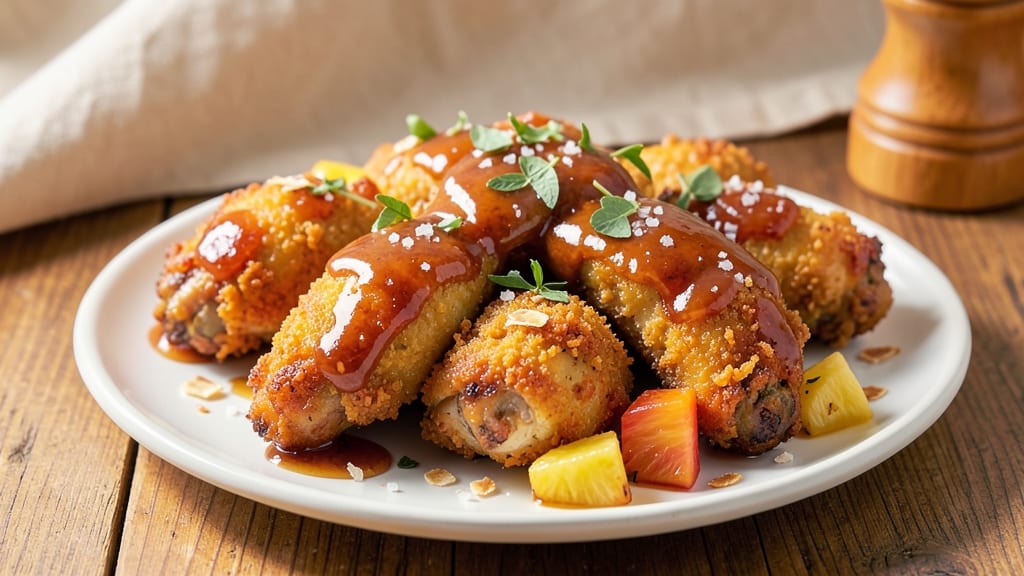
This fried pineapple chicken recipe delivers crispy, golden bites with a sweet-tangy glaze that balances perfectly. The secret lies in a double-dredge technique that creates an irresistible crunch, while fresh pineapple chunks add juicy sweetness that cuts through the richness.
I developed this dish after years of experimenting with fusion flavors, and it's now a crowd-pleaser at every gathering.
The process starts with tender chicken pieces coated in a light cornstarch batter, then fried to golden perfection before being tossed in a caramelized pineapple glaze. This method ensures each bite has that satisfying crunch while keeping the chicken juicy inside.
The pineapple isn't just decoration—it's a key flavor component that transforms ordinary fried chicken into something extraordinary.
What you'll end up with is a dish that's restaurant-quality at home, with crispy edges that give way to tender chicken and bursts of sweet-tart pineapple in every bite. The glaze caramelizes beautifully, creating pockets of sticky sweetness that complement the savory chicken perfectly.
This recipe serves 4 and comes together in about 45 minutes, making it ideal for weeknight dinners or special occasions.
The best part? This dish pairs wonderfully with sides like jasmine rice or a simple green salad to balance the richness. For serving, arrange the chicken on a platter with pineapple slices scattered around for both visual appeal and extra flavor.
The combination of textures and flavors makes this one of those recipes that disappears faster than you can say "second helping."
Ingredients for fried pineapple chicken
Crispy chicken meets sweet-tangy pineapple in this fusion dish—just 14 ingredients for restaurant-quality bites.
| Ingredient | Amount | Notes |
|---|---|---|
| Boneless, Skinless Chicken Thighs 🍗 | 1 ½ lb | Cut into 1-inch pieces, patted dry |
| Cornstarch 🌾 | 1 cup | For light, crispy batter |
| Large Eggs 🥚 | 2 whole | Beaten for dredging |
| All-Purpose Flour 🌾 | ½ cup | For second dredge coating |
| Fresh Pineapple Chunks 🍍 | 2 cups | Drained, 1-inch pieces |
| Brown Sugar 🍚 | ½ cup | Packed for caramelization |
| Lime Juice 🍋 | ¼ cup | Freshly squeezed |
| Soy Sauce 🍶 | ¼ cup | Low-sodium preferred |
| Vegetable Oil 🫒 | 3 cups | For deep frying |
| Garlic Cloves 🧄 | 4 cloves | Minced for glaze |
| Ground Ginger 🌿 | 1 tsp | Freshly grated preferred |
| Salt 🧂 | 1 tsp | Diamond Crystal kosher |
| Black Pepper 🌶️ | ½ tsp | Freshly cracked |
| Vegetable Oil Spray 🫒 | 1 tbsp | For greasing platter |
The chicken thighs are non-negotiable here—boneless, skinless cuts ensure even cooking and maximum crispiness. Look for fresh, plump thighs with good marbling at your butcher or grocery store's meat counter. Whole Foods or Trader Joe's often carry pre-cut pieces, but cutting them yourself guarantees consistency. For the pineapple, fresh is essential—canned chunks lack the bright acidity and texture. Grab a whole fresh pineapple (red or gold varieties both work) and cut it yourself; the extra effort pays off in flavor. The cornstarch is your secret weapon for that light, lacy batter—don't substitute with flour, which makes the coating too heavy.
Running short on cornstarch? Arrowroot powder works in a pinch, though the texture will be slightly different. No fresh lime? Bottled lime juice (like ReaLime) is fine, but add a pinch of sugar to compensate for the lack of natural sweetness. The soy sauce can be swapped for coconut aminos if you prefer a gluten-free option, though the umami depth will differ slightly. For the glaze, brown sugar caramelizes beautifully, but turbinado sugar adds a subtle crunch if you're feeling adventurous. The garlic should be freshly minced—pre-minced jars contain oxides that can make the glaze bitter. If you're short on time, garlic powder at half the amount works, though it lacks complexity.
This dish reheats beautifully—air fryer at 375°F for 5 minutes restores the crispiness remarkably well. Store leftovers in an airtight container for up to 3 days in the fridge, though the glaze hardens slightly when chilled. To serve, arrange the chicken on a vegetable oil-sprayed platter and scatter fresh pineapple around for both visual appeal and extra flavor. The glaze keeps for 1 week in the fridge if made ahead, so prepare it a day in advance for maximum caramelization. Freeze the chicken pieces (uncooked) for up to 3 months—just thaw and fry fresh for best results.
Why You'll Love This Recipe
- No-Fuss Coating: I swear by the cornstarch trick—it gives that perfect crunch without deep-frying drama. Just toss the thighs in flour, dip in beaten egg, then coat with cornstarch. Five minutes max, and zero messy breadcrumbs.
- Sweet-Savory Magic: That pineapple isn’t just decoration—it’s the star. The caramelized chunks cut through the crispy chicken like a bright, juicy knife. Honestly, the first bite makes me question why I’ve never made this before.
- Weeknight Wonder: Toss it in a bowl, fry it up, and boom—dinner’s done. Leftovers? Even better. Reheat in a skillet with a splash of pineapple juice, and it’s like you’re eating fresh again. (Yes, even on a Tuesday night.)
- Budget Crunch: Chicken thighs stretch further than breasts, and pineapple’s cheaper than you’d think when you buy it fresh. One pan, minimal ingredients, and enough leftovers to feed the family without breaking the bank. My wallet thanks me.
Step-by-step instructions for sweet-tangy fried pineapple chicken
Master the perfect balance of crispy chicken and caramelized pineapple with this method.
Prepare the Chicken for Double-Dredging
Cut the 1.5 lb boneless, skinless chicken thighs into 1-inch pieces and pat them completely dry with paper towels. This drying step is critical—any moisture will prevent the cornstarch from forming that signature crispy crust. Arrange the chicken pieces on a wire rack set over a plate to ensure air circulation while they dry for 15 minutes at room temperature.
In a shallow bowl, whisk together the 1 cup cornstarch, 1 tsp salt, and 0.5 tsp black pepper until evenly distributed. This dry mixture will create the first protective layer that locks in moisture while frying. In a separate bowl, beat the 2 whole large eggs until just combined—no need to overmix, as this can make the coating too dense.
Create the Double-Dredge Coating
Working in batches to avoid overcrowding, dip each chicken piece into the beaten eggs, allowing any excess to drip off. Then immediately transfer it to the cornstarch mixture, pressing gently to adhere the coating evenly. The cornstarch should cling like a fine powder without clumping. Place the coated chicken on a wire rack and repeat until all pieces are coated.
For the second dredge, create another shallow bowl with the 0.5 cup all-purpose flour. Lightly dust each cornstarch-coated chicken piece with the flour, shaking off any excess. This final layer adds an extra barrier for crispiness and helps maintain the coating during frying. Keep the coated chicken pieces at room temperature while you prepare the frying setup.
Fry the Chicken Until Golden and Crispy
Heat 3 cups vegetable oil in a deep skillet or Dutch oven to 350°F—use a candy or deep-fry thermometer for precision. The oil should shimmer gently but not smoke. Fry the chicken in batches of 4-5 pieces to avoid overcrowding, which lowers the oil temperature and leads to greasy results. Fry for 4-5 minutes per batch, turning occasionally, until the chicken reaches an internal temperature of 165°F and the coating turns a deep golden brown. Remove with a slotted spoon and drain on a wire rack over paper towels.
Here's the thing—don't rush this step. The chicken needs time to develop that perfect crispy exterior while staying juicy inside. If the oil starts smoking or the chicken browns too quickly, reduce the heat slightly. Overcooking will dry out the meat, so trust the thermometer over visual cues alone.
Make the Sweet-Tangy Pineapple Glaze
In a medium saucepan, combine the 2 cups fresh pineapple chunks, 0.5 cup packed brown sugar, 0.25 cup lime juice, 0.25 cup soy sauce, 4 minced garlic cloves, and 1 tsp ground ginger. Bring to a simmer over medium heat, then reduce to low and let it cook uncovered for 8-10 minutes, stirring occasionally. The mixture should reduce slightly, becoming syrupy and fragrant with caramelized pineapple aromas.
Mash half of the pineapple chunks lightly with a fork to release their juices into the sauce. This creates a thicker, more cohesive glaze that clings beautifully to the chicken. Taste and adjust seasoning—add a pinch more salt if needed, or a splash of lime juice for brightness. Keep the glaze warm while you prepare to serve.
Assemble and Serve with Crispy Perfection
Lightly spray a large serving platter with 1 tbsp vegetable oil spray to prevent sticking. Arrange the crispy fried chicken pieces on the platter and spoon the warm pineapple glaze generously over and around them. The contrast of the golden, shatteringly crisp chicken with the glossy, sweet-tangy glaze is what makes this dish unforgettable.
Serve immediately while the chicken is still piping hot and the glaze is fluid. The chicken should hold its shape when lifted, with a crackly exterior that gives way to tender, juicy meat inside. Garnish with extra pineapple chunks if desired, and pair with a simple arugula salad or steamed jasmine rice to balance the richness.
Pro Tips For Making Fried Pineapple Chicken
- USE COLD CHICKEN: Pat the thighs bone-dry first, then pop them in the freezer for 15 minutes before dredging. The cold slows moisture release so your cornstarch crust sticks like glue instead of turning to mush halfway through frying. I used to skip this—big mistake when pineapple syrup gets involved.
- DON’T OVERMIX THE BATTER: Whisk egg and flour together just until combined—lumps are fine. Overworking it makes the coating gummy, and fried chicken with a sticky crust is a sad, greasy mess. Think "light and airy," not "gluey." (Yes, even if you’re impatient like me.)
- PREP PINEAPPLE LAST: Cut the pineapple right before frying—it oxidizes fast and turns mushy when soaked in oil. Toss chunks in a tiny splash of lime juice (1 tsp) to keep them bright, but don’t overdo it or they’ll get soggy. Fresh pineapple is worth the effort; canned won’t cut it here.
- FRY IN BATCHES: Crowd the pan and your chicken steams instead of crisps. Use a slotted spoon to lift pieces when the oil hits 350°F—don’t move them too soon, but don’t let them linger either. Two minutes per side max, or you’ll end up with rubbery thighs and oil splatter everywhere. (Trust me, I’ve learned.)
Pro cooking tips for fried pineapple chicken
Double-Dredge Secret
The double-dredge technique is non-negotiable for that signature crispiness. First coat the chicken in cornstarch, then dip again in flour—this creates a two-layer barrier that locks in moisture while frying. I use fine cornstarch (not cake flour) because it creates a lighter, lacy crust that shatters perfectly.
Keep the chicken pieces separate on a wire rack while coating so they don’t stick together. 🌟
Oil Temp Control
Your frying oil temperature is the difference between crispy perfection and greasy disappointment. Use a candy thermometer and maintain 350°F—any hotter, and the coating burns before the chicken cooks through.
I fry in batches of 4-5 pieces to avoid crowding, which drops the oil temp and makes the coating soggy. A deep Dutch oven holds heat better than a skillet, so I use that for larger batches. 🔥
Glaze Caramelization
The pineapple glaze needs time to develop depth—don’t rush the 8-10 minute simmer. The brown sugar caramelizes beautifully, creating a sticky, glossy finish that clings to the chicken. I mash half the pineapple chunks to release their juices, which thickens the sauce naturally.
Taste as you go: if it’s too thin, simmer longer; if too thick, add a splash of lime juice to balance. 🍍
Resting for Crispiness
After frying, rest the chicken for 5 minutes on a wire rack before glazing. This lets the coating set properly, preventing it from falling off when the glaze goes on.
I also spray the platter with vegetable oil before arranging the chicken—this ensures the glaze doesn’t stick to the plate instead of the food. Serve immediately for that shatteringly crisp texture. ✨
Batch Frying Hack
If you’re frying a crowd, keep the oil temp steady by adding 1-2 uncoated chicken pieces to the oil before each new batch. This acts as a heat sink, stabilizing the temperature while you fry.
I also keep a small bowl of ice water nearby—dipping fried chicken in for 10 seconds after frying keeps it crispy longer. Just pat dry before glazing. ❄️
Glaze Thickness Trick
For an extra-thick glaze, reduce the sauce by 20% before adding the chicken. Simmer uncovered until it coats the back of a spoon, then drizzle over the hot chicken. The residual heat will make the glaze glossy and clingy—perfect for dipping or drizzling.
If the glaze hardens when chilled, reheat it gently with 1 tsp water to restore its fluidity. 💫
Nutrition facts
Frequently asked questions about fried pineapple chicken
Can I use chicken breast instead of thighs?
Chicken breast works but requires extra care—pat it extra dry and fry at 325°F for 3-4 minutes to avoid overcooking. Breast meat dries out faster, so use a meat thermometer to hit 165°F internally.
How do I make the glaze thicker for dipping?
Simmer the glaze uncovered for 5-7 extra minutes until it coats the back of a spoon. For instant thickening, mix 1 tsp cornstarch with 1 tbsp water, stir into the hot glaze, and cook for 1 minute.
Can I bake this instead of frying?
Yes! Toss the double-dredged chicken with 1 tbsp oil and bake at 400°F for 18-20 minutes, flipping halfway. The texture won't be as crispy, but it's a lighter alternative. Use the same glaze recipe.
What's the best way to store leftovers?
Keep chicken and glaze separate in an airtight container for up to 3 days. Reheat chicken in an air fryer at 375°F for 5 minutes to restore crispiness. Reheat glaze in a saucepan over low heat with 1 tsp water.
Why did my chicken turn out greasy?
Most likely, your oil was too cool (below 350°F) or you overcrowded the pan. Fry in small batches and use a thermometer. Also, pat chicken pieces thoroughly dry before coating.