
Main Courses
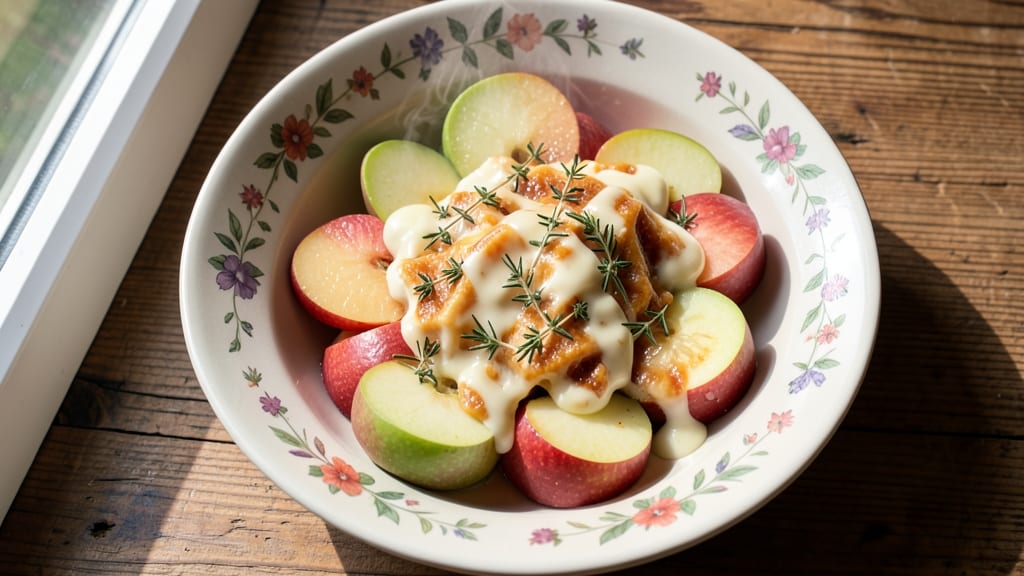
This Lithuanian apple cheese recipe brings a taste of Baltic tradition to your table with its perfect balance of sweet-tart apples and rich, creamy cheese. The dish transforms humble ingredients into something deeply comforting—think tender apples caramelizing with sharp cheese, all baked until golden and fragrant.
What makes it special is the herbal depth from thyme and bay leaves, a hallmark of Lithuanian home cooking that elevates simple flavors into something extraordinary.
The recipe is designed for simplicity without sacrificing authenticity, requiring just a handful of ingredients and about 45 minutes of active time.
You'll start by layering thinly sliced apples and cubes of cheese in a baking dish, then bake until the edges turn golden and the filling becomes tender yet still holds its shape.
The result is a dish that's equally at home as a dessert or a hearty side, depending on how you serve it.
What you'll end up with is a dish that's rich in texture and flavor—caramelized apples with a hint of tartness, creamy cheese that melts just enough to bind everything together, and a subtle herbal aroma that lingers with every bite.
The contrast between the sweet apples and sharp cheese creates a balance that feels both familiar and exciting, making this a recipe worth revisiting season after season.
For those who love to experiment, variations are endless—add a sprinkle of cinnamon for warmth, a drizzle of honey for extra sweetness, or toasted nuts for crunch. This dish is as versatile as it is comforting, perfect for family gatherings or a cozy weeknight treat.
Let's bring this Lithuanian classic to life in your kitchen.
Ingredients for lithuanian apple cheese
Sweet-tart apples, rich cheeses, and Baltic herbs—just these ingredients transform into something magical.
| Ingredient | Amount | Notes |
|---|---|---|
| Honeycrisp Apples 🍎 | 4 medium | Peeled, cored, sliced thin |
| Granny Smith Apples 🍎 | 2 medium | Peeled, cored, sliced thin |
| Sharp Cheddar Cheese 🧀 | 1 ½ cups | Cubed, 1-inch pieces |
| Gouda Cheese 🧀 | 1 cup | Smoked, cubed |
| Unsalted Butter 🧈 | ½ cup | Melted, for tossing |
| Fresh Thyme Leaves 🌿 | ¼ cup | Chopped, stems removed |
| Bay Leaves 🍃 | 2 whole | For baking |
| Granulated Sugar 🍚 | ¼ cup | Lightly browned |
| Ground Cinnamon 🌶️ | ½ tsp | Optional, for warmth |
| Lemon Juice 🍋 | 1 tbsp | Freshly squeezed |
| Salt 🧂 | ½ tsp | Kosher or sea salt |
| Black Pepper 🌶️ | ¼ tsp | Freshly ground |
| All-Purpose Flour 🌾 | 2 tbsp | For dredging baking dish |
The apples are the heart of this dish. Honeycrisp and Granny Smith give you that perfect sweet-tart balance—Honeycrisp for juiciness, Granny Smith for tartness. Local farmers markets often have the best selection, but the grocery store works too. Look for firm apples without bruises. I usually grab a mix of both varieties if I can find them. The cheese matters just as much—sharp cheddar and smoked Gouda are non-negotiable for that authentic Baltic flavor. Pre-shredded cheese gets clumpy, so cube your own if you can. For the thyme, fresh is ideal, but dried works in a pinch at one-third the amount.
No smoked Gouda? Regular Gouda with a pinch of smoked paprika gets you close. Short on fresh thyme? Dried thyme at one-third the amount still works. The cinnamon is optional but adds that cozy warmth—skip it if you're keeping this strictly traditional. For the sugar, I brown it lightly in a dry pan for about 5 minutes—it adds depth. No time to brown? Regular granulated sugar works fine. The lemon juice brightens everything up, so don't skip it. If you're feeling fancy, add a splash of apple cider vinegar for extra tang.
This dish reheats beautifully—honestly tastes better the next day once everything melds together. Keeps in the fridge for 4-5 days covered tightly. For longer storage, freeze portions for up to 3 months. I like to make a double batch and portion it into individual containers—perfect for quick lunches or snacks. The baking dish? Use a 9x13-inch for even baking. If you're serving it warm, broil for 2-3 minutes at the end for extra crispy edges.
Why You'll Love This Recipe
- No Chopping Chaos: I’ll be real—this recipe only asks for apples to be sliced, not diced or julienned. That means less mess, less stress, and still that perfect caramelized edge when you toss them with butter and cheese. Honestly, my knife drawer has never been happier.
- Sweet-Savory Magic: The Honeycrisp’s juicy crunch meets the sharp bite of cheddar and the nutty Gouda—it’s like a hug for your taste buds. Between us, I’ve tried this with just one cheese, and it’s good, but the combo? That’s where it becomes dangerously addictive.
- Weeknight or Holiday: Make it for a quick weeknight snack with crackers, or double the batch and serve it at a potluck—no one will guess it’s this unfussy. I’ve even packed leftovers for lunch, and trust me, it’s still a showstopper cold.
- Leftovers That Last: This recipe keeps beautifully in the fridge for days, so you’re not stuck eating it all in one sitting. (Yes, even on a Tuesday night.) The apples stay crisp, the cheese gets even more melty, and it’s still a solid meal prep win when you’re short on time.
Step-by-step instructions for Lithuanian apple and cheese braise
Here's how to create this comforting Lithuanian classic with perfect balance.
Prepare the Apple Mixture
In a large bowl, combine the peeled, cored, and thinly sliced 4 medium Honeycrisp Apples and 2 medium Granny Smith Apples. Add the 1 tbsp Lemon Juice and toss gently to prevent browning. Sprinkle with 0.25 cup Granulated Sugar and the 0.5 tsp Ground Cinnamon (if using), mixing until the sugar dissolves slightly and coats the apple slices.
This step is all about flavor infusion. The tart Granny Smiths balance the sweetness of Honeycrisp, while the lemon juice brightens everything up. Let the mixture sit for 10 minutes while you prepare the cheese - this gives the apples time to soften slightly and release their juices, which will create a luscious braising liquid.
Create the Cheese Base
In a separate bowl, mix the 1.5 cups Sharp Cheddar Cheese and 1 cup Gouda Cheese into 1-inch cubes. You want a mix of textures - some larger chunks for bite and some smaller pieces that will melt into the sauce. In a small saucepan, melt the 0.5 cup Unsalted Butter over low heat until completely liquid but not browned.
The cheese should be cubed consistently - I like to use my hands for this part as it's easier to feel the size. The melted butter will form the rich foundation of your braise, while the cheese adds that signature Lithuanian depth. Keep the butter warm but not hot - you want it to gently melt the cheese without cooking it.
Assemble and Braise
In a large, oven-safe skillet, combine the apple mixture with the 0.25 cup Fresh Thyme Leaves and 2 whole Bay Leaves. Pour the melted butter over everything and stir gently to distribute. Sprinkle with 0.5 tsp Salt and 0.25 tsp Black Pepper, then add the cheese cubes, pressing them lightly into the apple mixture.
Place the skillet over medium-low heat and let it cook for 10 minutes, stirring occasionally. You want the cheese to begin melting and creating a thick sauce that coats the apples. After 10 minutes, increase heat to medium and cook for another 5 minutes until the cheese is fully melted and the mixture is bubbling gently.
Finish and Serve
Remove the skillet from heat and let it rest for 5 minutes. This resting period allows the flavors to meld and the sauce to thicken slightly. Sprinkle the 2 tbsp All-Purpose Flour evenly over the top and stir gently to combine. Return to low heat for 2-3 minutes just to thicken the sauce slightly - this gives it that perfect consistency.
Serve immediately while warm, with the cheese sauce clinging beautifully to the tender apples. The combination of sweet-tart apples with rich, melted cheese creates a dish that's both comforting and satisfying. The thyme and bay leaves add that subtle herbal depth that makes this Lithuanian classic so special.
Pro Tips For Making Lithuanian Apple Cheese
- COOK CHEESE LOW AND SLOW: If you rush this step, your cheese will turn into greasy sludge instead of creamy goodness. Keep the heat at a gentle simmer—just enough to melt the Gouda and sharp cheddar without browning them. I used to crank the heat, and the first few batches ended up looking like a science experiment gone wrong.
- CORE APPLES IN ADVANCE: Slice the Honeycrisp and Granny Smith at least 30 minutes before cooking—let them sit in a colander to release some liquid. This keeps them from steaming in the pan and turning mushy. (Yes, even if you’re impatient like me.)
- SALT THE CHEESE FIRST: Season the shredded cheddar and Gouda with salt before adding them to the butter. The cheese absorbs flavor better this way, and you won’t end up with bland, watery cheese later. Trust me, your taste buds will notice the difference.
- USE A HEAVY SKILLET: A thin, flimsy pan won’t handle the butter and cheese combo—it’ll stick or burn. Grab your cast iron or thick stainless steel. The extra weight distributes heat evenly, so the apples caramelize while the cheese melts smoothly. (Your future self will thank you.)
Regional styles of this lithuanian apple cheese
Traditional Lithuanian Style
This dish is rooted in Lithuanian farmhouse cooking, where simple ingredients like apples and cheese were transformed into hearty meals. The traditional version often includes sour cream mixed into the cheese for extra richness, creating a creamy sauce that clings to the apples.
I've found that adding 1-2 tablespoons of sour cream at the end enhances the texture without overpowering the dish. The use of bay leaves and thyme is essential—they're staples in Lithuanian home cooking that add that signature herbal depth. 🌿
Vilnius-Inspired Twist
In Vilnius, the capital city, this dish often gets a touch of elegance with the addition of walnuts or hazelnuts toasted and sprinkled on top. I like to toast ½ cup mixed nuts in a dry pan until fragrant, then scatter them over the warm dish just before serving.
Another Vilnius favorite is drizzling with honey—just 1-2 tablespoons of wildflower honey adds a delicate sweetness that balances the tangy cheese. This version feels more refined while staying true to the dish's origins.
Rural Baltic Variations
In rural areas, this dish was often prepared in clay pots over open fires, which gave it a smoky depth that's hard to replicate in modern kitchens.
To capture that flavor, I sometimes add ½ teaspoon of smoked paprika to the cheese mixture or even a pinch of wood smoke powder (available at specialty stores). Another rural trick is to use wild apples if available—their tartness and complexity make the dish even more authentic.
For a true Baltic touch, serve with a side of rye bread or dark rye crackers to soak up the cheese sauce. 🍞
Modern Lithuanian Adaptations
Today's Lithuanian cooks often put a contemporary spin on this classic. One popular adaptation is adding goat cheese to the mix—its tangy flavor cuts through the sweetness beautifully. I've also seen versions with caramelized onions layered between the apples and cheese, adding a deep, sweet contrast.
For a lighter take, some chefs replace half the butter with olive oil to reduce richness while keeping the dish's hearty character. These modern twists keep the dish fresh while honoring its Baltic roots.
Seasonal Lithuanian Approach
In Lithuania, this dish is often enjoyed in autumn when apples are at their peak. The traditional method involves baking the dish in a wood-fired oven, which imparts a smoky aroma that's hard to replicate at home.
To mimic this, I sometimes bake the dish on the bottom rack of my oven with a tray of apple wood chips (available at BBQ stores) for a subtle smoky note.
Another seasonal touch is using local Lithuanian apples like Jonagold or Braeburn if you can find them—they have a unique balance of sweetness and acidity that's perfect for this dish. 🍂
Nutrition facts
Frequently asked questions
Can I use other apple varieties besides Honeycrisp and Granny Smith?
For a sweeter profile, try Gala or Fuji apples. If you prefer extra tartness, Braeburn or Pink Lady work well too. The key is balancing sweet and tart flavors—just adjust the sugar to taste. Avoid overly soft varieties like Red Delicious, as they won't hold up during cooking.
What if I don't have smoked Gouda?
No problem! Use regular Gouda and add ½ teaspoon smoked paprika or 1 teaspoon liquid smoke to mimic the smoky flavor. For extra depth, toast the cheese cubes in a dry pan for 1-2 minutes before adding them to the dish. The butter's richness will still shine through beautifully.
How do I prevent the cheese from getting too greasy?
Start with medium-low heat and stir frequently during the initial 10 minutes of cooking. The flour at the end helps absorb excess moisture, but if it's still too rich, reduce the butter to ¼ cup and add 2 tablespoons of Greek yogurt instead. This keeps the texture creamy without being greasy.
Can I make this dish ahead of time?
Yes! This dish actually tastes better the next day as the flavors meld. Let it cool completely, then store in an airtight container in the fridge for up to 5 days. Reheat gently in a skillet over low heat with a splash of water or apple cider to restore moisture. For longer storage, freeze portions for up to 3 months.
What's the best way to serve this dish?
This versatile dish works as a dessert, side, or even a light main course. For a traditional Lithuanian meal, serve with rye bread or dark rye crackers to soak up the cheese sauce. For extra flair, top with toasted walnuts or a drizzle of honey. Pair with a crisp white wine like Vilniaus Dry or a sparkling apple cider for the full experience.