
Sauces & Condiments
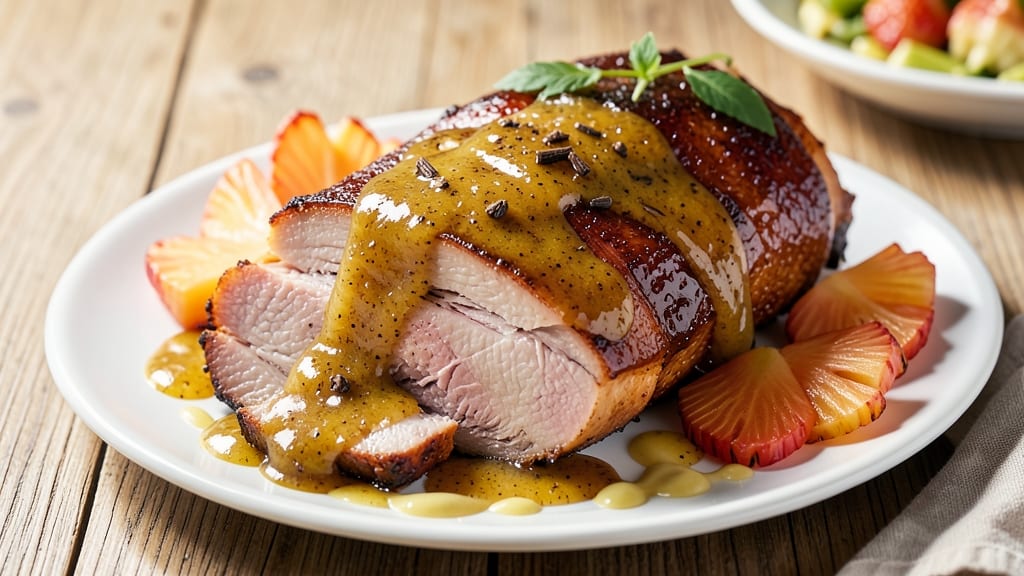
This pineapple sauce for baked ham transforms a simple holiday ham into a showstopping centerpiece with its caramelized sweetness and bright tropical notes. The perfect balance of pineapple's tangy-sweetness and warm spices creates a glaze that clings beautifully to every slice, elevating your ham from ordinary to extraordinary.
What makes this sauce truly special is its ability to caramelize as it cooks, developing deeper flavors while maintaining that signature pineapple brightness.
The recipe combines just six simple ingredients—fresh pineapple, brown sugar, apple cider vinegar, cinnamon, cloves, and a touch of mustard—that work together to create a sauce with complex layers of flavor.
The vinegar adds a subtle tang that cuts through the richness of the ham, while the spices add warmth that complements the natural sweetness of the pineapple. Best of all, this sauce requires minimal effort but delivers restaurant-quality results every time.
What you'll end up with is a glossy, caramelized glaze that's sticky enough to hold its shape when drizzled but still light enough to let the ham's natural flavors shine through.
The aroma alone will have your guests anticipating the first bite, and the taste—sweet, tangy, and subtly spiced—will leave them asking for seconds. This sauce isn't just a topping; it's the star of your holiday table.
Make it ahead of time and let the flavors meld even more, or prepare it just before serving for maximum freshness. Either way, you'll have a sauce that transforms your baked ham into something truly memorable. Let's get started on creating this perfect tropical glaze.
Ingredients for pineapple sauce for baked ham
Six ingredients transform your holiday ham into a tropical masterpiece with caramelized perfection.
| Ingredient | Amount | Notes |
|---|---|---|
| Fresh Pineapple Juice 🍍 | 1 ½ cups | From 1 medium fresh pineapple |
| Light Brown Sugar 🍚 | 1 cup | Packed, not granulated |
| Apple Cider Vinegar 🍎 | ½ cup | Bragg preferred for depth |
| Ground Cinnamon 🌿 | 1 tbsp | Ceylon preferred for delicate flavor |
| Whole Cloves 🌶️ | 6 pieces | Lightly crushed for aroma |
| Dijon Mustard 🍯 | 1 tbsp | For subtle tang balance |
| Unsalted Butter 🧈 | 2 tbsp | Cold, cubed for caramelization |
| Kosher Salt 🧂 | ½ tsp | Diamond Crystal preferred |
The pineapple juice is non-negotiable—freshly pressed delivers that vibrant tropical brightness. Trader Joe's carries pre-juiced pineapples in a bottle, but nothing beats squeezing it yourself. For the brown sugar, Light variety dissolves more easily, creating a smoother glaze. The apple cider vinegar adds depth—Bragg has a richer flavor than generic brands. Cloves should be lightly crushed in a mortar or between two spoons to release their aroma without turning bitter. And that butter? Cold cubes melt beautifully while caramelizing, creating the signature glossy finish.
No fresh pineapple? High-quality canned pineapple juice (like Del Monte) works in a pinch, but it lacks the bright acidity. Substitute maple syrup for brown sugar at a 1:1 ratio, though it'll be slightly less caramelized. Out of whole cloves? Ground cinnamon plus a pinch of cayenne mimics the warmth. For extra tang, add 1/2 tsp of lemon juice alongside the vinegar. The Dijon mustard can be swapped for whole-grain mustard, but it'll have a grittier texture. Pro tip: Toast the spices in a dry pan for 30 seconds before adding to deepen their flavor—trust me, it's worth it.
This sauce tastes even better the next day as the flavors meld. Store it in an airtight container in the fridge for up to 5 days, though I rarely have leftovers that long. For make-ahead prep, make it 24 hours early—the caramelization continues developing, intensifying the flavors. If you're prepping for a crowd, double the recipe; it reheats beautifully in a saucepan over medium heat. The sauce thickens as it cools, so thin with a splash of water if needed before drizzling—it should coat the back of a spoon but still flow smoothly.
Why You'll Love This Recipe
- Five-Ingredient Magic: I swear by this recipe because it’s that simple—just simmer pineapple juice, brown sugar, and vinegar with a few warm spices. No peeling, no chopping, no stress. Honestly, I’ve made it while chatting on the phone.
- Sweet-Tart Balance: That bright pineapple juice cuts through the ham’s richness while the brown sugar and cinnamon add warmth. The cloves? Tiny but mighty—they give it a cozy, almost spiced-wine vibe without overpowering. It’s the kind of sauce you’ll lick the spoon for.
- Holiday or Weeknight: Between us, this works for Thanksgiving leftovers and a lazy Sunday brunch. I’ve drizzled it on ham sandwiches, served it with roasted veggies, even poured it over ice cream (yes, really). It’s my go-to for when I need something special but don’t want to slave away.
- Leftovers That Don’t Let You Down: The sauce thickens beautifully when reheated—just add a splash of water if it gets too stiff. I make a double batch because it’s cheap (pineapple juice in bulk is a steal) and lasts for days. Plus, it freezes like a dream for last-minute gatherings.
Step-by-step instructions for pineapple glaze that caramelizes to perfection
This tropical glaze delivers deep caramelization and perfect balance—every time.
Create the Spiced Base
In a medium saucepan, combine the 1.5 cups fresh pineapple juice, 1 cup packed light brown sugar, and 0.5 cup apple cider vinegar. Bring to a gentle boil over medium-high heat, then reduce to a simmer for 10 minutes until slightly reduced and fragrant. This initial reduction concentrates the flavors and removes any excess acidity that might prevent proper caramelization later.
While the mixture simmers, lightly crush the 6 whole cloves with the flat side of a knife—just enough to release their aroma without turning them into powder. Add them along with the 1 tablespoon ground cinnamon and 0.5 teaspoon kosher salt to the simmering liquid. Stir gently to distribute the spices evenly. The cloves will infuse their warm, aromatic depth while the cinnamon adds that signature tropical warmth. Let this spiced mixture simmer uncovered for another 5 minutes to allow the flavors to meld completely.
Incorporate the Mustard and Butter
Reduce the heat to medium-low and remove the pan from heat momentarily. Whisk in the 1 tablespoon Dijon mustard until fully dissolved—this adds a subtle tang that cuts through the sweetness and helps emulsify the glaze later. Return the pan to the heat and let it warm through for 1 minute to ensure the mustard is completely incorporated.
Add the 2 tablespoons cold cubed unsalted butter, stirring constantly with a wooden spoon. The butter will melt gradually, creating tiny pockets of fat that will later contribute to the glaze's silky texture. Watch carefully as the butter melts—you want it to emulsify smoothly rather than separate. If the mixture begins to curdle or look grainy, reduce the heat slightly and continue stirring until it becomes smooth and glossy. This step is crucial for achieving that restaurant-quality finish.
Simmer to Perfect Caramelization
Return the heat to medium and let the glaze simmer gently for 15-20 minutes, stirring occasionally with a silicone spatula. You're looking for a transformation here—the liquid should reduce by about half, becoming thicker and developing a deep amber color. The aroma will shift from bright pineapple to rich, caramelized sweetness with warm spice notes. This is where the magic happens: proper reduction creates that glossy, clingy texture that clings beautifully to baked ham.
As the glaze thickens, it will naturally coat the back of a spoon. Test for doneness by placing a small amount on a chilled plate—it should hold its shape but still be pourable. If it's too thin, continue simmering for another 2-3 minutes. If it thickens too much, whisk in 1 teaspoon hot water to adjust the consistency. The glaze should be thick enough to coat the back of a spoon but still flow smoothly when poured.
Strain and Finish
Once the glaze reaches the perfect consistency, remove it from heat and strain it through a fine-mesh sieve into a clean bowl or measuring cup. This step removes the cloves but preserves all their aromatic essence in the liquid. Discard the strained spices—they've done their job. The resulting glaze should be smooth, glossy, and deeply fragrant with notes of pineapple, caramel, and warm spices.
Let the glaze cool slightly for 5 minutes before using it on your baked ham. This brief resting period allows any remaining steam to dissipate, ensuring the glaze clings perfectly to the meat without steaming off. The cooled glaze will have a beautiful sheen and a consistency that's thick enough to stay put but still pourable enough to create those signature ribbons when brushed onto the ham. This is the moment where all your efforts pay off—creating a glaze that's both visually stunning and deliciously balanced.
Pro Tips For Making Pineapple Sauce For Baked Ham
- Simmer Slow and Steady: Fresh pineapple juice has a habit of boiling over like a toddler at a birthday party. Reduce it on medium-low heat—not a rolling boil—and stir every 3-4 minutes. If you rush it, you’ll end up with a thin, sad glaze instead of a thick, glossy sauce worth drizzling.
- Strain the Cloves: Whole cloves are great for flavor, but they’re like tiny rocks in your sauce if you forget to remove them. After simmering, strain the mixture through a fine-mesh sieve or cheesecloth. Trust me, nobody wants to bite into a clove while eating ham.
- Balance the Vinegar: Apple cider vinegar adds tang, but too much turns your sauce into a science experiment gone wrong. Start with 1 tablespoon per cup of pineapple juice and taste as you go. You can always add more sugar to mellow it out, but you can’t take the vinegar back.
- Toast the Spices First: Ground cinnamon and whole cloves taste better when they’re warm. Lightly toast the spices in a dry pan for 30 seconds before adding them to the sauce—it deepens their aroma and makes the whole dish smell like a holiday. (Yes, even if you’re making it in July.)
Pro cooking tips for great pineapple sauce for baked ham
Heat Control Secrets
Start with medium-high heat to bring your pineapple mixture to a boil, but immediately reduce to medium-low once simmering begins. This prevents scorching the sugar, which can create bitter flavors.
I’ve ruined glaze more times than I’d like to admit by letting it boil too vigorously—always keep an eye on that pan! 🌡️
For the caramelization phase, maintain a gentle simmer (small bubbles, not rolling). If you see large bubbles or hear popping, reduce the heat immediately. The goal is to reduce the liquid slowly—this builds depth of flavor.
I use a silicone spatula to stir occasionally, which helps prevent sticking and lets me gauge the thickness by how it coats the back of the spoon.
Butter Emulsification
Adding cold cubed butter at the end is non-negotiable for that silky texture. If your butter melts too quickly, reduce the heat to low and whisk vigorously until fully incorporated.
I’ve seen glaze curdle when butter separates—just keep stirring patiently, and it’ll come together. For extra insurance, whisk in the butter off-heat for 30 seconds before returning to the stove.
Spice Toasting Trick
Before adding spices, lightly toast the whole cloves and ground cinnamon in a dry pan for 30 seconds over medium heat. This deepens their aroma and prevents them from turning bitter during simmering.
I crush them just enough to release their oils—over-crushing releases tannins that can make the glaze taste harsh. A mortar and pestle works best, but the flat side of a knife does in a pinch.
Reduction Timing
The 15-20 minute reduction is where the magic happens, but don’t walk away! Stir occasionally to prevent sticking and ensure even caramelization. Test doneness by placing a small amount on a chilled plate—it should hold its shape but still be pourable.
If it’s too thick, whisk in 1 teaspoon hot water to adjust consistency. I’ve had glaze that was too thick to drizzle, so always err on the side of slightly thinner.
Straining Like a Pro
Use a fine-mesh sieve to strain the glaze, pressing gently with a spoon to extract every last drop of flavor. Discard the cloves—they’ve done their job infusing the liquid. For extra smoothness, press the strained glaze through a cheesecloth-lined sieve if you’re feeling fancy.
This step ensures your final glaze is silky and free of any texture issues. 💫
Nutrition facts
Frequently asked questions
Can I use canned pineapple juice instead of fresh?
You can substitute canned pineapple juice, but fresh delivers brighter flavor and better caramelization. For canned, choose 100% pineapple juice (no added sugar) and reduce the brown sugar to 3/4 cup. The texture will be slightly less glossy, but still delicious—just add 1 extra teaspoon of vinegar to compensate for the lack of fresh acidity.
How do I prevent the glaze from burning?
Watch the heat like a hawk! Once the mixture starts simmering, reduce to medium-low and stir occasionally to prevent scorching. If you see dark spots forming, immediately reduce heat to low or remove from heat temporarily. The sugar can burn quickly, creating bitter flavors—keep the pan moving and maintain a gentle simmer.
Can I make this sauce ahead of time?
This glaze tastes even better when made 1-2 days ahead—the flavors deepen as it rests. Store in an airtight container in the fridge for up to 5 days. Reheat gently in a saucepan over low heat, stirring occasionally, until warmed through. If it thickens too much, whisk in 1 teaspoon water to restore pourability.
What if my glaze is too thick or too thin?
Too thick? Whisk in 1 teaspoon hot water at a time until it reaches a pourable consistency. Too thin? Return to medium heat and simmer uncovered for 2-3 minutes, stirring constantly. The perfect glaze should coat the back of a spoon but still flow smoothly when drizzled—aim for a consistency between honey and heavy cream.
Can I use this sauce for other meats?
While it's designed for baked ham, this glaze works beautifully on pork chops, roasted chicken, or even grilled salmon. For chicken, reduce the simmering time to 10 minutes (it's leaner and dries out faster). For salmon, add 1/2 teaspoon of ginger to complement the fish's natural oils. Just adjust cooking times to match the meat's doneness.