
Main Courses
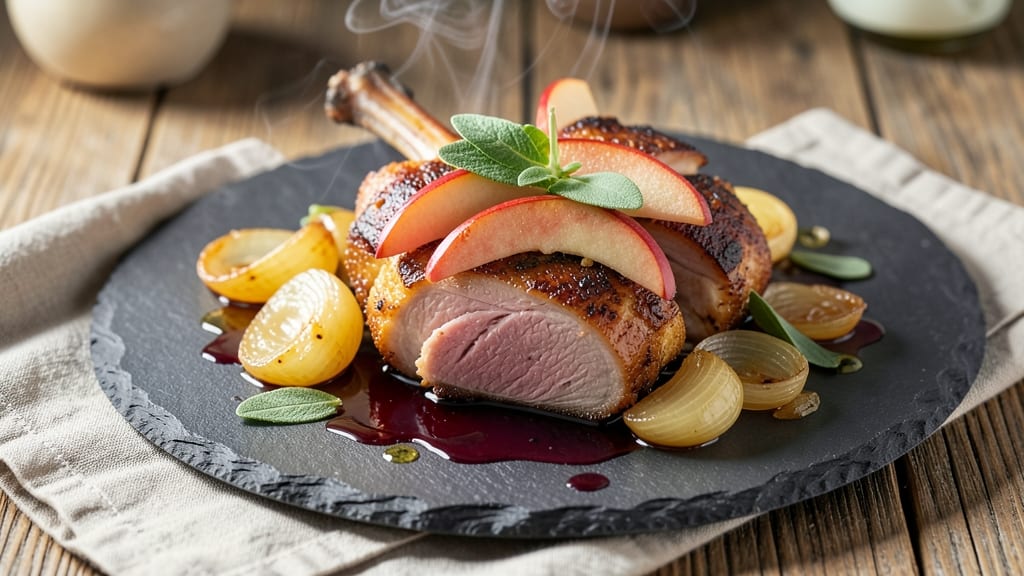
This pork apple sage recipe transforms humble ingredients into a dish that tastes like fall in every bite. 🍂 The secret lies in braising pork shoulder until it's fork-tender, then finishing with caramelized apples and fresh sage that add layers of herbal brightness.
I developed this recipe during a particularly chilly November when I needed a dish that would feed a crowd and warm the soul—it never fails to impress.
The technique is straightforward but delivers restaurant-quality results: sear the pork to lock in juices, then slow-cook until the meat practically falls apart. Fresh apples add natural sweetness that balances the savory pork, while sage brings an earthy aroma that fills the kitchen.
The caramelized apple topping adds a delightful crunch that contrasts beautifully with the tender meat.
By the time you serve this dish, you'll have a centerpiece that's rich, aromatic, and packed with flavor. The pork is so tender it melts in your mouth, while the caramelized apples and sage create a symphony of textures and tastes.
It pairs perfectly with simple sides like mashed potatoes or roasted root vegetables, making it ideal for family dinners or holiday gatherings.
What makes this recipe special is its versatility—use it for weeknight suppers or special occasions, and adjust the cooking time to fit your schedule. The flavors only improve as they sit, so it's perfect for making ahead and reheating. Let's get cooking!
Ingredients for pork apple sage
Six ingredients transform into a cozy fall centerpiece that feeds a crowd.
| Ingredient | Amount | Notes |
|---|---|---|
| Pork Shoulder (Bone-In) 🐖 | 3 lb | Well-marbled for juiciness |
| Yellow Onions 🧅 | 2 whole | Medium-sized, sliced |
| Fresh Sage Leaves 🌿 | ½ cup | Packed, stems removed |
| Granny Smith Apples 🍎 | 4 whole | Peeled, cored, sliced |
| Garlic Cloves 🧄 | 6 cloves | Smashed, not minced |
| Dry Red Wine 🍷 | 1 cup | Bold, like Cabernet |
| Chicken Broth 💧 | 2 cups | Low-sodium preferred |
| Apple Cider Vinegar 🍏 | 1 tbsp | For brightness |
| Brown Sugar 🍚 | 2 tbsp | Light or dark |
| Olive Oil 🫒 | 2 tbsp | For searing |
| Salt 🧂 | 1 ½ tsp | Kosher or sea salt |
| Black Pepper 🌶️ | 1 tsp | Freshly ground |
| Fresh Thyme Leaves 🌿 | 1 tsp | Or 0.25 tsp dried |
| Honey 🍯 | 1 tbsp | For apple caramel |
| All-Purpose Flour 🌾 | 1 tbsp | For thickening |
The pork shoulder is the star—look for bone-in cuts with good marbling at Costco or your local butcher. Trader Joe's usually has pre-cut pork shoulder if you're short on time. Fresh sage is a must (the dried stuff just doesn't cut it here), so grab a bunch at the grocery store—you'll use half and save the rest for other dishes. Granny Smith apples add the perfect tartness, but Honeycrisp works too if you prefer sweeter apples. Just make sure they're firm, not mushy. The garlic? Smash those cloves with the side of your knife—it releases more flavor than mincing.
No red wine? Dry white wine or extra chicken broth works in a pinch. Fresh thyme is ideal, but dried works at one-third the amount if you're out. For the apple caramel topping, maple syrup can replace honey if you're avoiding it. The brown sugar? Light or dark—your call, but light has a slightly better texture. If you're making this ahead, prep the apples and sage first—they'll keep fresh in the fridge for a few days while you cook the pork. The flour is just for thickening the sauce at the end, so don't stress about the brand.
This dish tastes even better the next day—make extra and freeze portions for lazy weeknights. Store the pork and sauce together in an airtight container for up to 5 days in the fridge. For freezing, portion into single-serving containers so you can reheat just what you need. The caramelized apple topping can be made ahead too—just reheat it with the pork for 2-3 minutes before serving. Leftovers reheat beautifully—cover with foil to keep them moist.
Why You'll Love This Recipe
- One-Pan Magic: I swear by this—just toss the pork, onions, and apples on a sheet pan, add a handful of sage and garlic, and let the oven do the work. No chopping boards, no pots, no stress. (Yes, even on a Tuesday night.)
- Sage & Apple Harmony: That crisp, peppery sage with the sweet-tart Granny Smiths? It’s the kind of combo that makes you want to close your eyes and savor every bite. The pork stays juicy while the apples caramelize—like a fall hug on a plate.
- Leftovers That Shine: This recipe actually improves the second day. Shred the pork for tacos, sandwiches, or even a hearty salad—it’s my go-to for quick lunches. (Honestly, I make double portions just for this.)
- Budget-Friendly Feast: Pork shoulder is affordable, and the apples add freshness without breaking the bank. A single pan, minimal ingredients, and enough flavor to feed four for less than $15. My wallet and my family thank me every time.
Step-by-step instructions for pork apple sage braise
Here's how to make this rich, herbaceous braise with perfectly tender pork and caramelized apples.
🔥 Step 1: Sear the Pork Shoulder for Deep Flavor
Heat 2 tablespoons olive oil in a Dutch oven over medium-high heat until shimmering. Pat the 3 lb pork shoulder dry with paper towels—this ensures maximum browning. Place the pork fat-side down and sear undisturbed for 8-10 minutes until deeply golden brown.
Flip the pork and continue searing for another 5-6 minutes until the second side is also browned. Here's the thing—don't rush this step. The longer you sear, the more complex flavors you'll develop. If the oil starts smoking, reduce the heat slightly but keep it hot enough to maintain a good sear.
👨🍳 Step 2: Sauté Aromatics and Deglaze
Remove the pork from the pot and set it aside. In the same Dutch oven, add the 2 whole yellow onions and cook over medium heat for 5-6 minutes until softened and starting to caramelize. Add the 6 smashed garlic cloves and 1 teaspoon fresh thyme leaves, cooking for another 30 seconds until fragrant.
Pour in the 1 cup dry red wine and scrape up all the browned bits from the bottom of the pot—this is where all the flavor lives. Let it simmer for 2-3 minutes until reduced by half. You're building the foundation for that rich, herby sauce that'll coat every bite of pork.
🥘 Step 3: Braise with Apples and Herbs
Return the pork to the Dutch oven and add the 2 cups chicken broth, 1 tablespoon apple cider vinegar, 2 tablespoons brown sugar, 1.5 teaspoons salt, and 1 teaspoon black pepper. Bring to a gentle simmer, then cover and transfer to a 325°F oven.
Cook for 2.5 hours, turning the pork occasionally to ensure even cooking. About 30 minutes before the pork is done, add the 4 sliced Granny Smith apples and 0.5 cup fresh sage leaves to the pot. The apples will soften and caramelize, adding sweetness and texture to the braise. You'll know it's ready when the pork is fork-tender and pulls apart easily.
🍳 Step 4: Finish with Honey and Thicken the Sauce
Remove the pork from the pot and set it aside on a cutting board. Increase the heat to medium-high and add the 1 tablespoon honey and 1 tablespoon all-purpose flour to the braising liquid. Stir well and let it simmer for 3-4 minutes until slightly thickened.
Taste and adjust the seasoning if needed—you might want to add a pinch more salt or a splash of vinegar for brightness. The sauce should coat the back of a spoon and have a glossy sheen. Here's where it gets good: the honey and flour combination creates a perfect balance of sweetness and thickness that'll make every bite irresistible.
⏰ Step 5: Rest and Serve with Crispy Apples
Let the pork rest for 15-20 minutes before slicing. This resting time allows the juices to redistribute throughout the meat, ensuring each slice is moist and flavorful. While it rests, spoon the sauce over the sliced pork to keep it warm and coated.
Serve the pork with the apple and sage braising liquid ladled over the top. The contrast of tender pork with the slightly crisp edges of the apples and the aromatic herbs creates a perfect balance of textures and flavors. This dish is even better the next day when the flavors have had time to meld together—so plan ahead and make extra!
Pro Tips For Making Pork Apple Sage
- SEAR THE PORK FIRST: Skip the slow start—hit the pork shoulder with a screaming-hot cast-iron pan for 5-6 minutes per side until it’s deep brown. I learned this the hard way: rushing the sear means the fat won’t render properly, and you’ll end up with a dish that tastes more like boiled pork than anything else. (Yes, even if you’re impatient like me.)
- PEEL AND SLICE APPLES THIN: Granny Smiths are tart and hold up better when sliced paper-thin—about ⅛-inch thick. Thicker slices turn mushy during cooking, and you’ll end up with a soggy apple comp instead of a caramelized topping. Use a sharp knife or mandoline, and resist the urge to core them—just slice around the stem.
- DON’T CROWD THE PAN: When sautéing onions and garlic, give them space to brown properly. I used to jam everything in there, and the onions just steamed instead of developing that sweet, jammy depth. Spread them out in a single layer—it takes a few minutes longer, but the flavor difference is night and day.
- REST THE PORK UNDER FOIL: Once the pork hits 195°F, pull it from the oven and tent it loosely with foil for 15-20 minutes. This lets the juices redistribute instead of pooling out when you slice. I skipped this once and got a dry, sad pork shoulder—now I treat it like a non-negotiable step.
Essential equipment for great pork apple sage
Dutch Oven Essentials
This recipe demands a Dutch oven—its heavy construction retains heat perfectly for searing and braising. I swear by my Lodge 6-quart cast iron Dutch oven (it's my go-to for everything from pork to chili), but any 5-7 quart model works.
The deep sides prevent spills, and the tight lid traps steam for even cooking. If you don't own one, Le Creuset or All-Clad are excellent alternatives. 🔥
Precision Thermometer
Never guess when it comes to pork—temperature accuracy is everything. A meat thermometer with a probe (like the Thermoworks Smoke) lets you monitor internal temps without opening the pot.
Insert it into the thickest part of the pork shoulder—it should hit 195-203°F for perfect tenderness. I check it every 30 minutes after the initial 2-hour mark to avoid overcooking.
Sharp Knives Matter
Your 8-inch chef's knife and boning knife make all the difference when prepping this dish. A Wüsthof or Shun handles pork shoulder like butter. For the apples, a serrated knife prevents crushing the flesh.
I keep my knives honed with a whetstone—dull blades bruise meat and make prep frustrating. Pro tip: Pat the pork dry before searing to maximize browning.
Herb Storage Solutions
Fresh sage and thyme wilt quickly, so store them properly. I keep sage bundles wrapped in damp paper towels inside a ziplock bag in the fridge—this preserves their aroma for 5-7 days. For thyme, trim the stems and place sprigs upright in a glass of water like flowers.
Both herbs freeze beautifully too: chop and store in ice cube trays with water, then transfer to a bag. Perfect for future braises!
Slow Cooker Adaptation
Short on oven space? A 6-quart slow cooker works wonders here. Sear the pork on the stovetop first, then transfer everything to the slow cooker and cook on LOW for 8 hours.
The texture won't be identical (slightly less caramelized), but it's still fork-tender and flavorful. Just add the apples and sage 30 minutes before serving to prevent mushiness. 💡
Apple Prep Tools
Peeling and slicing apples efficiently requires the right tools. A Y-peeler removes skins in seconds, while a mandoline (set to ¼-inch slices) ensures uniform thickness for even caramelization. For rustic texture, use a sharp paring knife—just be careful with those Granny Smiths, they're tart and can slip!
I also keep a bowl of cold water nearby to prevent browning while prepping. 🍎
Nutrition facts
Frequently asked questions
Can I substitute pork shoulder with another pork cut?
You can use pork butt (it's essentially the same cut) or bone-in pork loin, but adjust cooking times. Bone-in pork loin will cook faster (1.5-2 hours at 325°F) since it's leaner. For pork tenderloin, reduce to 1 hour—it's more delicate and overcooking will dry it out. The key is to monitor internal temperature (195-203°F for shoulder, 145°F for tenderloin).
What if I don't have fresh sage?
Use ½ teaspoon dried sage (it's more concentrated), but crush it between your fingers to release the oils. For extra flavor, add ½ teaspoon dried thyme or ½ teaspoon rosemary as well. If you're missing both, boost the garlic to 8 cloves and add 1 bay leaf for depth. The dish will still taste amazing—just slightly less aromatic.
How do I make this recipe in an Instant Pot?
Sear the pork first in a skillet, then transfer to the Instant Pot with all braising ingredients (except apples and sage). Cook on HIGH pressure for 75 minutes, then quick-release. Add apples and sage for the final 10 minutes on SAUTE mode to caramelize. The texture will be slightly different (more tender, less caramelized), but the flavors shine through. For best results, finish with 1 tablespoon honey and 1 tablespoon cornstarch instead of flour.
Why did my apples turn mushy instead of caramelized?
This usually happens from overcooking or too much liquid. For perfect caramelization, add apples and sage only in the last 30-45 minutes of cooking. If using Honeycrisp apples (sweeter), reduce brown sugar to 1 tablespoon to avoid excess sweetness. Also, ensure your Dutch oven has a tight-fitting lid—steam is your enemy here. For extra crunch, broil the apples for 2-3 minutes at the very end.
Can I make this dish ahead of time?
This recipe tastes even better the next day. Cook the pork and sauce as directed, then refrigerate in an airtight container for up to 5 days. Reheat gently in the oven at 350°F for 20-30 minutes until warmed through. For the caramelized apple topping, make it fresh when reheating—simmer the apples with 1 tablespoon honey and 1 teaspoon butter for 5-7 minutes until bubbly. Freeze portions for up to 3 months.