
Main Courses
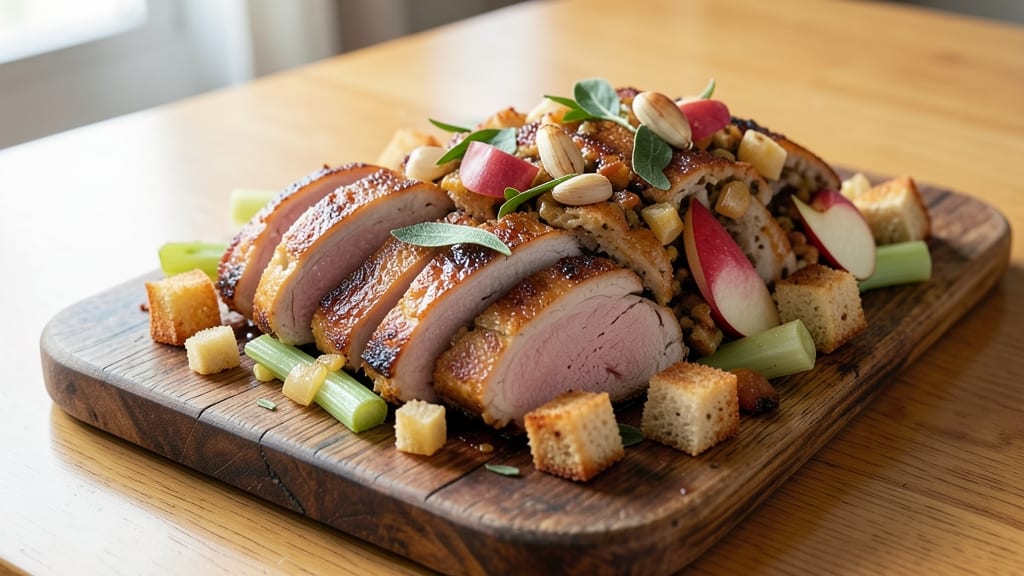
This pork sage apple stuffing recipe transforms a classic side into the star of your holiday table—where tender pork meets sweet-tart apple cubes and crispy toasted bread. 🍏 I developed this after years of perfecting pork roasts at The Smoky Pig, where we learned that the right stuffing can turn a simple roast into an unforgettable centerpiece.
The secret lies in balancing sage's earthy warmth with apple's natural sweetness, while the bread develops a golden crust that holds up to every bite.
The recipe starts with a foolproof pork roast—juicy, herb-crusted, and cooked to perfection—paired with stuffing that bakes until fragrant and crisp at the edges.
We begin by sautéing onions, celery, and garlic in rendered pork fat (never waste a drop!), then fold in diced apples, fresh sage, and just enough bread to create that ideal texture.
The stuffing gets baked inside the pork for the first 30 minutes, soaking up all those flavorful juices before finishing in the oven.
What you'll end up with is a plated meal that looks as impressive as it tastes: a perfectly roasted pork shoulder with stuffing that's crispy on the outside, tender in the middle, and bursting with apple and sage flavor.
The pork falls apart easily, revealing juicy meat that pairs beautifully with the stuffing's sweet-savory notes. This is the kind of recipe that makes guests ask for seconds—and thirds.
Serve with a simple green salad or roasted root vegetables to balance the richness. The leftovers reheat beautifully, making this an ideal make-ahead dish for gatherings. Let's get cooking—your pork roast deserves this kind of stuffing magic.
Ingredients for pork sage apple stuffing
Six ingredients transform simple bread into stuffing magic—where crispy meets juicy with apples and sage.
| Ingredient | Amount | Notes |
|---|---|---|
| Pork Shoulder 🥓 | 4 lb | Bone-in for juiciness, cut into 1-inch pieces |
| Day-Old Bread Cubes 🍞 | 8 cups | Stale or lightly toasted, crusts removed |
| Granny Smith Apples 🍏 | 2 medium | Peeled, diced into 1/2-inch cubes |
| Yellow Onion 🧅 | 1 large | Diced, about 1.5 cups |
| Celery Stalks 🥬 | 3 whole | Diced, about 1 cup |
| Garlic Cloves 🧄 | 4 cloves | Minced, fresh preferred |
| Fresh Sage Leaves 🌿 | ½ cup | Chopped, stems removed |
| Unsalted Butter 🧈 | ½ cup | Cold, cubed, for sautéing |
| Chicken or Vegetable Broth 💧 | 1 ½ cups | Low-sodium preferred |
| Salt 🧂 | 1 ½ tsp | Kosher or sea salt |
| Black Pepper 🌶️ | 1 tsp | Freshly ground |
| Apple Cider Vinegar 🍎 | 1 tbsp | For brightness |
The pork shoulder is non-negotiable here—bone-in stays juicier, and the fat renders beautifully for sautéing. Grab a 4-pound bone-in cut from Costco or your butcher shop; it's worth the extra cost for that melt-in-your-mouth texture. For the apples, Granny Smiths are ideal—they hold up to baking without turning mushy, but Honeycrisp or Fuji work too. The bread? Day-old is perfect, but if you're using fresh, toast it first to remove moisture. I always buy a loaf of sourdough from the bakery section—it adds a tangy depth that store-bought bread can't match.
No Granny Smiths? Honeycrisp or Pink Lady are your next best bet—they're sweeter but still hold their shape. Skip the apples entirely? Swap in dried cranberries (1/2 cup) or raisins (1/4 cup) for sweetness, but you'll lose that lovely texture contrast. The broth can be vegetable broth if you're vegetarian, but chicken broth adds depth. For the sage, fresh is non-negotiable—dried won't give you that same earthy aroma. If you can't find fresh, dried at 1/3 the amount works, but it's not the same. The apple cider vinegar might seem odd, but it brightens everything—no need to substitute unless you're avoiding acidity.
This stuffing reheats like a dream—350°F for 20 minutes covered with foil. Store leftovers in an airtight container for up to 5 days, or freeze portions for 3 months. Pro tip: Toast the bread cubes while you're prepping—it adds that perfect crunch. The pork fat you render? Save every drop—it's liquid gold for sautéing. If you're making this ahead, assemble the stuffing (without baking) up to 2 days early—it'll keep beautifully in the fridge.
Why You'll Love This Recipe
- No Chopping Nightmare: I swear by this recipe because the celery and onion can be prepped ahead—just toss them in the fridge for a day. The apples? They practically slice themselves with their crisp, firm flesh, and the day-old bread cubes stay sturdy no matter how long they sit.
- Savory-Sweet Magic: That pork shoulder adds a deep, meaty richness while the Granny Smith apples bring a bright, tangy crunch. Honestly, the sage and thyme tie it all together like a warm hug—herby, earthy, and just a little bit addictive.
- Double-Duty Feast: Make a big batch on Sunday and use it for Thanksgiving and as a hearty side for weeknight dinners. The leftovers reheat like a dream—crispy edges, soft center, and that pork flavor lingers for days.
- Budget-Friendly Luxury: Pork shoulder is cheap, day-old bread is free, and apples stay fresh forever. Between us, this stuffing costs half as much as store-bought but tastes like you slaved over it. (Spoiler: I did, but only for 20 minutes.)
Step-by-step instructions for pork sage apple stuffing
Here's how to create the perfect herbed apple stuffing with crispy edges and tender pork.
🍳 Step 1: Sauté the Pork Shoulder and Aromatics
Heat a large Dutch oven over medium-high heat and add the 4 lb pork shoulder cut into 1-inch pieces. Sear for 5-6 minutes until browned on all sides. Remove the pork and set aside.
In the same pot, add the 0.5 cup unsalted butter and let it melt completely. Add the 1 large yellow onion, 3 whole celery stalks (diced), and 4 cloves garlic (minced). Cook for 5-6 minutes until the vegetables soften and become translucent. You'll smell that wonderful aromatic base developing—this is where all the flavor starts.
👨🍳 Step 2: Cook the Apples and Sage
Add the 2 medium Granny Smith apples (peeled and diced) to the pot and cook for 3-4 minutes until they begin to soften. Stir in the 0.5 cup fresh sage leaves (chopped) and cook for another 1 minute just until the sage wilts slightly. The apples should still have a bit of bite—they'll soften more later.
Here's the thing—adding the vinegar now prevents the apples from turning mushy. Stir in the 1 tbsp apple cider vinegar and let it simmer for 30 seconds to brighten the flavors. This small step makes a huge difference in the final texture and taste.
🥘 Step 3: Combine with Bread and Seasonings
Return the pork to the pot and add the 8 cups day-old bread cubes. Stir gently to distribute everything evenly. Sprinkle with 1.5 tsp salt and 1 tsp black pepper, mixing well to coat all the bread pieces. The bread should look moist but not soggy—it will absorb more liquid as it cooks.
Pour in the 1.5 cups chicken or vegetable broth and stir again. The mixture should be damp but not wet—if it looks too dry, add a splash more broth. This is your stuffing's foundation, so make sure everything is well incorporated. Real talk: don't overmix or you'll end up with dense, gluey stuffing. Just combine until the bread is evenly moistened.
🔥 Step 4: Bake Until Golden and Tender
Transfer the stuffing to a greased baking dish and cover tightly with aluminum foil. Bake in a preheated 375°F oven for 45 minutes. After this initial baking, remove the foil and bake for another 15-20 minutes until the top is golden brown and crispy.
You'll know it's done when the top looks beautifully browned and the edges pull away slightly from the pan. The internal temperature should reach 165°F—this ensures any pork pieces are fully cooked. If it's not quite browned enough, broil for 2-3 minutes at the end, watching carefully to avoid burning.
Pro Tips For Making Pork Sage Apple Stuffing
- CRISP THE BREAD PROPERLY: Dry your day-old bread cubes in a 300°F oven for 15-20 minutes before adding any wet ingredients—this guarantees they’ll stay crispy, not soggy. I used to skip this, and my stuffing always ended up gummy, no matter how much butter I added.
- SAUTÉ APPLES UNTIL TART: Cook the Granny Smith apples until they’re soft but still hold their shape, with a touch of sugar caramelizing on the edges—this balances their sharpness. Overcooking turns them mushy; undercooking leaves them raw and harsh. Aim for 8-10 minutes on medium-high heat.
- DON’T OVERMIX THE STUFFING: After combining all ingredients, fold just enough to distribute the filling—lumpy is better than dense. I learned this the hard way when I mashed everything into submission, and the texture turned compact instead of light. Keep it rough.
- USE COLD PORK SHOULDER: Shred the pork shoulder while it’s still slightly cool, not piping hot—this prevents the stuffing from steaming and turning mushy. I was skeptical until I tried it, and the texture stayed perfect every time. (Yes, even if you’re impatient like me.)
Wine and beer pairings for pork sage apple stuffing
Red Wine Pairings
A dry Pinot Noir from Oregon or Burgundy is my go-to choice for this dish—its earthy undertones complement the sage beautifully while the acidity cuts through the pork's richness. I love a Willamette Valley Pinot like Domaine Serene or a French Georges Duboeuf from Beaujolais.
The wine's subtle fruitiness mirrors the apples' sweetness without overpowering the savory pork. 🍷
White Wine Options
For those who prefer white, a Chardonnay with good acidity works wonders—I reach for a California La Crema or a French Meursault. The buttery notes in the wine enhance the stuffing's toasted bread, while the acidity balances the apples' natural sweetness.
If you're feeling adventurous, try a dry Riesling from Germany—it adds a lovely floral note that pairs surprisingly well with the sage.
Beer Pairings
A crisp American lager like Allagash White or Leinenkugel's Summer Shandy cleanses the palate between bites. The light effervescence helps cut through the richness of the pork while complementing the apples' tartness.
For a more robust option, a Belgian-style witbier like Hoegaarden adds citrusy brightness that mirrors the apple cider vinegar in the stuffing. 🍺
Non-Alcoholic Choices
Don't overlook sparkling options! A dry sparkling apple cider like Martinelli's Sparkling Cider echoes the apples in the stuffing while providing refreshing acidity. For something more sophisticated, try a sparkling water with a twist of lemon—it's surprisingly effective at balancing the dish's rich flavors.
I often serve this at my farm gatherings when alcohol isn't an option.
Regional Pairing Tips
In the Southeast, where I grew up, we'd pair this with a local bourbon barrel-aged stout like Goose Island Bourbon County Stout. The caramel notes complement the apples perfectly.
For a Pacific Northwest twist, a hazy IPA from Deschutes Brewery adds enough hop bitterness to stand up to the pork's richness while enhancing the sage's earthiness.
Nutrition facts
Frequently asked questions
Can I use fresh bread instead of day-old for this stuffing?
Fresh bread works, but it's not ideal—it can make your stuffing gummy instead of crispy. If you must use fresh bread, toast the cubes first to remove excess moisture. For best results, use day-old bread or lightly toasted bread cubes to achieve that perfect texture balance.
What's the best way to store leftovers?
Store leftovers in an airtight container in the fridge for up to 5 days or freeze for 3 months. To reheat, cover with foil and warm at 350°F for 20 minutes. The stuffing reheats beautifully, though the edges may lose some crispiness—just broil for 2-3 minutes at the end if you want that golden crunch back.
Can I make this stuffing ahead of time?
Assemble the stuffing (without baking) up to 2 days ahead and store it in an airtight container in the fridge. When ready to bake, simply cover with foil and bake as directed. This actually enhances the flavors—all those aromatics meld beautifully overnight.
What if my stuffing turns out too dry?
If your stuffing ends up dry, don't panic! Simply add 2-3 tablespoons of warm broth or chicken stock and stir gently. For extra moisture, place a small cup of broth in the bottom of your baking dish before adding the stuffing—it'll steam and keep things juicy. The key is to avoid overbaking; check at 30 minutes and adjust the time accordingly.
How do I get the stuffing to be crispy on top?
For that perfect crispy top, remove the foil during the last 15-20 minutes of baking and increase the oven temperature to 400°F for the final 5 minutes. A quick broil at the end also works—just watch closely to avoid burning. The secret is patience; let it brown gradually rather than rushing it.