
Sauces & Condiments
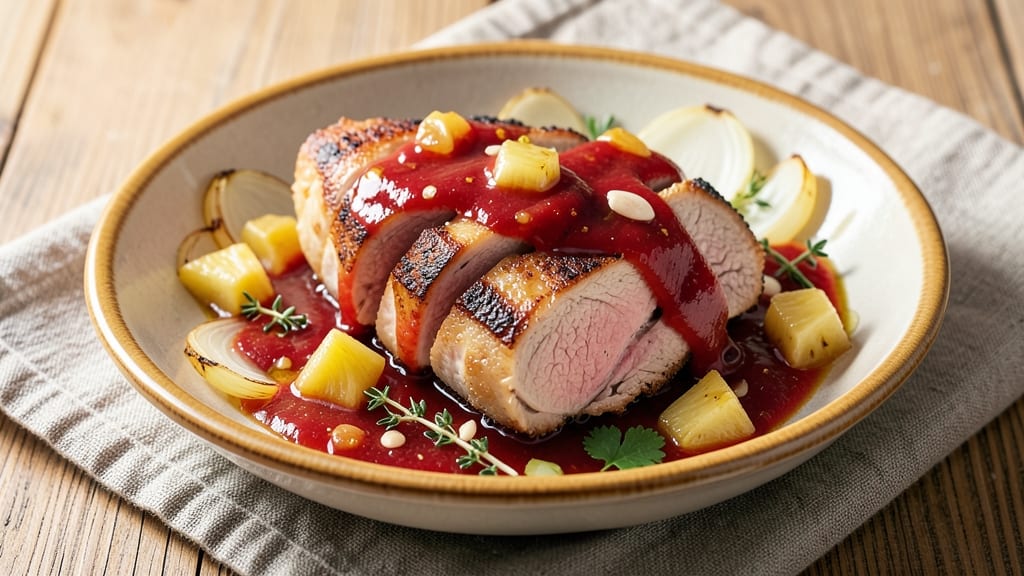
This pork with pineapple and tomato sauce recipe transforms simple ingredients into a restaurant-worthy dish with minimal effort. The sweet-tangy glaze caramelizes beautifully on grilled pork, creating a balance of juicy meat and vibrant sauce that pairs perfectly with rice or crusty bread.
I developed this recipe after years of testing different glaze techniques, and it never fails to impress—even with picky eaters.
The secret lies in simmering the sauce just until it thickens, allowing the natural sweetness of pineapple and acidity of tomatoes to meld into a glossy, flavorful coating.
Unlike many recipes that rely on heavy cream or sugar, this version uses a light, balanced approach with just enough sweetness to complement the savory pork without overpowering it. The result? Tender, flavorful pork with a sauce that clings perfectly to every bite.
What makes this dish truly special is its versatility—it works equally well as a main course or a hearty appetizer. The pork stays juicy whether you grill, braise, or pan-sear it, while the sauce adds a bright, fruity contrast that cuts through the richness.
Serve it with steamed rice or roasted vegetables for a complete meal that feels indulgent yet balanced.
Ready in under an hour, this recipe is perfect for weeknight dinners or weekend entertaining. The prep is straightforward, and the cooking process is hands-off, making it ideal for busy cooks who still want impressive results. Here’s how to achieve that perfect sweet-tangy glaze every time.
Ingredients for pork with pineapple and tomato sauce
Restaurant-quality pork with a sweet-tangy glaze requires just these 15 ingredients for perfect balance.
| Ingredient | Amount | Notes |
|---|---|---|
| Boneless Pork Loin 🐖 | 1 ½ lb | Center-cut for even cooking |
| Fresh Pineapple Chunks 🍍 | 1 cup | Fresh or canned in juice |
| Roma Tomatoes 🍅 | 4 whole | Diced, vine-ripened preferred |
| Yellow Onion 🧅 | 1 whole | Thinly sliced, sweet variety |
| Garlic Cloves 🧄 | 4 cloves | Minced, fresh preferred |
| Extra-Virgin Olive Oil 🫒 | ¼ cup | For high heat searing |
| Soy Sauce 🍶 | 2 tbsp | Low-sodium preferred |
| Honey 🍯 | 1 tbsp | Wildflower for depth |
| Apple Cider Vinegar 🍶 | 1 tbsp | For tangy balance |
| Fresh Ginger 🌿 | 1 tbsp | Grated, aromatic variety |
| Diamond Crystal Kosher Salt 🧂 | 1 tsp | For seasoning |
| Freshly Ground Black Pepper 🌶️ | ½ tsp | Coarsely ground |
| Cornstarch 🌾 | 1 tsp | For sauce thickening |
| Fresh Cilantro 🌿 | ¼ cup | Chopped, for garnish |
| Sesame Seeds 🌾 | 1 tsp | Toasted, for garnish |
The pork loin is non-negotiable for this recipe—center-cut stays juicy while the outer edges caramelize beautifully. Look for uniform thickness (about 1.5-inch) to ensure even cooking. Whole Foods or your local butcher will have the best quality, but most grocery stores carry pre-trimmed loins. Pat it dry before cooking to ensure a good sear. For the pineapple, fresh is ideal—the canned version lacks the same bright acidity, but if you're in a pinch, choose juice-packed over syrup. The Roma tomatoes should be firm and vine-ripened for natural sweetness that balances the sauce's acidity.
No fresh ginger? Ground ginger at half the amount works, though it lacks the bright zing. Substituting pineapple? Mango or peach adds a similar sweetness, but the acidity will differ. The apple cider vinegar is crucial—white vinegar or lemon juice can replace it, but the flavor profile shifts slightly. For those avoiding honey, maple syrup maintains the sweetness without altering the sauce's balance. The cornstarch is key for thickening—arrowroot powder works identically. If you're making this ahead, prepare the sauce first and store it separately for up to 3 days in the fridge, then cook the pork fresh.
The sauce reheats beautifully—simmer it gently to restore its glossy texture. Store leftovers in an airtight container for up to 4 days in the fridge, or freeze for 3 months for later use. The pork itself reheats best in a skillet over medium heat, just until warmed through. Garnish with fresh cilantro and toasted sesame seeds right before serving to preserve their vibrant flavors. For meal prep, cook the pork fully, slice it, and store it in portions with the sauce on the side—reheat the sauce separately to maintain its texture.
Why You'll Love This Recipe
- One-Pan Magic: I swear by this recipe because it’s literally one pan, two ingredients chopped (onion and garlic—seriously, that’s it), and the rest just simmers. No flipping pans, no washing extra dishes—just pork, pineapple, and tomatoes doing their thing while I stir once or twice.
- Sweet-Savory Balance: That first bite? The caramelized onions and garlic hit first, then the bright acidity of the tomatoes, and boom—the pineapple’s natural sweetness ties it all together. It’s like a hug in sauce form, but make it tropical and tangy.
- Leftover Goldmine: Between us, this dish tastes better the next day. The flavors meld into something richer, and it reheats like a dream. I make a double batch on Sundays because it’s my go-to for lunchboxes, quick dinners, or even a lazy weekend brunch with toast.
- Budget-Friendly Feast: Pork loin stretches far here, and pineapple and tomatoes are often cheaper than you’d think—especially when you use Roma tomatoes (they’re sweeter and cheaper than vine-ripened). Plus, the sauce freezes beautifully, so I stock up when it’s on sale. Smart, tasty, and my wallet thanks me.
Step-by-step instructions for pork with pineapple and tomato sauce
Master this sweet-tangy glaze technique for perfectly balanced grilled pork.
Prepare the Pork for Even Cooking
Pat the 1.5 lb boneless pork loin completely dry with paper towels—this ensures a proper sear. Using a sharp knife, score the surface in a diamond pattern, cutting about ¼ inch deep without piercing all the way through. This creates channels for the marinade to penetrate deeply and prevents curling during cooking.
In a small bowl, whisk together 2 tbsp soy sauce, 1 tbsp honey, 1 tbsp apple cider vinegar, 1 tbsp grated fresh ginger, 1 tsp Diamond Crystal kosher salt, and ½ tsp freshly ground black pepper. Pour this marinade over the pork and massage it into the scored surface. Let it sit at room temperature for 30 minutes—this allows the flavors to meld and the pork to cook more evenly when grilled.
Build the Sweet-Tangy Sauce Base
While the pork marinates, heat ¼ cup extra-virgin olive oil in a large skillet over medium-high heat. Add the thinly sliced yellow onion and cook for 4-5 minutes until softened but not browned. Add the minced garlic cloves and cook for 30 seconds until fragrant—don't let it burn, or it will turn bitter.
Add the diced Roma tomatoes and cook for 5-6 minutes until they begin to break down and release their juices. Stir in the 1 cup fresh pineapple chunks and cook for another 3-4 minutes until the pineapple softens slightly. Remove from heat and let the mixture cool for 5 minutes—this prevents the sauce from curdling when combined later.
Grill the Pork to Perfect Doneness
Preheat your grill to medium-high heat (about 375°F). Grill the pork loin for 12-15 minutes, turning occasionally, until the internal temperature reaches 145°F—this ensures it's juicy and fully cooked. The exterior should develop a beautiful caramelized crust with grill marks. If using an indoor grill pan, reduce heat to medium to prevent burning.
Transfer the pork to a cutting board and let it rest for 10 minutes before slicing. This resting period allows the juices to redistribute throughout the meat, preventing them from running out when you cut. Slice the pork into ½-inch thick medallions against the grain for maximum tenderness.
Thicken and Finish the Sauce
Return the sauce base to the skillet over medium heat. In a small bowl, whisk together 1 tsp cornstarch with 2 tablespoons water to create a slurry. Slowly pour the slurry into the skillet while stirring constantly for 2-3 minutes until the sauce thickens to a glossy consistency—it should coat the back of a spoon but still be pourable.
Taste and adjust seasoning if needed, adding a pinch more salt or a splash of apple cider vinegar for brightness. Remove from heat and stir in the chopped fresh cilantro. The sauce should have a perfect balance of sweetness from the pineapple and honey, tanginess from the vinegar and tomatoes, and umami from the soy sauce.
Assemble and Garnish
To serve, spoon the thickened sauce over the sliced pork medallions. Garnish each serving with 1 tsp toasted sesame seeds and an additional sprinkle of chopped fresh cilantro. The contrast of the warm, caramelized pork with the vibrant, tangy sauce creates a dish that's both visually striking and deeply flavorful.
For best results, serve immediately while the pork is still warm. The sauce will continue to meld with the pork as it sits, enhancing the overall flavor profile. This method ensures a restaurant-quality dish with a perfect balance of textures and flavors in every bite.
Pro Tips For Making Pork With Pineapple And Tomato Sauce
- SEAR THE PORK FIRST: That pineapple-tomato sauce needs something to cling to, so don’t skip browning the pork. Hit medium-high heat with 1 tablespoon of oil, then let those pork slices develop a crust for 3-4 minutes per side before pulling them out—you’ll taste the difference when the sauce absorbs into the caramelized surface.
- CUT PINEAPPLE SMALLER: I used to leave chunks too big, and they’d turn to mush or sit like awkward guests at a dinner party. Dice that pineapple into ½-inch pieces—it cooks faster, soaks up flavors better, and blends seamlessly into the sauce instead of looking like a separate garnish.
- DEGLAZE WITH A SPLASH OF WINE: After searing the onions and garlic, don’t just toss in tomatoes—pour in ¼ cup of dry white wine or apple cider vinegar first. It scrapes up all the browned bits (the good stuff) and adds a brightness that cuts through the sweetness of the pineapple and pork.
- SIMMER LOW AND LONG: Rushing this sauce? You’ll end up with a watery, one-dimensional mess. Once everything’s in the pot, drop the heat to medium-low and let it bubble gently for 20-25 minutes. The flavors meld, the tomatoes break down, and the sauce thickens—no stirring required after the first 5 minutes.
Troubleshooting your pork with pineapple and tomato sauce
Sauce Too Thin?
If your sauce isn't thickening properly, it's likely because the cornstarch slurry wasn't heated long enough. Bring the sauce to a gentle boil for 1-2 minutes after adding the slurry—this ensures proper thickening. For extra insurance, mix ½ tsp additional cornstarch with 1 tbsp water and stir in gradually. 🌡️
Pork Overcooked?
Pork often continues cooking after being removed from heat. Use a meat thermometer to check for 145°F internal temperature—this is the safe doneness level. If your pork is dry, try brining it for 30 minutes in ¼ cup soy sauce + 1 cup water before cooking.
This adds moisture without altering flavor.
Sauce Too Sweet?
The pineapple and honey can easily overpower the dish. Balance it by adding 1 extra tbsp apple cider vinegar or ½ tsp grated ginger to brighten the sauce. For a more savory profile, stir in 1 tsp fish sauce—it adds umami depth without sweetness. Taste as you go!
Pineapple Too Watery?
Fresh pineapple releases excess liquid during cooking. To fix this, drain canned pineapple thoroughly or pat fresh chunks dry with a paper towel before adding. For extra thickness, simmer the sauce uncovered for 3-4 minutes to evaporate excess moisture.
A splash of 1 tsp soy sauce also helps balance the liquid.
Grill Marks Missing?
If your pork isn't developing grill marks, your heat might be too low. Preheat your grill to 400°F for better searing. For indoor cooking, use a cast-iron skillet on high heat and press the pork down slightly with a spatula to create direct contact.
A quick spray of olive oil before grilling also helps.
Sauce Separating?
Sauce separation usually happens when it's heated too quickly. Simmer gently over low-medium heat and stir constantly. If it separates, whisk vigorously to re-emulsify. For prevention, always cool the sauce slightly before thickening—this stops the cornstarch from activating too fast. 💫
Nutrition facts
Frequently asked questions
Can I use pork shoulder instead of pork loin?
Yes! Pork shoulder works beautifully but requires different cooking methods. Braise it for 2-3 hours at 300°F until tender, then shred or slice. The fat content makes it more forgiving, but reduce the sauce slightly since pork shoulder releases its own juices. For best results, trim excess fat first to avoid greasy sauce.
How do I adjust this recipe for a slow cooker?
This dish adapts perfectly to slow cooking! Sear the pork in a skillet first, then transfer it to your slow cooker with the sauce ingredients. Cook on low for 6-7 hours or high for 3-4 hours, adding 1 tbsp cornstarch slurry at the end to thicken. The slow cooker enhances the pork's tenderness while letting flavors meld beautifully.
What's the best way to store leftovers?
Store the pork and sauce separately in airtight containers for up to 4 days in the fridge. Reheat the pork in a skillet over medium heat with a splash of water, and warm the sauce separately on the stove. For freezing, package components separately—pork freezes for 3 months while the sauce stays fresh for 2 months. Thaw overnight in the fridge before reheating.
Can I make this dish less sweet?
Reduce the honey to ½ tbsp and increase the apple cider vinegar to 2 tbsp for more tang. Add 1 tsp fish sauce or an extra ½ tsp soy sauce to boost umami. For a completely savory version, omit the honey and use 1 tbsp maple syrup instead—it adds depth without sweetness. Always taste as you go!
What sides pair best with this dish?
This sweet-tangy pork pairs perfectly with jasmine rice or coconut rice to balance the flavors. For a lighter option, serve with grilled asparagus or steamed bok choy. Heartier sides like roasted sweet potatoes or garlic mashed potatoes complement the dish's richness. The bright acidity in the sauce also makes it a great match for crusty bread for dipping.