
Main Courses
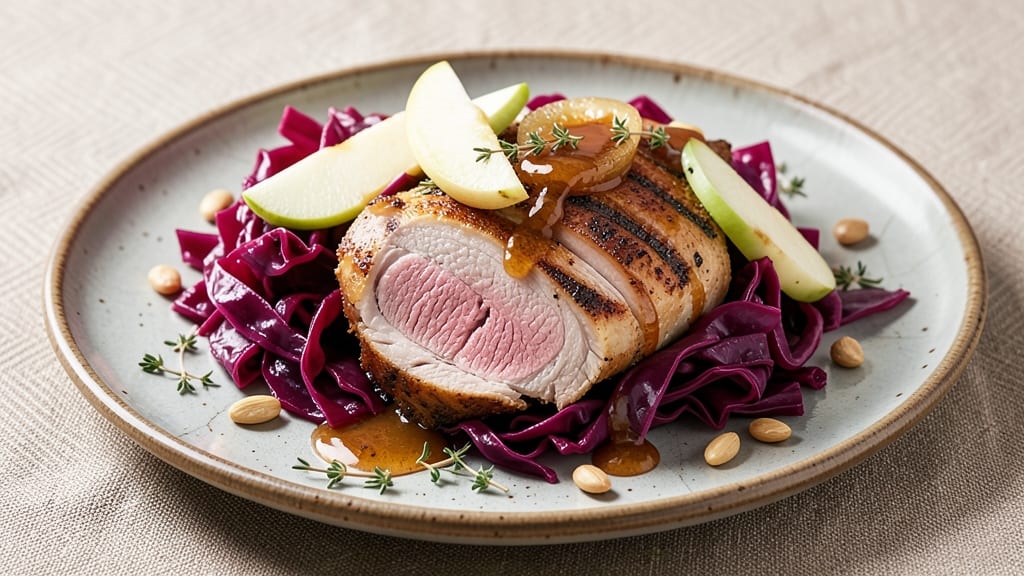
This pork with red cabbage and apple recipe transforms a simple braise into a restaurant-worthy dish that balances sweet, savory, and crispy textures. 🔥 After years of perfecting this technique—especially during Georgia's crisp autumns—I've cracked the code for tender pork, caramelized cabbage, and apples with edges that stay gloriously crisp.
The secret lies in timing: braising the pork low and slow while roasting the apples separately for that perfect contrast. What makes this recipe special is how the flavors develop together.
The red cabbage softens into sweet, vinegary ribbons while absorbing the pork's rich juices, while the apples caramelize just enough to add natural sweetness without overpowering.
I use a 50-50 mix of apples—tart Granny Smiths and sweet Honeycrisp—for the ideal balance, then roast them until their edges turn golden and crispy.
By the time you serve this dish, you'll have perfectly tender pork shoulder with a crispy apple-apricot glaze, cabbage that's tender yet still holds its shape, and a sauce so rich it coats every bite.
The aroma alone—smoky pork meeting sweet apples—will have everyone at the table asking for seconds before the first plate is cleared. This is the kind of meal that feels like a celebration, whether you're feeding a family or hosting a dinner party. The best part?
It comes together in one pot with minimal effort, making it perfect for weeknights when you still want to feel like you've cooked a masterpiece. Let's get started.
Ingredients for pork with red cabbage and apple
Six ingredients make this sweet-savory braise shine: tender pork, crisp apples, and cabbage that melts into sweet ribbons.
| Ingredient | Amount | Notes |
|---|---|---|
| Pork Shoulder 🥓 | 3 lb | Bone-in for flavor, cut into 2-inch chunks |
| Red Cabbage 🥬 | 1 ½ lb | Shaved into thin ribbons |
| Granny Smith Apples 🍎 | 2 whole | Peeled, cored, sliced into wedges |
| Honeycrisp Apples 🍎 | 2 whole | Peeled, cored, sliced into wedges |
| Apricot Preserves 🍑 | ½ cup | For the crispy glaze |
| Yellow Onion 🧅 | 1 whole | Thinly sliced |
| Garlic Cloves 🧄 | 6 cloves | Minced for depth |
| Fresh Thyme 🌿 | ¼ cup | Stems removed, chopped |
| Dried Bay Leaves 🍃 | 2 whole | For aromatic depth |
| Apple Cider Vinegar 🍶 | ¼ cup | For tangy brightness |
| Brown Sugar 🍚 | ½ cup | Packed, for caramelization |
| Kosher Salt 🧂 | 1 ½ tsp | Adjust to taste |
| Black Peppercorns 🌶️ | 1 tsp | Freshly cracked |
| Vegetable Oil 🫒 | 2 tbsp | For searing pork |
| Beef Broth 💧 | 2 cups | Low-sodium preferred |
The pork shoulder is non-negotiable here—bone-in, not lean cuts—it delivers that rich, fall-apart texture. Costco or local butchers usually have the best deals on whole shoulders, but any grocery store carries pre-cut chunks. Look for good marbling—those little white fat streaks mean juicier meat. The apples? Granny Smiths and Honeycrisp are my go-to, but any mix of tart and sweet works. If you can't find Honeycrisp, Fuji or Gala hold up well too. The cabbage should be vibrant purple, not wilted—check the date stamp on the bag, as it loses crispness fast once cut.
No apricot preserves? Substitute with peach jam or even a splash of apple juice plus a pinch of cinnamon for that sweet-tangy glaze. Swapping the vinegar? White wine or lemon juice works in a pinch, but apple cider vinegar gives that signature tang. Fresh thyme is ideal, but dried thyme at half the amount keeps things simple. The beef broth can be swapped for vegetable broth if you're avoiding meat, though the flavor will be slightly less rich. For the cabbage, shave it thinly—a mandoline makes this job easy, but a sharp knife works too. If you're short on time, pre-shredded cabbage from the salad aisle saves steps, though it won't be as crisp.
This dish tastes even better the next day—make extra and freeze portions for lazy weeknights. The pork keeps 4 days in the fridge, while the cabbage and apples can be prepped ahead and stored separately for 3 days. For serving, I like to reheat gently with a splash of broth to keep everything moist. The crispy apple edges? Those come from roasting the apple slices separately at the end—don't skip this step! They add that perfect textural contrast that makes this dish feel special. Store leftovers in airtight containers, and the sauce will thicken beautifully over time, making it even more flavorful.
Why You'll Love This Recipe
- One-Pan Magic: I swear by this trick—just toss everything on a sheet pan, and the pork shoulder roasts while the cabbage and apples caramelize right alongside it. No flipping pans, no mess, and honestly? The smell alone makes my kitchen feel like a cozy German tavern.
- Sweet-Savory Balance: That tangy apricot preserve glaze? It’s the star. The Granny Smiths add a sharp bite, Honeycrisp brings juicy sweetness, and the pork? Perfectly tender with a crispy edge. It’s the kind of dish where every bite feels like a little flavor celebration.
- Weeknight or Holiday: Between us, this is my go-to for both lazy Tuesdays and Thanksgiving leftovers. The cabbage and apples hold up for days, so I make it once and feed the family for three. (Yes, even on a Tuesday night.)
- Budget-Friendly Feast: Pork shoulder is cheap, cabbage lasts forever, and apples stretch across multiple meals. I’ve turned this into a potluck favorite—minimal cost, maximum wow factor. My wallet and guests thank me every time.
Step-by-step instructions for sweet-savory pork braise
This rich, aromatic braise delivers melt-in-your-mouth pork with perfectly caramelized apples and tender cabbage.
🔥 Step 1: Sear the Pork Shoulder for Deep Flavor
Heat a large Dutch oven over medium-high heat and add the 2 tablespoons vegetable oil. Working in batches if needed, add the 3 lb pork shoulder cut into 2-inch chunks and sear on all sides for 3-4 minutes per side until deep golden brown. You want that beautiful Maillard reaction happening—this builds the foundation for all that rich flavor.
As you sear, don't overcrowd the pan or the temperature will drop and you'll steam instead of brown. I press down gently on the pork with a spoon to ensure even contact with the hot surface. Once all pieces are golden and crispy, transfer them to a plate and set aside.
👨🍳 Step 2: Build the Aromatic Base
In the same Dutch oven, reduce heat to medium and add the thinly sliced yellow onion. Cook for 4-5 minutes until softened and beginning to caramelize. Add the 6 cloves minced garlic and 0.25 cup chopped fresh thyme, cooking for another 1 minute until fragrant—this should take just seconds before the garlic starts to color.
Sprinkle in the 1.5 teaspoons kosher salt and 1 teaspoon cracked black peppercorns, stirring to combine. Add the 2 whole dried bay leaves and pour in the 0.25 cup apple cider vinegar. Let this bubble away for 2 minutes until the vinegar smell mellows into something bright and tangy.
🍳 Step 3: Braise the Pork with Cabbage and Apples
Return the seared pork to the Dutch oven. Add the 1.5 lb shaved red cabbage, 2 whole Granny Smith apples sliced into wedges, and 2 whole Honeycrisp apples sliced into wedges. Pour in the 2 cups beef broth and sprinkle in the 0.5 cup packed brown sugar. Stir everything together gently to combine.
Bring to a simmer, then reduce heat to low. Cover and cook for 1 hour and 15 minutes until the pork is fork-tender. Here's the thing—don't peek! Every time you lift that lid, you're losing heat and moisture. The pork should be falling apart easily when you test it with a fork.
⏰ Step 4: Finish with Apricot Glaze for Crispy Edges
After the initial braising time, stir in the 0.5 cup apricot preserves and spread them evenly over the top of the pork and vegetables. Increase heat to medium-high and cook uncovered for 10-12 minutes until the preserves bubble and caramelize, creating those beautiful crispy apple edges we're after.
Watch carefully—you want the glaze to thicken slightly but still remain glossy. If it starts to look too dry, add 1-2 tablespoons of water to loosen it. The cabbage should be tender but still holding its shape, and the apples should be caramelized with slightly crisp edges.
🍽️ Step 5: Rest and Serve with Pan Sauce
Remove from heat and let the braise rest for 10 minutes covered. This resting period allows all the juices to redistribute throughout the pork and vegetables. The flavors will meld together beautifully, creating that perfect balance of sweet, savory, and tangy notes.
Serve the pork with the cabbage, apples, and all that glorious pan sauce spooned over the top. The crispy apple edges should contrast perfectly with the tender pork and sweet-savory cabbage. Each bite delivers a symphony of textures and flavors that will have everyone coming back for seconds!
Pro Tips For Making Pork With Red Cabbage And Apple
- Sear the Pork First: Hit that pork shoulder with a screaming-hot cast-iron or heavy skillet for 3-4 minutes per side before braising—it builds flavor and keeps the meat from turning into mushy pork loaf. I used to skip this, and the dish just didn’t have the same depth. Trust me, the extra 5 minutes now saves you from dry pork later.
- Core the Apples: Remove the core and seeds from both Granny Smith and Honeycrisp apples before slicing—it prevents bitter pockets and makes them cook evenly. I learned this the hard way when I got a mouthful of seedy apple in an otherwise perfect bite. Use a melon baller if you’re lazy, but a knife works too.
- Don’t Overcrowd the Cabbage: Slice the red cabbage thinly and cook it in batches if needed—packing it all in at once steams it instead of caramelizing. I once turned my cabbage into sad, watery lettuce because I was impatient. A crowded pan = no crisp-tender texture.
- Deglaze with Apple Juice: After searing the pork, deglaze the pan with ¼ cup apple juice (from the cores) instead of just broth—it adds brightness and balances the richness of the pork. I was skeptical until I tried it; the acidity cuts through the fat and makes the sauce sing. Save the juice from coring those apples!
Essential equipment for pork with red cabbage and apple
Dutch Oven
This is my non-negotiable workhorse for this recipe—a 5-6 quart Dutch oven like the Le Creuset Stoneware or All-Clad Stainless Steel. The deep sides prevent spills when the apples caramelize, and the heavy base distributes heat evenly for perfect braising.
I swear by the All-Clad for its durability—it’s been with me through thousands of pounds of pork. For budget-friendly options, Cuisinart’s MultiClad Pro works beautifully too. 🔥
Sharp Knives
You’ll need two high-quality knives for this dish: a 8-inch chef’s knife for chopping onions and apples, and a mandoline or sharp chef’s knife for shaving the cabbage. I use my Wüsthof Classic chef’s knife—it stays sharp for years with proper care.
For the cabbage, a mandoline gives you consistent, paper-thin ribbons, but a sharp knife works if you’re patient. Never use a dull knife; it crushes the cabbage and makes the job harder. 🧅
Measuring Tools
Precision matters here, especially with the brown sugar and apricot preserves. Use a digital kitchen scale for accuracy—OXO Good Grips is my go-to—especially when measuring the 3 lb pork shoulder.
For liquids, a liquid measuring cup with clear markings ensures you get the 2 cups beef broth and 0.25 cup apple cider vinegar just right. I avoid eyeballing measurements; this dish relies on balance, and every ingredient plays a role. ✨
Tongs for Searing
Invest in a good pair of tongs—I use J.B. Prinz Stay-Sharp—to handle the searing pork. They give you better control than a fork or spatula, and the silver-plated tips resist sticking. When searing, you want to flip the pork quickly without losing any of that precious rendered fat.
These tongs have lasted me over a decade and are worth every penny. The last thing you want is a flimsy tool that bends mid-cook. 💪
Instant-Read Thermometer
A thermometer is your best friend for checking the pork’s doneness. I rely on the ThermoWorks Thermapen ONE—it’s fast, accurate, and has a backlight for those late-night cooks. Insert it into the thickest part of the pork; it should reach 203°F for that fall-apart tenderness.
No guessing here—this tool takes the guesswork out of braising. If you’re new to braising, this is the one gadget I’d recommend above all others. 🌡️
Roasting Pan for Apples
While the pork braises, roast the apples separately in a rimmed baking sheet or roasting pan to get those crispy edges. A half-sheet pan (13x18 inches) gives enough space for even browning. Line it with parchment paper for easy cleanup—trust me, you’ll thank yourself later.
If you’re short on space, a large cast-iron skillet works too, but it won’t hold as many apples. The key is high heat (425°F) and minimal stirring to let them caramelize properly. 🍎
Nutrition facts
Frequently asked questions
Can I substitute bone-in pork shoulder with boneless pork loin?
I don't recommend it for this braise. Bone-in pork shoulder stays juicier during long cooking and adds depth of flavor. If you must use boneless pork loin, reduce the cooking time by 20-25 minutes and monitor closely—it's leaner and dries out faster. For best results, stick with bone-in shoulder for that perfect tender texture.
What if I can't find Granny Smith or Honeycrisp apples?
No problem! Use a mix of tart and sweet apples—think Braeburn (tart) with Fuji (sweet) or Pink Lady with Gala. The key is balancing flavors: aim for about 60% tart and 40% sweet. If you only have one variety, add 1 teaspoon lemon juice to the braising liquid to enhance tartness.
How can I make this dish ahead of time?
This braise actually tastes better the next day! Cook it completely, then refrigerate in an airtight container for up to 4 days. Reheat gently in a skillet with a splash of broth or water to restore moisture. For serving, you can re-crisp the apple edges by broiling for 2-3 minutes—just watch closely to avoid burning.
Why does my cabbage turn mushy instead of tender? Overcooking is the usual culprit. Red cabbage should be tender but still hold its shape—about 1 hour and 15 minutes total cooking time. If it's mushy, you likely braised too long. For next time, check it at 1 hour and adjust. Also,
Can I make this recipe in a slow cooker?
Sear the pork first, then transfer everything to a 6-quart slow cooker. Cook on low for 7-8 hours or high for 4-5 hours. In the last 30 minutes, stir in the apricot preserves and increase heat to high to caramelize. The slow cooker method actually enhances the tenderness, though you'll lose some of that crispy apple edge—just serve it with fresh apple slices on top.