
Sauces & Condiments
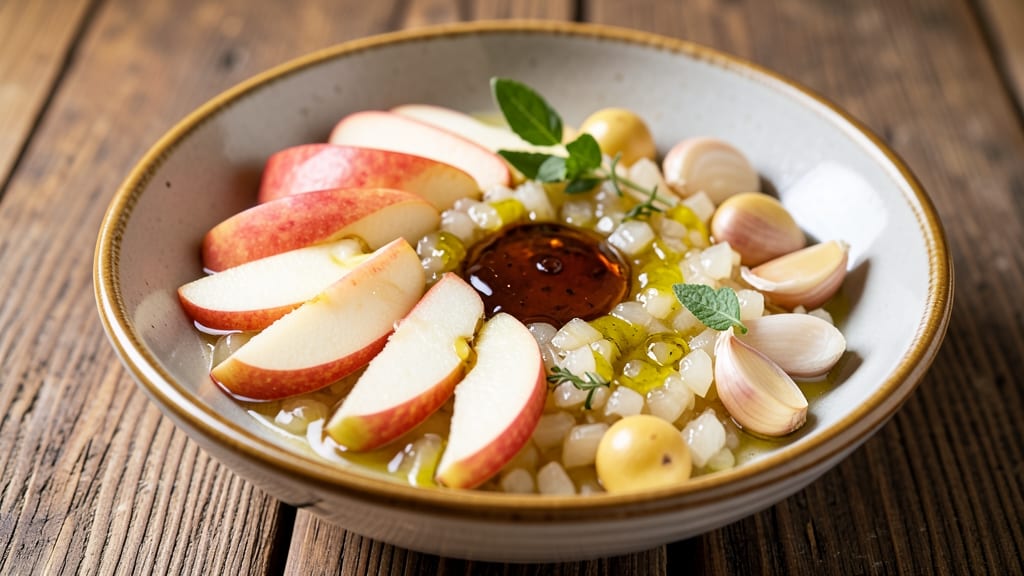
This apple and garlic chutney transforms simple pantry ingredients into a versatile, spiced condiment that bridges sweet and savory flavors effortlessly.
The secret lies in balancing caramelized apples with sharp garlic, bright vinegar, and warm spices like cinnamon and ginger—creating a chutney that elevates everything from grilled meats to cheese boards. I developed this recipe after years of testing, ensuring it’s foolproof for both beginners and seasoned cooks.
The process is straightforward: simmer fresh apples with garlic, onions, and spices until tender, then blend with vinegar and lemon juice for that signature tang. What you’ll end up with is a semi-smooth, aromatic chutney with just enough texture to cling beautifully.
The spices deepen as it cools, making it even more flavorful over time—a perfect make-ahead condiment for meal prep.
This chutney shines as a dipping sauce for samosas or fries, a spread on sandwiches, or a garnish for roasted chicken and pork. Its natural sweetness and acidity cut through rich dishes, while the garlic adds depth that lingers on the palate.
The best part? It keeps well in the fridge for up to 2 weeks, so you’ll always have a pantry staple ready to elevate any meal.
Ready to make it? The recipe requires just 10 minutes of prep and 20 minutes of simmering, with no fancy equipment needed. Let’s get started—your taste buds will thank you.
Ingredients for apple and garlic chutney
Simple ingredients for a chutney that dances between sweet, tangy, and aromatic perfection.
| Ingredient | Amount | Notes |
|---|---|---|
| Honeycrisp Apples 🍎 | 4 medium | Peeled, cored, chopped |
| Garlic Cloves 🧄 | 6 cloves | Minced for depth |
| Yellow Onion 🧅 | 1 medium | Diced, finely chopped |
| Extra-Virgin Olive Oil 🫒 | ¼ cup | For sautéing onions |
| Apple Cider Vinegar 🍶 | ¼ cup | For tangy balance |
| Fresh Lemon Juice 🍋 | ¼ cup | Brightens flavor |
| Ground Cinnamon 🌿 | 1 tsp | Warm aromatic touch |
| Ground Ginger 🌿 | ½ tsp | Freshly ground preferred |
| Salt 🧂 | 1 tsp | Kosher or sea salt |
| Black Pepper 🌶️ | ½ tsp | Freshly cracked |
Apples are the star—Honeycrisp is ideal for its crisp texture and mild sweetness, but Fuji or Granny Smith work too. Grab a mix of tart and sweet varieties if you want extra depth. The garlic should be fresh, not powdered—roasted garlic adds a mellow sweetness if you prefer. Onions? Any yellow or red variety will do, but Vidalia adds a touch of natural sweetness. For the spices, Penzeys or the bulk bins at Whole Foods are my go-tos—they stay fresher longer. If you can't find fresh ginger, ground works at double the amount but fresh is worth the effort.
No apple cider vinegar? White vinegar or balsamic will work, though the flavor profile shifts slightly. Running short on fresh lemon juice? Bottled lemon juice is fine, but add a pinch of sugar to balance the acidity. The cinnamon and ginger are non-negotiable for that warm, spiced character—skip them and you lose the soul of the chutney. For a smoother texture, pulse the apples longer in the food processor. If you prefer it chunkier, leave some whole pieces. The olive oil is just for sautéing, but if you're worried about calories, avocado oil has a higher smoke point and similar flavor.
This chutney tastes even better the next day as the flavors meld. Store it in an airtight jar in the fridge for up to 2 weeks. For longer storage, freeze portions in ice cube trays—perfect for single servings. The acidity helps preserve it naturally, so no need for preservatives. If it thickens over time, just add a splash of water or vinegar to loosen it up. The spices deepen in flavor as it sits, so making a big batch is worth it—you'll always have a pantry staple ready to elevate any meal.
Why You'll Love This Recipe
- No-Chop Nightmare: I swear, this chutney only needs one knife—just dice the onion and mince the garlic while the apples cook themselves down. Honeycrisp’s natural sweetness melts into a jammy texture without you having to peel or core more than a handful of slices.
- Garlic Honey Bomb: That slow caramelization of garlic in olive oil? It’s like a flavor grenade—sweet, spicy, and sticky all at once. The apple cider vinegar cuts through it just enough to make every bite ridiculously balanced.
- Cheeseboard MVP: Honestly, this is my go-to for parties, picnics, or just when I’m staring at a block of cheddar wondering what to do with it. Drizzle it over goat cheese, smear it on crackers, or toss it with nuts—it’s the kind of chutney that makes people ask for the recipe and the ingredients list.
- Pantry Stash Winner: I make a double batch and keep it in the fridge for weeks. The vinegar and honey preserve it better than you’d think, and it’s cheaper than buying specialty spreads. Plus, it turns a sad onion and a few apples into something that actually costs less than takeout.
Step-by-step instructions for apple and garlic chutney
Here's how to craft a vibrant, perfectly balanced chutney that marries sweet apples with savory garlic and aromatic spices.
Sauté Onions and Garlic Until Golden
Heat the 0.25 cup extra-virgin olive oil in a medium saucepan over medium heat. Add the 1 medium finely diced yellow onion and cook for 5-6 minutes until translucent and beginning to soften. This foundational step builds flavor—don't rush it.
Add the 6 cloves minced garlic and continue cooking for another 2-3 minutes until the garlic becomes fragrant and just starts to turn golden. Watch closely—garlic burns quickly, and you want that nutty aroma without bitterness. The onions should be golden brown at this point, signaling they're ready for the next ingredients.
Add Apples and Spices for Depth
Increase heat to medium-high and add the 4 medium chopped Honeycrisp apples. Stir frequently for 5-7 minutes until the apples begin to soften and release their juices. The texture should become tender but still hold some bite—this prevents a mushy final chutney.
Reduce heat to medium-low and stir in the 1 tsp ground cinnamon, 0.5 tsp ground ginger, 1 tsp salt, and 0.5 tsp black pepper. Let the mixture simmer for 3-4 minutes until the spices are fully incorporated and the apples are breaking down into a chunky consistency. This is where the magic happens—the spices meld with the apples' natural sweetness.
Balance with Vinegar and Lemon
Pour in the 0.25 cup apple cider vinegar and 0.25 cup fresh lemon juice, stirring constantly. The mixture will bubble vigorously as the acidity reacts with the apples. Let it simmer for 5-7 minutes until the liquid reduces by about half and the chutney thickens slightly.
Taste and adjust the balance—you want a harmonious sweet-tangy profile. If it's too sharp, add a pinch more salt or a small apple piece. If it's too mild, add a splash more vinegar or lemon juice. The goal is that perfect equilibrium where every bite sings with complexity.
Simmer to Perfection
Continue simmering on low heat for 10-12 minutes, stirring occasionally, until the chutney reaches your desired thickness. It should coat the back of a spoon but still maintain a chunky texture with visible apple pieces. The color should deepen to a rich amber, and the aroma should be intoxicating—sweet apples with warm spice notes.
Remove from heat and let it cool completely. The chutney will continue to thicken as it cools, so resist the urge to over-reduce it while hot. Once cooled, transfer to a clean jar and store in the refrigerator for up to 2 weeks. This chutney pairs beautifully with cheeses, meats, or even as a glaze for roasted vegetables.
Pro Tips For Making Apple And Garlic Chutney
- CHOP APPLES SMALL: Tiny dice—no bigger than ¼-inch cubes—cook faster and blend smoother. I used to slice them in uneven chunks, and the texture ended up grainy. Honeycrisp stays crisp even when cooked, so keep those pieces consistent.
- SMASH GARLIC FIRST: Crush the garlic cloves with the flat side of your knife before mincing. This releases more flavor and prevents burning. I learned this after one batch tasted bland—turns out, whole cloves hide in the mix instead of infusing.
- LOW AND SLOW: Simmer the chutney on medium-low heat for at least 20 minutes, stirring often. Rushing it on high heat turns the onions bitter and the apples mushy. Patience here makes the difference between good and really good.
- ACID TEST FIRST: Taste the raw apple and garlic mix before adding vinegar. If it’s already sharp, cut back on the cider vinegar—Honeycrisp can be tart. I overdid it once and ended up with a mouth-puckering mess. Balance is everything.
Pro cooking tips for apple and garlic chutney
Spice Roasting Secret
For deeper flavor, toast your cinnamon and ginger in a dry skillet over medium heat for 30 seconds before adding to the onions. This enhances their aromatic oils, giving your chutney a more complex, toasty depth. I always do this step—it makes a noticeable difference in the final product. 🌶️
Apple Texture Control
To maintain the perfect chunky texture, cut your apples into ¼-inch dice rather than slicing them thin. Larger pieces hold their shape better during simmering, preventing a mushy consistency.
If you prefer a smoother chutney, pulse the cooked apples in a food processor for 10-15 seconds before blending with the vinegar and lemon.
Garlic Mastery
Fresh garlic is non-negotiable, but how you prepare it matters. For maximum flavor, smash 6 cloves with the flat side of a knife before mincing them. This releases more of their aromatic oils.
If you're sensitive to raw garlic's intensity, roast the cloves at 400°F for 10 minutes before mincing—they'll add sweetness instead of sharpness. 🧄
Vinegar Substitutions
Apple cider vinegar is ideal, but don't stress if you're out. White vinegar works in a pinch (use the same amount), though it's slightly more acidic. For a richer taste, substitute with balsamic vinegar—reduce it by 2 tablespoons since it's thicker.
Always taste as you go, adjusting with a pinch of sugar if needed to balance the acidity.
Simmering Precision
Keep your chutney on the lowest heat setting during the final 10-12 minutes of simmering. This gentle heat allows the flavors to meld without overcooking the apples or burning the spices.
Stir occasionally to prevent sticking, and watch for the perfect consistency—it should coat the back of a spoon but still have visible apple pieces. 💡
Flavor Boost Hacks
Add a pinch of cayenne pepper for subtle heat or a teaspoon of honey if your apples aren't sweet enough. For extra depth, stir in 1 tablespoon of apple brandy or bourbon during the final simmer—it adds a warm, caramelized note.
The key is balance: taste as you go and adjust gradually to avoid overpowering the natural flavors. ✨
Nutrition facts
Frequently asked questions
Can I use any type of apple for this chutney?
While Honeycrisp apples work best due to their balanced sweetness and texture, you can absolutely use other varieties! Tart apples like Granny Smith add brightness, while sweeter varieties like Fuji will intensify the chutney's natural sweetness. For extra depth, mix sweet and tart apples—just adjust the vinegar to balance flavors.
How do I adjust the sweetness if my apples are too tart?
Start by reducing the vinegar by 1 tablespoon and adding ½ teaspoon of honey or maple syrup during the final simmer. Taste as you go—you can always add more sweetener gradually. For a more natural approach, try adding a small piece of peeled apple during cooking to mellow the tartness.
Can I make this chutney without a stove?
Yes! If you're using an Instant Pot, combine all ingredients (except vinegar and lemon) and cook on high pressure for 3 minutes. Quick-release, then stir in the vinegar and lemon. For a microwave method, cook the onions and garlic in 1-minute intervals, stirring between each, then proceed with the apple simmering in 2-minute bursts until tender. The texture will be slightly softer, but the flavors remain delicious.
What are the best ways to use this chutney?
This versatile chutney shines as a dipping sauce for samosas or fries, a spread on toast with cheese, or a glaze for grilled meats. Try it with roasted chicken, pork tenderloin, or even as a tangy topping for tacos. For vegetarians, pair it with hummus, flatbreads, or as a condiment for veggie platters. The possibilities are endless!
Why did my chutney turn out too thick?
This usually happens if you over-reduced the liquid or used apples with lower water content. To fix it, whisk in 1-2 tablespoons of warm water or vinegar while the chutney is still warm. For future batches, simmer on low heat and taste frequently—remove it when it just coats the back of a spoon. If it thickens after refrigeration, stir in a splash of vinegar or lemon juice to restore balance.