
Sauces & Condiments
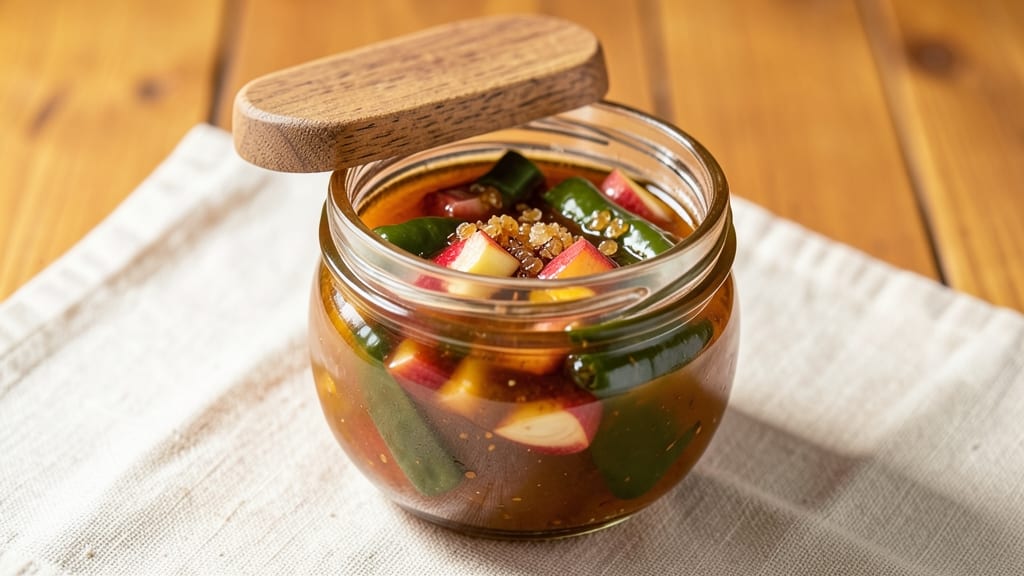
This apple habanero hot sauce transforms two bold flavors into a perfect balance of sweet heat that elevates everything from tacos to grilled meats. The secret lies in fermenting the habanero's fiery punch while letting the apple's natural sweetness mellow the intensity over time.
I developed this recipe after years of experimenting with fruit-based hot sauces—this version cuts through rich dishes without overpowering them.
The process is simple but requires patience: fresh habanero peppers (not dried) create a bright, fruity heat, while the apple adds depth without masking the spice.
We'll ferment the mixture for 7 days to develop complexity, then strain and bottle it for a sauce that's smooth, vibrant, and packed with character. The result? A condiment that's versatile enough for salsa, wings, or even drizzled over ice cream for adventurous palates.
What makes this sauce special is its adjustable heat level—you can control the spice by adjusting fermentation time or adding more apple purée. The final product has a glossy finish, a perfect balance of sweet and heat, and a shelf life of up to a year when stored properly.
This isn't just a hot sauce; it's a flavor enhancer that turns simple meals into memorable experiences.
Ready in just 10 minutes of prep (plus fermentation), this recipe delivers restaurant-quality results with minimal effort. The key is using ripe apples and fresh habanero peppers for the brightest, most vibrant flavor. Let's create a sauce that's as impressive as it is easy to make.
Ingredients for apple habanero hot sauce
Three core ingredients create this vibrant hot sauce: fiery habanero, sweet apples, and tangy vinegar.
| Ingredient | Amount | Notes |
|---|---|---|
| Fresh Habanero Peppers 🌶️ | 4 whole | Seeds removed for milder heat |
| Red Apples 🍎 | 2 medium | Sweet variety like Fuji or Gala |
| Apple Cider Vinegar 🍶 | 1 cup | Raw, unfiltered preferred |
| Granulated Sugar 🍚 | ½ cup | White or raw cane sugar |
| Sea Salt 🧂 | 1 tsp | Fine grain preferred |
| Garlic Cloves 🧄 | 2 cloves | Minced for depth of flavor |
| Fresh Ginger 🌿 | 1 inch | Peeled, grated for brightness |
| Extra-Virgin Olive Oil 🫒 | ¼ cup | For glossy finish |
The habanero peppers are the heart of this sauce—fresh, not dried, for maximum brightness. Local farmers markets often carry them in summer, but if you can't find them, Thai bird's eye peppers work in a pinch (use half the quantity). For the apples, Fuji or Gala give the best balance of sweetness and acidity—avoid tart varieties like Granny Smith. The vinegar should be raw and unfiltered; Bragg or Organic Valley are solid choices. Ginger and garlic add layers of complexity, but don't skip either—they're what make this sauce more than just sweet and spicy.
No habanero? Scotch bonnet or jalapeño can substitute, but expect less fruity heat. The apples can be swapped for peaches or mangoes if you're not near an apple tree, though the fermentation will taste different. Vinegar shortage? Lemon juice at half the amount works, but the flavor profile shifts slightly. Sugar can be omitted entirely if you prefer tartness, but I recommend keeping it for balance. The olive oil is optional but adds a silky texture—avocado oil works too if you're avoiding olive oil for dietary reasons.
This sauce ferments best in a sterilized glass jar with a lid, kept at room temperature for 7 days. After straining, store in a clean bottle in the fridge for up to 1 year. The flavor actually improves with age, developing deeper complexity. For gifting, use amber glass bottles to protect from light. Double batches freeze beautifully—just thaw overnight in the fridge before using.
Why You'll Love This Recipe
- Here’s what sold me: I already had everything. No weird imports or hard-to-find spices—just apples from the fridge, vinegar from the pantry, and a bag of sugar. It’s the kind of recipe that turns "I need to use up these habaneros" into "I want to use up these habaneros." And because it keeps for months, I’ve got backup for when guests drop by or I’m craving a kick mid-week.
- I’ll be real: I’ve used this on everything. Grilled chicken? Check. Tacos? Obviously. Even drizzled over vanilla ice cream (don’t judge). The beauty is, it’s not just a hot sauce—it’s a flavor booster. Need a little tang for your BBQ? A touch of sweetness for your marinade? This does it all without stealing the spotlight. My go-to weeknight sauce, and it never lets me down.
Step-by-step instructions for crafting apple habanero hot sauce
Here's how to transform fresh habaneros and apples into a perfectly balanced hot sauce.
Prepare the Peppers and Apples
Start by cutting the 4 whole fresh habanero peppers in half lengthwise. Carefully remove all seeds and membranes using a small spoon—this reduces the heat while keeping the fruity depth. For the 2 medium red apples, peel and core them, then cut into small chunks about ½-inch in size. The smaller pieces will soften more evenly during cooking.
Place both the habanero halves and apple chunks in a medium saucepan. Add the 1 cup apple cider vinegar and bring to a simmer over medium-high heat. Cover and cook for 10 minutes, stirring occasionally, until the apples begin to break down and release their juices. This step extracts the natural sweetness and acidity that will balance the habanero's heat.
Simmer and Sweeten the Mixture
After the initial simmer, stir in the 0.5 cup granulated sugar and 1 tsp sea salt. The sugar will help caramelize the flavors while the salt enhances the overall depth. Reduce the heat to medium-low and let the mixture simmer uncovered for 20-25 minutes, stirring occasionally, until the apples are completely soft and the sauce has thickened slightly.
Here's where it gets important: You'll notice the sauce will naturally reduce as it cooks. This concentration intensifies the flavors, creating a more complex hot sauce. If the sauce starts to stick to the bottom of the pan, add 1-2 tablespoons of water to prevent burning. The goal is a thick, syrupy consistency that still coats the back of a spoon.
Add Aromatics and Blend
While the sauce simmers, mince the 2 cloves garlic and grate the 1 inch fresh ginger. When the apple-habanero mixture has thickened, remove it from heat and stir in the garlic and ginger. Let it steep for 5 minutes to allow the aromatics to infuse. This step adds layers of complexity that elevate the sauce from simple to sophisticated.
Transfer the mixture to a blender or food processor. Add the 0.25 cup extra-virgin olive oil and blend until completely smooth. If the sauce is too thick, add 1-2 tablespoons of water at a time until it reaches a pourable consistency. The olive oil adds a silky finish and helps balance the heat with its richness. Taste the sauce at this stage—you should feel a pleasant heat with a strong sweet apple flavor.
Strain and Bottle for Storage
Pour the blended sauce through a fine-mesh strainer into a clean bowl or jar, pressing gently on the solids to extract all the liquid. This step ensures a smooth, seed-free sauce without compromising flavor. The strained pulp can be discarded or composted—it's still packed with flavor but too fibrous for a refined sauce.
Transfer the strained sauce to sterilized bottles or jars. Seal tightly and let it cool to room temperature. For best results, store in the refrigerator where it will keep for up to 3 months. The flavors will continue to meld and deepen over time, making the sauce even more complex with each day that passes.
Pro Tips For Making Apple Habanero Hot Sauce
- ROAST PEPPERS FIRST: DESCRIPTION: Ditch the raw habanero heat—roast them whole over a gas flame or under a broiler for 8-10 minutes until charred. This caramelizes the sugars and mellows the raw bite, giving your sauce depth instead of just pain. (Yes, even if you’re impatient like me, wait for those blackened spots.)
- COARSE GRATE APPLES: DESCRIPTION: Skip the food processor for apples—use a box grater to get chunky, uneven pieces. They’ll break down faster in the vinegar, but you’ll still get texture in the sauce. (I learned this the hard way after blending apples into a sad, smooth sludge.)
- SIMMER LOW AND LONG: DESCRIPTION: Reduce heat to a bare simmer after the first 10 minutes—boiling burns sugar and makes the sauce taste bitter. Let it cook uncovered for 20-25 minutes until it thickens to a loose syrup. (Your future self will thank you for not rushing this.)
- BALANCE SALT IN LAYERS: DESCRIPTION: Add half the salt with the vinegar, then taste and adjust at the end. The acid dulls flavor initially, so you’ll need more than you think—especially if you’re using unsalted sugar. (Does it taste weird mid-cook? Yes. Does it fix itself? Absolutely.)
Essential equipment for great apple habanero hot sauce
Blender or Food Processor
You'll need a high-quality blender or food processor to achieve that silky, smooth texture this hot sauce is known for. I recommend a Vitamix or Ninja for their powerful motors that handle fibrous ingredients like habanero peppers and apple chunks without clogging.
If you're on a budget, a Cuisinart or Hamilton Beach blender works well too. The key is ensuring your appliance can handle hot liquids—always allow the sauce to cool slightly before blending to prevent steam buildup. 💫
Fine-Mesh Strainer
A stainless steel fine-mesh strainer is essential for removing seeds and skins while keeping all the flavorful liquid. I use a OXO Good Grips strainer because it's durable and has a wide surface area to press out every last drop.
If you don't have one, a cheesecloth works in a pinch—just double it up for better filtration. The goal is a smooth, seed-free sauce, so don't rush this step. Press gently but firmly to extract maximum flavor.
Glass Jars or Bottles
For fermentation and storage, amber glass jars or bottles are ideal—they protect your sauce from light, which can degrade flavors over time. I prefer Ball Mason jars for fermentation because they're airtight and easy to sterilize.
For bottling the finished sauce, amber glass bottles (like those from Repurpose Life) are perfect—they keep the sauce fresh longer and look great on your pantry shelf. Avoid clear glass if possible, as UV light can turn your vibrant sauce dull.
Thermometer (Optional but Helpful)
A candy or instant-read thermometer helps ensure your sauce reaches the perfect simmering temperature of 205-210°F for optimal flavor extraction. I use a Thermoworks thermometer because it's precise and durable. While not strictly necessary, it takes the guesswork out of cooking—especially when balancing sweetness and heat.
If you don't have one, watch for small bubbles around the edges of the pan to confirm a gentle simmer.
Sterilization Supplies
Sterilizing your jars and tools is critical to prevent spoilage during fermentation. I use boiling water to sterilize jars and lids for 10 minutes, then let them cool completely before use. For tools like spoons and funnels, I run them through the dishwasher on the sanitize cycle.
If you're short on time, rubbing alcohol (70% isopropyl) works too—just wipe down all surfaces before assembly. Proper sterilization ensures your sauce ferments safely and develops the best flavors. 🧼
Nutrition facts
Frequently asked questions
Can I adjust the heat level in this apple habanero hot sauce?
For milder heat, remove all habanero seeds and membranes before cooking. For extra spice, leave some seeds in or add 1-2 extra habaneros. Fermentation time also affects heat—5 days yields sharper heat, while 7-10 days mellows the spice. Taste before bottling and adjust with more apple purée if needed.
What if I can't find fresh habanero peppers?
Use Thai bird's eye peppers (reduce to 2 peppers) or Scotch bonnet for similar fruity heat. For milder options, try jalapeños (remove seeds completely) or serrano peppers. The apple's sweetness will still shine, but expect less complex heat. Dried peppers won't work—they lack the fresh brightness this sauce needs.
How long does the fermentation process really need to be?
The minimum is 5 days for basic fermentation, but 7 days develops the best balance of sweetness and heat. For deeper flavor, ferment up to 10 days. Check daily—if you smell strong vinegar or see mold, discard immediately. The sauce should smell tangy with apple and habanero notes. Patience here makes all the difference!
Can I make this hot sauce without sugar?
Yes! Omit the sugar for a tart, vinegar-forward sauce. The apples' natural sweetness will still balance the habanero, but the flavor profile will be more acidic. If you prefer sweetness, try 1-2 tablespoons of honey instead. The sugar isn't just for sweetness—it also helps with fermentation and texture. Without it, the sauce may be thinner.
What's the best way to use leftover habanero pulp?
Don't waste it! Blend the strained pulp with 1 tablespoon olive oil and 1 teaspoon salt for a spicy apple-habanero relish. Use it on tacos, in sandwiches, or as a topping for grilled meats. For a fermented version, mix with equal parts vinegar and ferment another 3-5 days. The pulp is packed with flavor—just avoid using it in delicate dishes where texture matters.