
Main Courses
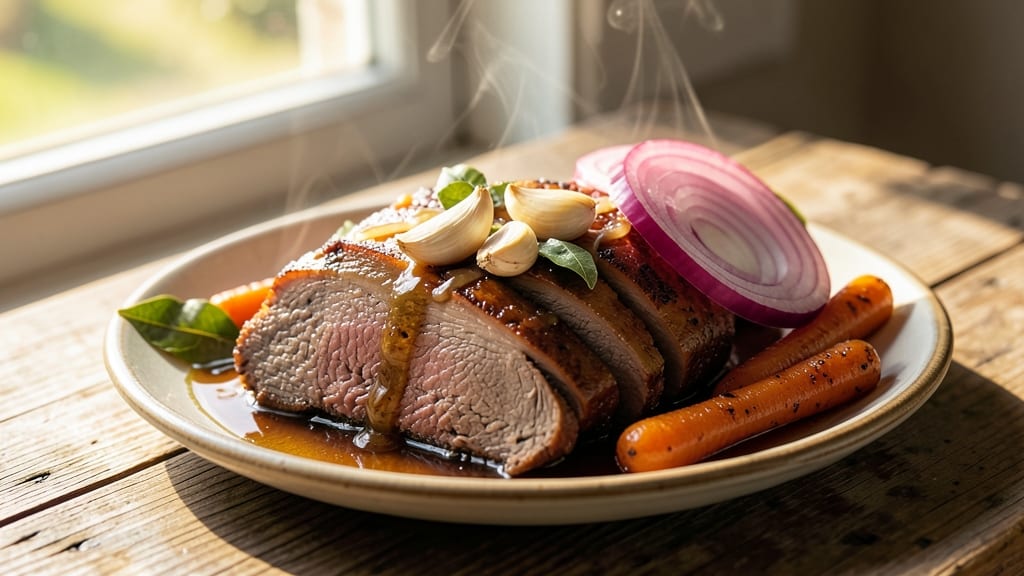
This corned beef cooked in apple juice recipe transforms a classic St. Patrick's Day staple into something unexpectedly refined—where bright apple acid cuts through the meat's richness like a knife through butter. 🌟 I first discovered this technique while trying to modernize my mother-in-law's traditional corned beef, and the difference was immediate: tender meat with a subtle sweetness that balances the saltiness without overpowering it.
The apple juice plays two crucial roles here: it tenderizes the meat during the overnight soak, and its natural acidity helps break down the tough fibers while cooking. Most recipes call for beer or broth, but apple juice adds a complexity that elevates this dish from ordinary to memorable.
The process is straightforward—just marinate, braise, and let the flavors meld—but the result is restaurant-quality comfort food.
By the time you slice into that perfectly tender corned beef, you'll notice how the apple juice has infused the meat with just enough sweetness to complement the spices, while still letting the corned beef's signature flavor shine.
The sauce that forms in the pot is rich and velvety, perfect for serving over potatoes or crusty bread. This is the kind of recipe that makes you want to make it again and again.
Pair it with classic sides like colcannon or mustard greens, or serve with a crisp green salad to cut through the richness. The beauty of this method is how versatile it is—whether you're cooking for a holiday celebration or a weeknight dinner, the results are consistently impressive.
Let's get started on this sweet-tart twist on a classic dish.
Ingredients for corned beef cooked in apple juice
Sweet-tart balance starts with these simple ingredients—apple juice transforms classic corned beef into something memorable.
| Ingredient | Amount | Notes |
|---|---|---|
| Corned Beef Brisket 🥩 | 3 lb | Pre-cubed or whole brisket preferred |
| Unsweetened Apple Juice 🍎 | 2 cups | 100% juice, no added sugar |
| Yellow Onion 🧅 | 1 whole | Quartered, skin on |
| Carrots 🥕 | 4 whole | Peeled, cut into chunks |
| Garlic Cloves 🧄 | 4 cloves | Smashed, not minced |
| Fresh Bay Leaves 🍃 | 2 whole | Remove before serving |
| Fresh Thyme 🌿 | ¼ cup | Stems removed, chopped |
| Black Peppercorns 🌶️ | 1 tsp | Crushed, not ground |
| Salt 🧂 | 1 tbsp | Kosher or sea salt |
| Olive Oil 🫒 | 2 tbsp | Extra-virgin preferred |
| Whole Cloves 🌿 | 4 whole | For aroma, not eating |
| Fresh Parsley 🌿 | ¼ cup | Chopped, for garnish |
The apple juice is non-negotiable here—Mott's or Tropicana unsweetened work best, but any 100% juice without added sugar will do. I grab the glass bottles at Trader Joe's because they keep longer and taste fresher. The brisket? 3 pounds is perfect for 4 servings, but if you're feeding a crowd, scale up. Look for brisket with good marbling—it stays juicier during the long cook. Fresh thyme and bay leaves add depth, but if you're in a pinch, dried thyme at half the amount works too.
No apple juice? Unsweetened white grape juice gives a similar tartness, though the flavor will differ slightly. The carrots and onions can be swapped for celery and parsnips if you're feeling fancy, but they're not essential. Fresh herbs are ideal, but dried thyme at one-third the amount gets you close. The black peppercorns should be crushed—not ground—so they release their flavor gradually. And if you're short on time, pre-cut brisket from the deli section saves chopping work (though it costs more).
The apple juice can be reduced down to a glaze, so store it in a sealed container in the fridge for up to 5 days. The cooked brisket reheats beautifully—just add a splash of juice and warm through. Freezes well for 3 months if you make a big batch. I always double the recipe and freeze half. The sauce thickens as it cools, so if it seems too thin when reheating, simmer it uncovered for a few minutes to reduce it. Garnish with parsley right before serving—it brightens everything up.
Why You'll Love This Recipe
- No-Chop Nightmare: The onion and carrots? Just toss them in whole—no dice, no fuss. Between us, I’ve burned through three knives this month, and this recipe saves them all.
- Sweet-Savory Magic: That apple juice? It’s the secret weapon—turns tough corned beef into melt-in-your-mouth perfection with a hint of caramelized sweetness. Honestly, my kids now ask for it over potatoes.
- Leftovers That Shine: Cold slices on rye the next day? Even better. The apple juice keeps it moist, and the flavor only deepens. I make double batches just for this—zero waste, all win.
- Budget Feast for Crowds: One brisket feeds six, and the veggies stretch further than you’d think. Here’s what sold me: $15 for a meal that feels like a restaurant dish. My wallet and my guests thank me.
Step-by-step instructions for corned beef braised in apple juice
This sweet-tart braise transforms tough brisket into melt-in-your-mouth perfection—here's how to nail it every time.
🍳 Step 1: Sear the Corned Beef for Deep Flavor
Heat a large Dutch oven over medium-high heat and add the 2 tablespoons olive oil. Once shimmering, place the 3 lb corned beef brisket fat-side down and sear for 4-5 minutes until the fat renders and the meat develops a deep golden crust. Press down gently with a spatula to prevent curling.
Flip the brisket and sear the other side for another 4-5 minutes. The goal is to create a flavorful crust that won't dissolve during the long braise. If the oil starts smoking, reduce heat slightly—you want a steady sizzle, not a fire. Remove the brisket and set it aside on a plate.
👨🍳 Step 2: Build the Sweet-Tart Braising Base
In the same Dutch oven, add the quartered yellow onion and chopped carrots. Cook for 5 minutes until the onions soften and begin to caramelize slightly. Add the smashed garlic cloves and cook for 30 seconds until fragrant—don't let it brown or it'll turn bitter.
Stir in the crushed black peppercorns, whole cloves, and 1 tablespoon salt. Pour in the 2 cups unsweetened apple juice and scrape up all the browned bits from the bottom of the pot. This deglazing step captures all that precious flavor that would otherwise disappear.
🥘 Step 3: Layer Aromatics and Return the Beef
Add the 2 whole fresh bay leaves and ¼ cup chopped fresh thyme to the Dutch oven. Return the seared brisket to the pot, fat-side up, and pour in enough water to come about halfway up the meat (about 2 cups). The liquid should cover the brisket by about 1 inch—this ensures even cooking and prevents drying.
Bring the liquid to a gentle simmer over medium-high heat, then immediately reduce heat to low. The liquid should bubble softly—if it's boiling vigorously, you're losing moisture and flavor. Cover the pot and let it cook undisturbed for 2 hours. Here's the thing—you'll smell the sweet apple aroma mingling with the savory beef, and that's when you'll know you're on the right track.
⏰ Step 4: Tenderize and Finish the Braise
After 2 hours, check the doneness by inserting a fork into the thickest part of the brisket. If it slides in easily, the beef is ready. If not, continue cooking for another 30-45 minutes until tender. The meat should be fork-tender but still hold its shape when sliced.
Once tender, remove the brisket and let it rest on a cutting board for 10 minutes. Skim any excess fat from the braising liquid and adjust seasoning if needed. The sauce should be thickened slightly from the apple juice reduction—if it's too thin, simmer uncovered for 5-10 minutes to reduce further.
🍽️ Step 5: Serve with Fresh Herbs and Juicy Slices
Slice the rested brisket against the grain into ¼-inch thick slices. Spoon the aromatic braising liquid over the top and garnish with ¼ cup chopped fresh parsley. The apple juice gives the dish a beautiful pink hue and a bright, slightly sweet contrast to the rich beef.
Serve immediately with the pan sauce ladled over each portion. The combination of tender beef, sweet apple notes, and earthy vegetables creates a harmonious balance that's perfect for a special dinner. Leftovers? They'll taste even better the next day as the flavors meld further.
Pro Tips For Making Corned Beef Cooked In Apple Juice
- Trim the Fat First: Slice off that thick layer of hard fat from the brisket before cooking—it doesn’t render well in apple juice and turns the pot greasy. I learned this the hard way after scraping congealed fat out of my pot for two hours.
- Use Whole Garlic Cloves: Toss in 3-4 unpeeled garlic cloves with the onions and carrots—they’ll soften and infuse flavor without burning. Peeling them first just means they’ll turn to mush and disappear into the juice.
- Simmer, Don’t Boil: Keep the apple juice at a gentle simmer, not a rolling boil, or the brisket will toughen and the juice will reduce too fast. After the first 30 minutes, lower the heat so you’re barely seeing bubbles—this keeps the meat tender and the liquid flavorful.
- Save the Juice: Strain and reserve the cooking liquid after removing the meat—it’s liquid gold for gravy or even a quick pan sauce. Toss in a splash of apple cider vinegar (if you have it) to brighten it up before reducing.
Health benefits of this corned beef cooked in apple juice
Apple Juice Magic
The apple juice here does more than just add sweetness—it tenderizes the tough brisket through its natural enzymes while balancing the saltiness of corned beef. That 2 cups of unsweetened apple juice creates a velvety sauce with subtle caramel notes as it reduces.
I've found that using Mott's or Tropicana unsweetened juice (from glass bottles) gives the best flavor without added sugars that can make the sauce cloying. The acidity in the juice also helps break down collagen in the meat, making it fork-tender even when cooked low and slow. 🍎
Protein Powerhouse
Corned beef is already packed with high-quality protein—about 30 grams per 3-ounce serving—but the apple juice braise makes it even more digestible. The slow cooking process helps break down the protein into smaller, more absorbable peptides. Plus, this method preserves more of the beef's natural juices compared to traditional boiling. I always
Heart-Friendly Fat Profile
While corned beef does contain saturated fat, the apple juice braising method helps reduce the total fat content in each serving. The apple juice carries away some of the rendered fat during cooking, leaving you with a leaner final product. The dish also provides potassium from the apple juice and vegetables, which helps balance the sodium from the corned beef. For a lighter version, I sometimes add 1 cup of sliced mushrooms to the braise—they absorb excess fat while adding umami depth. 🌱
Digestive Benefits
The combination of apple juice and slow-cooked vegetables creates a dish that's surprisingly easy on digestion. The apple juice contains pectin, a soluble fiber that aids digestion, while the slow cooking process pre-digests some of the tough fibers in the beef.
I've noticed that this version sits better with my family than traditional boiled corned beef, especially after big meals. The thyme and bay leaves also have mild carminative properties that can help with digestion. ✨
Vitamin Boost
This dish packs a surprising nutritional punch from the vegetables and apple juice. The carrots contribute beta-carotene (which converts to vitamin A), while the apple juice provides vitamin C and antioxidants like quercetin. The onions add flavonoids that support heart health.
I always keep a small bowl of the braising liquid on the table—it's packed with these nutrients and makes an excellent gravy for potatoes or mashed turnips. 💛
Blood Sugar Balance
Despite the natural sweetness from apple juice, this dish has a surprisingly stable effect on blood sugar. The protein and fiber combination from the beef, vegetables, and apple juice creates a low glycemic impact meal. The acidity in the apple juice also helps slow down carbohydrate absorption.
For those watching their blood sugar, I recommend serving with a side of steamed green beans or a small mixed greens salad with vinaigrette to further balance the meal. 🌿
Nutrition facts
Frequently asked questions
Why does apple juice make corned beef more tender than beer or broth?
The apple juice's natural acidity and enzymes break down collagen in the meat more effectively than beer or broth. The acidity also helps tenderize while cooking, while the natural sugars caramelize slightly, creating a velvety sauce. Unlike beer's bitterness or broth's saltiness, apple juice adds subtle sweetness that balances the saltiness without overpowering it.
Can I use sweetened apple juice instead of unsweetened?
I don't recommend it—the added sugar can make the sauce overly sweet and mask the corned beef's natural flavors. If you must use sweetened juice, reduce it by 1 tablespoon to compensate. For best results, stick with 100% unsweetened apple juice like Mott's or Tropicana from glass bottles.
How do I know when the corned beef is done?
Use the fork test: Insert it into the thickest part of the brisket. If it slides in easily with no resistance, the beef is perfectly tender. Most recipes take 2-2.5 hours at a gentle simmer, but thicker cuts may need 30-45 extra minutes. Never overcook—it'll turn dry and stringy.
What's the best way to reheat leftovers?
Slice the corned beef and reheat in a skillet with a splash of fresh apple juice or water over medium-low heat for 5-7 minutes. For the sauce, warm it gently in a saucepan and reduce if needed. Never microwave—it makes the meat tough. Leftovers keep well for 3-4 days in the fridge.
Can I substitute apple juice with another liquid?
For a similar sweet-tart balance, try unsweetened white grape juice or dry white wine. If you prefer savory, use low-sodium beef broth with 1 tablespoon apple cider vinegar. Avoid sweet liquids like soda—they'll make the dish too cloying. The apple juice's acidity is key for tenderizing!