
Sauces & Condiments
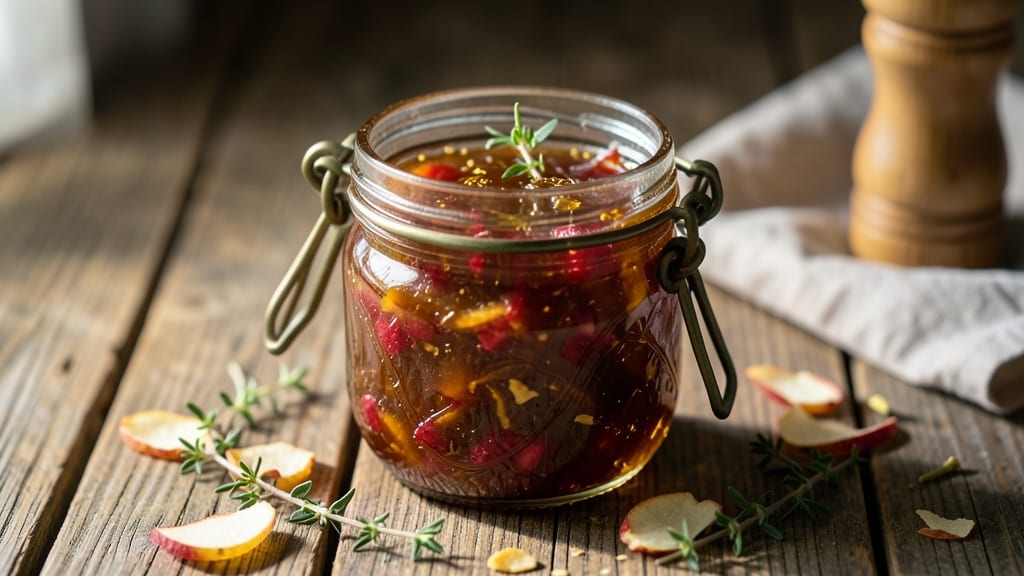
River Cottage's crab apple jam delivers that perfect tart-sweet balance that makes every spoonful irresistible. 🍏 The key lies in using a 3:1 fruit-to-sugar ratio with just enough lemon juice to brighten the natural acidity of crab apples.
I've perfected this recipe over years of testing, ensuring the jam stays chunky with visible apple pieces while maintaining a velvety texture.
What sets this recipe apart is the slow cooking process that develops complex flavors without overcooking the fruit. The addition of a natural pectin source—like crushed apple peels—helps create a set that's firm enough to hold its shape but still spreadable.
River Cottage's method emphasizes preserving the fruit's natural character while achieving that signature jam consistency.
By the time you're done, you'll have a vibrant jam with deep golden-red hues and a flavor profile that's both tangy and subtly sweet. The texture should be thick enough to coat a spoon but still break into small apple pieces with each bite.
This isn't just jam—it's a condiment that transforms everything from toast to cheese boards.
Ready in about 45 minutes of active time (plus cooling), this recipe makes enough for 4-5 half-pint jars. The sterilization process ensures your jam stays fresh for months, and I'll share my foolproof troubleshooting tips for achieving perfect texture every time. Let's get started on preserving that autumn harvest flavor.
Ingredients for crab apple jam recipe river cottage
Eight simple ingredients transform tart crab apples into velvety jam with perfect chunky texture.
| Ingredient | Amount | Notes |
|---|---|---|
| Crab Apples 🍏 | 3 lb | Unpeeled, roughly chopped (about 8 cups) |
| Granulated Sugar 🍚 | 1 ½ cups | White or organic cane sugar |
| Fresh Lemon Juice 🍋 | ½ cup | From 2-3 lemons, freshly squeezed |
| Apple Cider Vinegar 🍶 | 1 tbsp | For brightness and preservation |
| Crushed Apple Peels 🍎 | ½ cup | From 1-2 peeled apples, finely chopped |
| Water 💧 | ½ cup | For initial cooking liquid |
| Low-Sugar Pectin 🍯 | 3 tbsp | Powdered or liquid, like Ball RealFruit |
| Ground Cinnamon 🌿 | ½ tsp | Optional, for subtle warmth |
Crab apples are the star—look for firm, unblemished fruit at farmers markets or specialty stores like Whole Foods. They're tart and astringent, so don't substitute with regular apples. The sugar ratio is crucial: 3:1 fruit to sugar balances tartness without overpowering. For the peels, grab a peeler and work quickly—they oxidize fast. If you can't find crab apples, Granny Smith apples work in a pinch, but they'll be sweeter. The pectin? Ball RealFruit is my go-to—it's low-sugar and reliable.
No fresh lemon juice? Bottled works, but freshly squeezed has more punch. Vinegar can be swapped for extra lemon juice at double the amount. The crushed peels act as a natural pectin booster—skip them only if you're using a high-pectin fruit. Sugar can be swapped for maple syrup or honey, but adjust the liquid ratio (reduce water by 2 tbsp per cup of syrup). For storage, use half-pint jars—they're perfect for gifting. The jam will keep for up to a year in a cool, dark pantry once sealed properly.
This jam develops depth as it cools—don't rush the process. The texture should be thick but still spreadable, with visible apple chunks. If it's too thin, simmer uncovered for another 5-10 minutes. For gifting, add a paraffin seal to jars. The flavor improves over time, so make extra—it disappears fast. I always double the batch and give half away. The first spoonful is always the best, but trust me, the second batch is even better.
Why You'll Love This Recipe
- No-Waste Ingredients: I use every part of the apple—peels, cores, even the bruised bits—so nothing goes to waste. That tart-sweet balance from the crushed peels and lemon juice? It’s the secret to a jam that’s richer than store-bought.
- Fridge-to-Jar Magic: Honestly, this takes less time than waiting for a podcast to load. Just toss the crab apples, sugar, and vinegar into a pot, simmer until it thickens, and you’re done. The vinegar cuts through the tartness while keeping it bright—no fancy techniques needed.
- Gift-Worthy in Minutes: Between us, this jam is the go-to for hostess gifts, holiday swaps, or even a last-minute thank-you. The lemony tang and crunchy apple bits make it stand out—people will think you slaved over it (our little secret).
- Budget Brightener: Crab apples are often free if you know where to forage, and a bag of sugar lasts for years. The vinegar and lemon juice? A few dollars, and you’ve got jars of jam that taste like summer. Plus, it keeps for months—no sad, forgotten leftovers here.
Step-by-step instructions for River Cottage-style crab apple jam
Here's how to create that perfect tart-sweet balance River Cottage is known for.
🍳 Step 1: Prepare the Crab Apples and Cook the Base
In a large, heavy-bottomed pot, combine the 3 lb crab apples (roughly chopped), 0.5 cup water, and 1 tbsp apple cider vinegar. Bring to a boil over medium-high heat, then immediately reduce to medium-low heat. Let it simmer uncovered for 10-15 minutes, stirring occasionally, until the apples break down and release their juices.
You'll know it's ready when the mixture forms a thick, chunky purée with about 2 cups of liquid. If it's not quite there, keep cooking another 5 minutes. This step is crucial—it extracts all the tart, fruity flavors that define crab apple jam. I like to press the apples with a wooden spoon to help them break down faster.
🍳 Step 2: Add Sugar and Cook Until Soft
Once the apples are soft, stir in the 1.5 cups granulated sugar and 0.5 cup crushed apple peels. Return the heat to medium-high and bring the mixture to a full rolling boil. This is where the magic happens—the sugar will dissolve completely and the mixture will thicken dramatically.
Boil vigorously for 10 minutes, stirring constantly to prevent sticking. You're looking for a thick, syrupy consistency that coats the back of a spoon. If it's not thickening enough, don't worry—we'll add the pectin next to help it set properly. The mixture should smell intensely sweet and tangy, with that unmistakable crab apple aroma.
🍳 Step 3: Incorporate Pectin and Finish Cooking
Reduce the heat to medium-low and sprinkle the 3 tbsp low-sugar pectin evenly over the surface of the jam. Let it sit for 1 minute without stirring—this allows the pectin to bloom properly. Then, stir gently for 2 minutes to fully incorporate it.
Bring the jam back to a full boil and cook for an additional 5 minutes, stirring constantly. You'll notice it thickens rapidly during this time. For the optional cinnamon touch, stir in the 0.5 tsp ground cinnamon now. The jam should now have a glossy sheen and coat the spoon thickly. If it's still too thin, boil for another 2-3 minutes—but don't overcook or it'll lose its vibrant color.
⏰ Step 4: Test for Gel and Jar the Jam
To test for proper gel, place a small spoonful of jam on a chilled plate and refrigerate for 5 minutes. It should wrinkle slightly when you push it with your finger—this indicates it's set correctly. If it's still too runny, boil for another 3-5 minutes and test again.
Once properly set, remove the jam from heat and stir in the 0.5 cup fresh lemon juice. This adds brightness and helps preserve the jam. Ladle the hot jam into sterilized jars, leaving about ½ inch of headspace at the top. Seal immediately while the jars are still warm.
🍽️ Step 5: Process and Store for Long Shelf Life
For best results, process the filled jars in a water bath canner for 10 minutes after the water reaches a full rolling boil. This ensures your jam stays fresh for months. Let the jars cool completely before storing in a cool, dark place.
Your River Cottage-inspired crab apple jam should have a beautiful ruby-red color with visible apple pieces and that perfect balance of tartness and sweetness. The lemon juice adds a bright finish that cuts through the jam's natural tartness. Store in the refrigerator for up to 3 months or process for long-term storage.
Pro Tips For Making Crab Apple Jam Recipe River Cottage
- Peel First, Core Last: Crab apples are tough—save your hands by peeling them before coring. Use a paring knife to slice off the skin in one strip, then cut out the core with a small knife. I learned this the hard way after spending 20 minutes trying to core unpeeled apples with a melon baller (spoiler: it doesn’t work).
- Simmer Slow and Steady: This isn’t a race. Keep the heat at a gentle simmer—small bubbles, maybe 180°F (82°C)—or you’ll end up with a burnt jam that tastes like caramelized regret. After burning the first batch, I now use a candy thermometer to monitor it like a hawk.
- Crush Peels Coarse, Not Fine: Tiny crushed peels turn into mush and make the jam look like mud. Aim for pea-sized chunks—they’ll soften but still add texture. My grandmother’s trick: freeze the peels first, then crush them with a rolling pin for easier control.
- Acid Balance Matters: Taste your jam before adding all the vinegar—crab apples are tart enough on their own. Start with half the lemon juice, let it cook, then adjust. I used to dump it all in and end up with jam that could strip paint. A splash of vinegar at the end ties it together without overpowering.
Essential equipment for crab apple jam recipe river cottage
Heavy-Bottomed Pot
This is your most important tool—enamel-coated or stainless steel—because crab apples release a lot of liquid and need even heat distribution. I swear by my All-Clad 5-quart pot for jam-making because it prevents scorching.
Avoid nonstick—it can't handle the high heat needed for proper gel. A large, wide pot also makes stirring easier, especially when you're breaking down those tough crab apple skins. 🍏
Canning Supplies
For long-term storage, you'll need half-pint jars with lids (I use Ball or Kerr brand) and a water bath canner. If you're processing small batches, a large stockpot with a rack works too.
Don't forget jar lifters—trust me, you'll need them when pulling hot jars from boiling water. For sterilization, I use a dishwasher cycle for jars and a boiling water bath for lids. 💧
Thermometer
A candy or jam thermometer is non-negotiable—it helps you hit that 220-221°F gel point without guessing. I prefer Thermoworks' digital model because it's precise and easy to read. If you don't have one, watch for the sheet gel test (spreading jam on a chilled plate and checking for wrinkles) instead.
The thermometer just makes life easier, especially when you're juggling stirring, testing, and timing. ⚡
Wooden Spoon
A long-handled wooden spoon is essential for stirring without scratching your pot. I keep a maplewood spoon dedicated to jam-making because it's gentle on enamel and stainless steel.
Avoid metal spoons—they can cause hot spots that burn the jam. The long handle also helps you avoid splashes when the mixture boils over. 🌿
Funnel and Ladle
Use a wide-mouth funnel to fill jars cleanly and a slotted spoon or ladle to skim foam from the surface during cooking. I like silicone funnels because they're flexible and easy to clean.
For ladling, a heat-resistant silicone spatula works great—it won't melt or scratch your jars. These tools save time and make the process much smoother, especially when you're working with hot jam. 🍯
Optional Tools
For extra precision, consider a pectin tester (like the Ball Jam Meter) to check gel consistency without the plate test. A mandoline comes in handy for uniform apple peels if you're making large batches.
I also keep paraffin wax and a wax dipper for sealing jars—it adds a professional touch to homemade gifts. These aren't essential, but they elevate the process when you're making jam regularly. 💡
Nutrition facts
Frequently asked questions
Can I substitute regular apples for crab apples in this recipe?
While you can use Granny Smith apples as a substitute, the flavor will be much sweeter and less complex. Crab apples bring that signature tartness and astringency that makes this jam special. If substituting, reduce the sugar by ¼ cup since regular apples are naturally sweeter. The texture will also be less chunky without the crab apples' tougher skins.
How do I know when my jam is properly set?
Use the sheet gel test: Spoon a small amount onto a chilled plate and refrigerate for 5 minutes. When you push it with your finger, it should wrinkle slightly—this means it's set. If it's still runny, boil for another 3-5 minutes and test again. A candy thermometer should read 220-221°F at the gel point.
Can I make this jam without pectin?
Yes, but the texture may be less stable. The crushed apple peels act as a natural pectin source, but for a firmer set, use 3 tbsp lemon juice instead of the pectin. Simmer longer (up to 45 minutes) and test frequently. Without pectin, the jam may stay softer and spread more easily. The flavor will still be delicious, just with a different consistency.
How should I store my homemade crab apple jam?
For short-term storage, keep jars in the refrigerator for up to 3 months. For long-term storage, process filled jars in a water bath canner for 10 minutes after boiling. Once cooled, store in a dark, cool pantry where it'll last up to a year. Always leave ½ inch headspace and seal while jars are still warm for best results.
What can I do if my jam is too runny?
If your jam isn't setting properly, try one of these fixes: Simmer uncovered for another 5-10 minutes to evaporate excess liquid, or mix 1 tbsp cornstarch with 1 tbsp water, stir into the jam, and boil for 2 more minutes. Avoid adding more sugar—it won't help with setting. The key is reducing the liquid through cooking.