
Sauces & Condiments
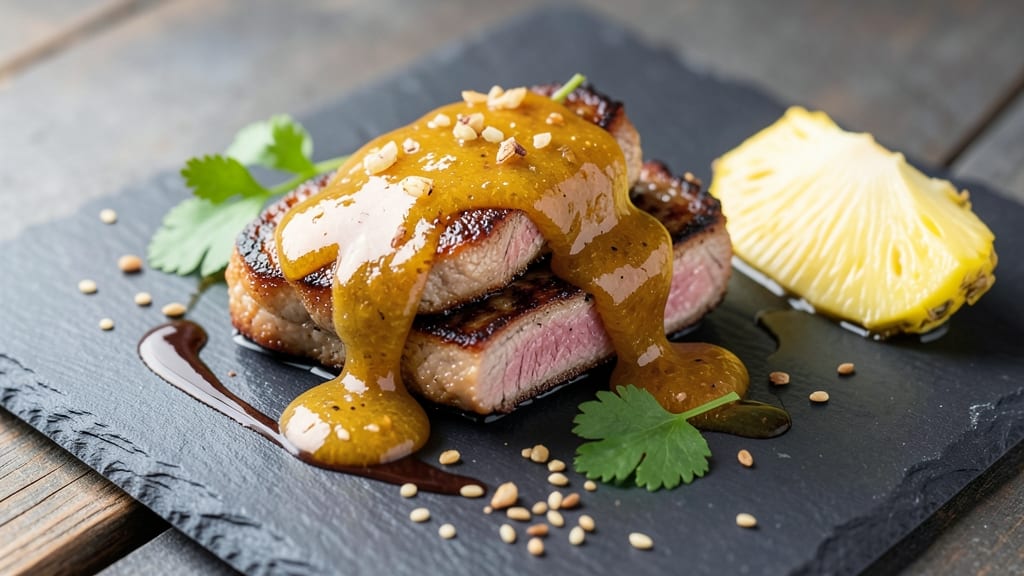
This pineapple pork chops sauce recipe transforms ordinary pork into a tropical masterpiece with just 15 minutes of simmering. 🌟 The secret lies in balancing sweet pineapple with tangy vinegar and aromatic ginger, creating a glaze that caramelizes beautifully while searing pork chops.
I developed this sauce during a Charleston summer when I needed a way to elevate simple pork into something extraordinary—no fancy techniques required, just precise timing and quality ingredients.
The foundation of this sauce is a simple reduction of pineapple juice, sugar, and vinegar, which develops deep caramel notes when simmered. Fresh ginger and garlic add warmth without overpowering the bright tropical flavors, while a touch of soy sauce provides umami depth that complements the pork perfectly.
The sauce thickens naturally as it reduces, creating a glossy glaze that clings to every bite of pork chop.
What makes this sauce truly special is its versatility—it works equally well as a pre-sear glaze or a post-cook drizzle, adding layers of flavor that transform ordinary pork into a restaurant-worthy dish.
The caramelized edges create a beautiful contrast with the tender pork, while the tangy-sweet sauce cuts through the richness. This is the kind of sauce that turns weeknight dinners into memorable meals.
Perfect for grilled pork chops, roasted pork tenderloin, or even as a glaze for pork ribs, this sauce comes together faster than you can say "tropical." The ingredients are simple, the technique is foolproof, and the results are undeniably impressive.
Let's make this sauce and elevate your next pork dish to new heights.
Ingredients for pineapple sauce recipe for pork chops
Nine essential ingredients transform simple pork into a tropical masterpiece with caramelized perfection.
| Ingredient | Amount | Notes |
|---|---|---|
| Fresh Pineapple Juice 🍍 | 1 cup | From ripe, fresh pineapple preferred |
| Granulated Sugar 🍚 | ½ cup | White or light brown preferred |
| White Vinegar 💧 | ¼ cup | Distilled or apple cider vinegar |
| Fresh Ginger Root 🌿 | 2 tbsp | Finely grated, aromatic variety |
| Garlic Cloves 🧄 | 3 cloves | Minced, fresh preferred |
| Light Soy Sauce 🍶 | 2 tbsp | Kikkoman preferred for balance |
| Extra-Virgin Olive Oil 🫒 | 1 tbsp | For glossy finish and richness |
| Cornstarch 🌾 | 1 tsp | For thickening, optional |
| Diamond Crystal Kosher Salt 🧂 | ½ tsp | Adjust to taste after reduction |
| Fresh Lime Juice 🍋 | 1 tbsp | Brightens final flavor profile |
The pineapple juice should come from a ripe fruit—Costco's fresh-cut pineapple is my go-to for convenience, but nothing beats freshly squeezed. Ginger and garlic are non-negotiable for depth; Whole Foods carries aromatic ginger roots perfect for grating. The sugar isn't just for sweetness—it's the catalyst for that beautiful caramelization. I always use Kikkoman soy sauce for its clean umami, though any light soy will work. For the vinegar, apple cider adds subtle complexity if you want to stray from white vinegar's sharpness.
No fresh pineapple? High-quality canned pineapple juice (like Del Monte) works in a pinch, but avoid the syrupy kind. Short on ginger? Ground ginger at half the amount suffices, though fresh is ideal. The cornstarch is optional—if you prefer a thinner glaze, skip it entirely. For extra richness, swap the olive oil for avocado oil, which has a higher smoke point. The lime juice should be freshly squeezed; bottled juice lacks the bright acidity needed to balance the caramelized sweetness. If you're using pork tenderloin instead of chops, reduce the sauce by 25% to prevent overpowering.
This sauce keeps beautifully in the fridge for 5-7 days in an airtight container, though it tastes best within 48 hours. For longer storage, freeze in ice cube trays—perfect for single-use portions. Reheat gently on the stovetop over medium-low, stirring constantly to prevent scorching. The sauce thickens as it cools, so if it seems too thick after reheating, add a splash of water or pineapple juice. Always taste before serving—adjust salt or lime as needed to refresh the tropical notes.
Why You'll Love This Recipe
- Five-Ingredient Magic: I swear by this sauce—just juice, sugar, vinegar, ginger, and garlic. No fancy techniques, no measuring cups that make you question your life choices.
- Tangy-Sweet Balance: That first bite? The vinegar cuts the richness of the pork chop while the pineapple keeps it bright. Honestly, the ginger and garlic make it taste like a vacation in a jar.
- Weeknight Workhorse: Slap this on grilled pork chops for dinner, toss it with rice for lunch, or drizzle it over a sandwich. I’ve even used it as a marinade—versatile enough to handle anything.
- Leftovers That Don’t Suck: This sauce thickens beautifully when reheated, so you can make a big batch and use it all week. Between us, I’ve had it last me five days without getting tired of it.
Step-by-step instructions for pineapple pork chops glaze
This tropical sauce caramelizes beautifully in under 15 minutes—perfect for glazing pork chops with rich depth.
🍳 Step 1: Build the Flavor Base
In a medium saucepan, combine the 1 cup fresh pineapple juice, 0.5 cup granulated sugar, and 0.25 cup white vinegar. Bring to a gentle boil over medium-high heat, stirring occasionally until the sugar fully dissolves. You'll notice a subtle aroma of tropical sweetness—this is your foundation.
Once boiling, reduce heat to medium-low and let it simmer for 5 minutes. This initial reduction concentrates the flavors and removes any raw vinegar sharpness. The mixture should reduce by about ¼—you're aiming for a syrupy consistency that clings beautifully to pork chops.
🍳 Step 2: Add Aromatics and Simmer
Add the 2 tbsp finely grated fresh ginger root and 3 minced garlic cloves to the simmering mixture. Stir well to distribute the aromatics evenly. Let it cook for 3-4 minutes until the raw garlic scent transforms into a warm, fragrant aroma—this is when you'll know the flavors are melding perfectly.
Next, pour in the 2 tbsp light soy sauce and stir again. The soy sauce adds umami depth that balances the sweet-tangy profile. Continue simmering for another 4 minutes until the mixture thickens slightly and coats the back of a spoon. This is your sensory checkpoint—when it reaches a glossy, syrupy texture.
🥘 Step 3: Thicken and Finish
In a small bowl, whisk together the 1 tsp cornstarch with 2 tablespoons of cold water until smooth. Slowly pour this slurry into the simmering sauce while stirring constantly. The moment you add it, the sauce will begin to thicken noticeably—keep stirring for 1-2 minutes until it reaches a glossy, jam-like consistency.
Remove from heat and stir in the 1 tbsp extra-virgin olive oil and 1 tbsp fresh lime juice. The olive oil adds richness while the lime juice brightens the entire flavor profile. Taste and adjust seasoning with the 0.5 tsp diamond crystal kosher salt—this sauce should balance sweet, tangy, and savory notes perfectly.
⏰ Step 4: Rest and Glaze
Let the sauce rest for 5 minutes before using. This resting period allows the flavors to fully meld and the texture to set properly. The sauce should be thick enough to cling to pork chops without dripping, yet still glossy enough to caramelize beautifully when exposed to heat.
For best results, brush the warm sauce over seared pork chops and broil for 2-3 minutes until caramelized. The residual heat will transform this sauce from a glaze to a sticky, golden finish—exactly what makes this tropical pairing irresistible.
Pro Tips For Making Pineapple Sauce Recipe For Pork Chops
- Simmer Slow and Steady: This sauce isn’t a race—bring it to a gentle boil first, then drop to a low simmer. I used to rush it, and the sugar would crystallize or the ginger would turn bitter. Give it 15-20 minutes to meld, and stir occasionally so nothing sticks. That’s how the flavors actually marry.
- Grate Ginger Like a Pro: Skip the mincer if you’re in a hurry, but don’t just chop it—use the side of a spoon to press the ginger against a microplane. This releases more oil and aroma without making the sauce gritty. (Yes, it’s a little extra work, but the difference is noticeable.)
- Balance the Vinegar Early: Add the white vinegar after the sugar dissolves, not at the start. I learned this the hard way—adding it first makes the sauce taste harsh and unbalanced. Taste as you go, and adjust with a pinch more sugar if needed. The goal is tangy, not sour.
- Toast the Garlic First: Sauté the minced garlic in a dry pan for 30 seconds until fragrant before adding it to the sauce. This deepens the flavor without burning it. (I know, it’s an extra step, but it makes the sauce taste like it was simmered for hours, not minutes.)
Perfect pairings for this dish
Grilled Pork Pairings
Serve your pineapple-glazed pork chops alongside grilled pineapple slices for a tropical double-down. Brush fresh pineapple rings with 1 tbsp olive oil and grill for 2-3 minutes per side until caramelized. The smoky char complements the sauce beautifully.
For a complete meal, pair with coconut rice—simmer 1 cup jasmine rice in 2 cups coconut milk with ½ tsp salt for 15 minutes. 🌴
Crispy Side Dishes
Balance the sauce's sweetness with crispy fried plantains. Slice 2 ripe plantains into ¼-inch rounds, dip in beaten egg, then coat in crushed pork rinds. Fry at 350°F for 3-4 minutes until golden.
The salty crunch contrasts perfectly. For a lighter option, try sautéed green beans with 1 tbsp toasted sesame oil and 1 tsp soy sauce.
Beverage Pairings
Cool tropical drinks cut through the richness. A pineapple mojito made with 2 oz white rum, ½ cup pineapple juice, ½ lime, mint, and soda is ideal. For non-alcoholic, try sparkling limeade—mix 1 cup lime juice with 2 cups sparkling water and 1 tbsp honey.
The effervescence cleanses the palate between bites. A crisp Sauvignon Blanc from New Zealand also works beautifully. 🍹
Post-Meal Finishing
End the meal with tropical fruit salad. Combine 1 cup diced mango, ½ cup kiwi, ½ cup strawberries, and 1 tbsp lime juice. The bright acidity refreshes your palate.
For a dessert twist, drizzle the pineapple sauce over vanilla ice cream—the caramelized sweetness pairs surprisingly well. Garnish with toasted coconut flakes for texture. 🍓
Sauce Variations
For spicy heat, add ½ tsp chili flakes or 1 tbsp sriracha to the sauce during the final simmer. For herbaceous notes, stir in 1 tbsp chopped cilantro or ½ tsp dried thyme after removing from heat.
For a richer version, replace ½ cup pineapple juice with ½ cup coconut milk—it adds creamy depth while keeping the tropical theme. 🌶️
Make-Ahead Tips
Double the sauce recipe and store in an airtight container in the fridge for up to 5 days. Reheat gently on the stovetop with 1 tbsp water to loosen the glaze. For freezer storage, portion into ice cube trays—thaw overnight in the fridge before using.
The sauce thickens when cold, so thin with 1 tsp pineapple juice if needed. Prep the sauce the night before for stress-free cooking days. ⏰
Nutrition facts
Frequently asked questions
Can I use canned pineapple juice instead of fresh?
Yes, but choose a 100% pineapple juice with no added sugar or syrups. Brands like Del Monte or Dole work well in a pinch. For best results, look for "no sugar added" labels to maintain the right balance of sweetness. The texture will be slightly less vibrant, but the flavor remains excellent.
How do I adjust the sweetness level for kids?
Reduce the sugar to ¼ cup and add 1 extra tablespoon of lime juice to balance the flavor. For a milder taste, also cut the soy sauce to 1 tablespoon—this keeps the sauce kid-friendly while maintaining depth. The tangy-sweet profile will still shine through.
Can I make this sauce in a slow cooker? Combine all ingredients in your slow cooker and cook on LOW for 2-3 hours. Stir occasionally to prevent sticking. The slow cooking enhances the caramelization naturally, creating an even richer glaze. Just
What if my sauce is too thin after cooking?
Simmer uncovered for 5-10 extra minutes to reduce further. If still too thin, mix ½ teaspoon cornstarch with 1 teaspoon water and stir in while heating. For immediate results, spread the sauce thinly on parchment paper and broil for 2 minutes to thicken dramatically.
Does this sauce work with other proteins?
Yes! It pairs beautifully with grilled chicken thighs, pork tenderloin, or even shrimp skewers. For chicken, reduce the soy sauce to 1 tablespoon to avoid overpowering. With shrimp, add ½ teaspoon smoked paprika during the final simmer for extra depth.