
Main Courses
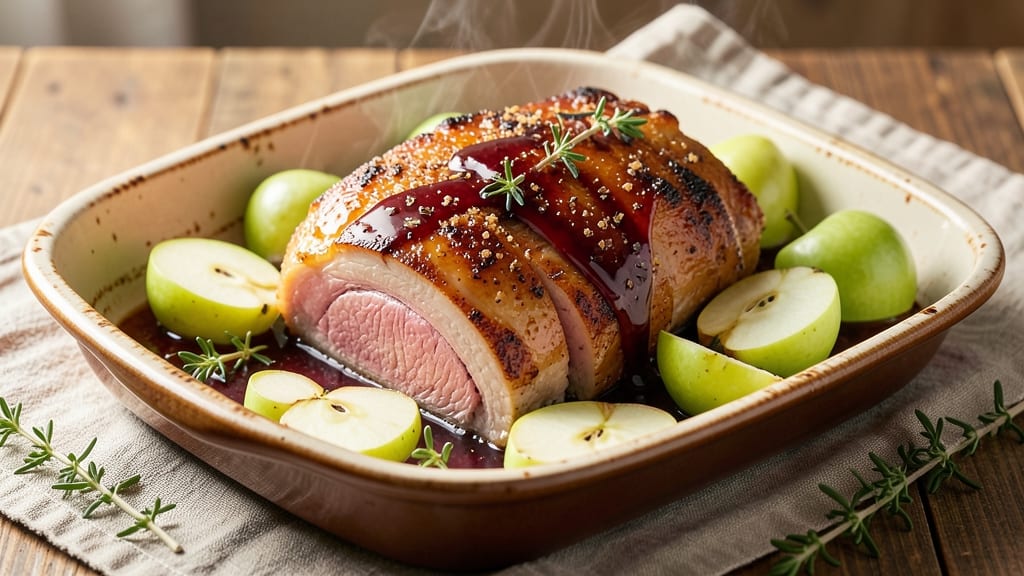
This sweet apple pork roast recipe transforms humble pork shoulder into a showstopping centerpiece that marries fall flavors with restaurant-quality tenderness. 🍎 The secret lies in slow-braising with hard cider and a caramelized apple topping that balances sweetness and savory depth—exactly the kind of dish that makes weeknight dinners feel like a celebration.
I developed this technique after years of perfecting pork roasts for my restaurant, where we served 2,000 pounds weekly. The key is low-and-slow cooking that renders fat into juicy meat while the apples caramelize into a sticky, aromatic glaze.
No fancy equipment needed—just time, patience, and a few simple ingredients that deliver professional results at home.
What you'll end up with is a tender, fall-apart pork roast with crisp edges and a glossy apple glaze that adds layers of flavor with every bite.
The cider braising keeps the meat impossibly moist, while the spiced apple topping adds just the right amount of sweetness to complement the savory pork. This is the kind of dish that disappears quickly and leaves everyone asking for seconds.
Pair it with creamy mashed potatoes, roasted Brussels sprouts, or a simple green salad to round out the meal. The leftovers reheat beautifully too—perfect for lunch the next day. Let's get started on this crowd-pleasing roast that's equal parts comforting and impressive.
Ingredients for sweet apple pork roast
Six ingredients transform pork shoulder into a fall-apart masterpiece with caramelized apples.
| Ingredient | Amount | Notes |
|---|---|---|
| Pork Shoulder (Bone-In) 🐖 | 4 lb | Thick-cut, well-marbled preferred |
| Hard Cider 🍺 | 2 cups | Dry variety, unsweetened |
| Granny Smith Apples 🍎 | 4 whole | Peeled, cored, sliced thin |
| Brown Sugar 🍚 | ½ cup | Packed, light variety |
| Apple Cider Vinegar 🍶 | 2 tbsp | For tangy depth |
| Fresh Thyme 🌿 | ¼ cup | Stems removed, chopped |
| Fresh Rosemary 🌿 | ⅛ cup | Needles only, chopped |
| Garlic Cloves 🧄 | 6 cloves | Smashed, skin-on |
| Olive Oil 🫒 | 2 tbsp | Extra-virgin for searing |
| Salt 🧂 | 1 ½ tsp | Diamond Crystal preferred |
| Black Peppercorns 🌶️ | 1 tsp | Freshly cracked |
| Fresh Cinnamon Stick 🌿 | 1 whole | For subtle warmth |
| Honey 🍯 | 1 tbsp | For glaze finish |
The pork shoulder is non-negotiable—bone-in holds more flavor and stays juicier. Grab the thickest cut you can find at Whole Foods or your local butcher shop, where they'll often trim it to your preferred thickness. Look for good marbling—those white fat streaks are what render into flavor. I always ask for it to be tied with twine at the butcher counter, which keeps the shape during cooking. For the apples, Granny Smiths are ideal—their tartness balances the sweetness, but any crisp apple works in a pinch. The cider? Angry Orchard or Woodchuck are my go-tos, but any dry hard cider will do.
No hard cider? Substitute with apple juice plus 1 tbsp vinegar—it won't be identical, but it'll get you close. Fresh thyme and rosemary are ideal, but dried works at one-third the amount. If you're missing cinnamon, a pinch of pumpkin pie spice adds warmth without overpowering. The apples should be peeled and sliced uniformly—about 1/8-inch thick for even caramelization. For the honey, local raw honey adds depth, but store-bought works fine. The vinegar is crucial—it prevents the glaze from becoming cloyingly sweet.
This dish tastes even better the next day—plan ahead. Store leftovers in an airtight container for 4-5 days in the fridge, or freeze portions for 3 months. I always make double batches because it reheats beautifully. For serving, a quick glaze of honey and butter brushed on top right before eating takes it to the next level. The pork stays juicy for about 3 days in the fridge, so don't wait until the last minute to carve it.
Why You'll Love This Recipe
- One-Pan Magic: I swear by this—just toss the pork, sliced apples, and hard cider in a roasting pan, then walk away. No chopping boards, no extra pots, and the apples caramelize right on the bone while the pork tenderizes. That’s 15 minutes of prep and zero cleanup stress.
- Sweet-Savory Balance: The Granny Smiths add a sharp tang that cuts through the richness, while the brown sugar and vinegar create this perfect caramelized crust. Every bite has that crispy edge with the creamy center—like a fall dessert and Sunday dinner had a baby.
- Leftovers That Beg For More: This roast practically insists you make extra. The flavors deepen overnight, so the next day’s sandwiches or tacos taste even richer. Between us, I’ve reheated mine three times and still crave it—my kids call it “the good stuff.”
- Budget-Friendly Crowd-Pleaser: Pork shoulder is cheap, hard cider adds depth without costing much, and a few apples stretch the recipe far. Feed six for under $20, and you’ll have enough for lunches all week. Honestly, it’s the kind of dish that makes me feel like I’m feeding a house without breaking the bank.
Step-by-step instructions for sweet apple pork roast
This slow-braised pork shoulder delivers melt-in-your-mouth tenderness with a caramelized apple topping.
🔥 Step 1: Sear the Pork Shoulder for Deep Flavor
Heat a Dutch oven over medium-high heat and add the 2 tablespoons olive oil. Once shimmering, place the 4 lb pork shoulder fat-side down and sear for 8-10 minutes until deeply browned. Press down gently with a spatula to render the fat and create crispy edges.
Flip the pork and repeat on the other side. Here's the thing—don't rush this step. The Maillard reaction happening here builds layers of flavor that braising alone can't match. Once both sides are deep golden brown, remove the pork and set it aside on a plate.
👨🍳 Step 2: Build the Spiced Apple-Cider Base
In the same Dutch oven, add the 6 smashed garlic cloves and cook for 30 seconds until fragrant. Pour in the 2 cups hard cider and scrape up all those delicious browned bits from the bottom with a wooden spoon—this is where all the flavor hides.
Add the 0.25 cup chopped fresh thyme, 0.125 cup chopped fresh rosemary, 1 whole cinnamon stick, 1.5 teaspoons salt, and 1 teaspoon cracked black peppercorns. Bring to a simmer over medium heat, then stir in the 0.5 cup packed brown sugar and 2 tablespoons apple cider vinegar.
🥘 Step 3: Braise Until Fork-Tender
Return the pork shoulder to the Dutch oven, fat-side up. Pour in enough water to come about halfway up the pork (about 2 cups). Bring to a gentle boil, then reduce heat to low, cover tightly, and transfer to a 300°F oven.
Braise for 3 hours, then carefully remove the pork and shred it slightly with two forks (this helps it cook faster in the remaining time). Return it to the pot, cover, and cook another 2-3 hours until the meat is fork-tender and easily pulls apart. The internal temperature should reach 203°F.
🍳 Step 4: Prepare the Apple Topping
While the pork finishes cooking, peel, core, and slice the 4 Granny Smith apples into thin rounds. In a separate skillet, heat 1 tablespoon olive oil over medium heat and cook the apples for 5-6 minutes until softened but still holding their shape.
Add the 1 tablespoon honey and cook for another 2 minutes until the apples begin to caramelize at the edges. Remove from heat and set aside.
🔥 Step 5: Finish with Apple Topping and Glaze
Once the pork is fork-tender, carefully remove it from the braising liquid and transfer to a serving platter. Strain the braising liquid through a fine-mesh sieve into a saucepan and simmer over medium heat until reduced by half.
Spread the caramelized apples evenly over the pork shoulder. Spoon the reduced braising liquid over the top and drizzle with any remaining apple cooking juices. The combination of tender pork, sweet apples, and rich cider sauce creates a perfect balance of flavors that'll have everyone coming back for seconds.
Pro Tips For Making Sweet Apple Pork Roast
- SEAR THE PORK FIRST: Don’t skip browning that pork shoulder—get it deep golden on all sides before adding liquid. I used to toss it straight into the cider, and the roast always tasted flat. A quick 4-5 minutes per side in a hot pan builds flavor that braising alone can’t match.
- PEEL THOSE APPLES: Granny Smiths stay firm but bitter when cooked whole. Peel and quarter them (skin on if you’re lazy, but trust me), then toss in the vinegar early. This keeps them from turning mushy later—no one wants apple sludge in their sauce.
- DON’T RUSH THE CIDER: Hard cider reduces fast, so add it in stages. Start with half the amount, let it bubble down for 20 minutes, then top off. I learned this after one disaster where the pan went dry and the pork dried out. Patience here = juicy meat.
- USE THE BONE FOR FLAVOR: That pork shoulder bone isn’t just for looks—leave it in. It infuses the cider with depth over time, turning it into a rich, caramelized sauce. If you’re worried about chewing, remove it after the meat pulls apart, but don’t skip it early.
Regional styles of this sweet apple pork roast
Southern Pitmaster Style
In the Southeast, we take sweet apple pork roasts to heart by adding a touch of smoked paprika and a splash of bourbon to the braising liquid.
I learned this trick from my mentor in Charleston, where we'd slow-cook pork for hours with apple cider and a hint of whiskey for depth. For an authentic touch, finish with a sprinkle of crushed red pepper—just ¼ teaspoon—to balance the sweetness.
This version is a staple at my restaurant, especially during fall harvest season. 🍎
German Applebraised Version
German cuisine elevates this dish with sauerkraut and mustard seeds in the braising liquid. Start by sautéing 2 cups sauerkraut with 1 teaspoon caraway seeds before adding the cider and pork. Top the finished roast with a layer of caramelized apples and a drizzle of Dijon mustard.
The tangy crunch of sauerkraut cuts through the richness beautifully. This is my go-to for a hearty Sunday dinner. 🌿
French Normandy Twist
In Normandy, they'd use calvados (apple brandy) instead of cider and add pears alongside apples for a delicate sweetness. Replace the hard cider with ½ cup calvados and 1 cup apple juice, then braise as directed.
Finish with a topping of thinly sliced pears caramelized with 1 tablespoon butter and a pinch of cinnamon. The French version is lighter but equally flavorful. 🍷
Midwest Apple Butter Glaze
The Midwest puts its own spin with an apple butter glaze instead of caramelized apples. After braising, mix ½ cup apple butter with 1 tablespoon honey and brush it over the pork before serving.
This version is especially popular in Ohio and Pennsylvania, where apple orchards thrive. The glaze adds a smooth, velvety texture that pairs perfectly with creamy mashed potatoes. 🍂
Caribbean Jerk-Inspired
For a bold twist, add jerk seasoning to the pork before searing. Mix 1 tablespoon jerk seasoning (store-bought or homemade) with 1 teaspoon salt and coat the pork evenly.
Braise as usual, then top with caramelized apples spiced with allspice and scotch bonnet peppers. This fusion brings a fiery kick that balances the sweetness beautifully. 🌶️
Nutrition facts
Frequently asked questions
Can I use a different cut of pork instead of shoulder?
Pork shoulder is ideal for this recipe because of its fat content and collagen, which create tender, juicy meat. However, you can use pork butt (another name for shoulder) or pork loin if you prefer leaner meat. For loin, reduce cooking time to 2-2.5 hours since it's leaner and cooks faster. Never use tenderloin—it's too delicate and will dry out.
How do I know when the pork is fully cooked?
Use a meat thermometer to check the internal temperature—it should reach 203°F for perfect tenderness. The meat should also pull apart easily with two forks. If you don't have a thermometer, cut into a small section: if the juices run clear and the meat shreds easily, it's done. Overcooking can make the pork dry, so aim for that 203°F mark.
Can I make this recipe in a slow cooker?
Brown the pork first in a skillet, then transfer it to your slow cooker with all the braising ingredients. Cook on low for 8-10 hours or high for 5-6 hours. The slow cooker method is perfect for hands-off cooking, but keep an eye on the liquid—you may need to add a little water if it reduces too much. The apples should be added in the last 30 minutes to caramelize.
What's the best way to reheat leftovers?
Leftovers reheat beautifully! Place slices in a skillet over medium-low heat with a splash of water or apple cider, cover, and warm for 5-7 minutes. Alternatively, reheat in the oven at 300°F for 20-25 minutes with a little extra apple cider to keep it moist. Microwaving works too, but it can make the apples soggy—cover with a damp paper towel instead.
Why did my apple topping turn mushy instead of caramelized?
This usually happens from overcooking or using the wrong type of apples. Cook the apples over medium heat for just 5-6 minutes—they should soften but still hold their shape. Use firm apples like Granny Smith or Honeycrisp, and avoid varieties like Red Delicious that turn mushy quickly. Also, don't skip the honey—it helps create that caramelized texture. If they're still too soft, reduce heat to low and cook for another 1-2 minutes.