
Sauces & Condiments
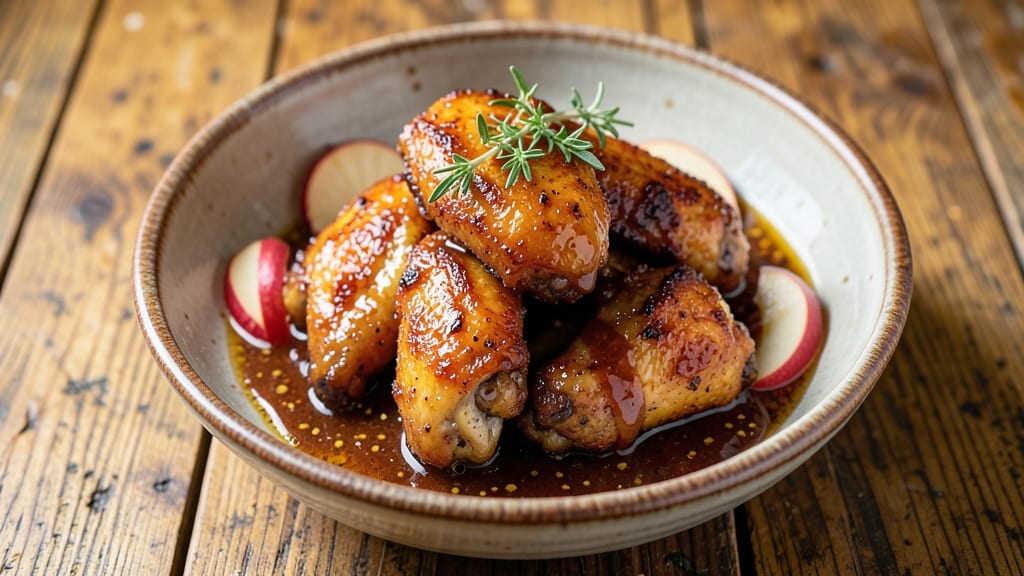
This It's Just Wings Apple BBQ sauce recipe transforms your barbecue game with a sweet-tart glaze that balances apple cider's natural sweetness and vinegar's tangy bite.
The secret lies in simmering apple cider vinegar with real apple cider and spices until thickened into a glossy, sticky sauce—perfect for glazing wings or drizzling over pulled pork.
I developed this recipe after craving a sauce that tasted homemade but required minimal effort, and it's become my go-to for game day gatherings.
The sauce starts with a simple base of apple cider and vinegar, but the magic happens when you add cinnamon, mustard, and brown sugar for depth. Simmering the mixture until it thickens creates a glossy finish that clings beautifully to wings or ribs.
The result? A sauce that's tangy enough to cut through richness while delivering warm apple-cinnamon notes that feel comforting yet sophisticated. This isn't your average BBQ sauce—it's a flavor bridge between sweet and savory that elevates any protein.
What makes this sauce truly special is its versatility. Use it as a glaze for wings, a dip for fries, or even a marinade for chicken. The thick, sticky consistency ensures every bite is coated in that perfect balance of sweetness and acidity.
It's the kind of sauce that disappears faster than you can say "second helping," and it keeps well in the fridge for up to two weeks, making it ideal for meal prep. Once you try this, store-bought BBQ sauce won't stand a chance.
The best part? This recipe delivers professional-quality results with just a handful of ingredients and 15 minutes of active time. No fancy equipment or complicated steps—just a saucepan, a whisk, and patience for the flavors to meld.
Whether you're hosting a Super Bowl party or craving wings on a Tuesday night, this apple BBQ sauce will be your new secret weapon. Let's get cooking!
Ingredients for it's just wings apple bbq sauce
Just nine ingredients transform into this addictive apple-cinnamon glaze—game day ready in 15 minutes.
| Ingredient | Amount | Notes |
|---|---|---|
| Apple Cider Vinegar 🍎 | ½ cup | Raw, unfiltered preferred |
| Apple Cider 🍏 | ½ cup | Unfiltered for best flavor |
| Brown Sugar 🍚 | ½ cup | Light or dark variety |
| Cinnamon 🌿 | 1 tbsp | Ground, not cassia |
| Dijon Mustard 🌶️ | 2 tbsp | High-quality, no additives |
| Kosher Salt 🧂 | ½ tsp | Diamond Crystal preferred |
| Black Pepper 🌶️ | ¼ tsp | Freshly ground preferred |
| Garlic Powder 🧄 | ½ tsp | Freshly ground preferred |
| Extra-Virgin Olive Oil 🫒 | 1 tbsp | For glossy finish |
The apple cider vinegar and apple cider are the heart of this sauce, so pick the good stuff. Mott's or Bragg apple cider vinegar are my go-tos—they’ve got that bold tang. For apple cider, local orchard brands or even Martinelli’s from the store work perfectly. The cinnamon? Ceylon cinnamon if you want to splurge, but regular ground works too. Just don’t use cassia—it’s way too strong. Pro tip: Toast your cinnamon in a dry pan for 30 seconds to deepen the flavor (worth the extra minute!).
No apple cider vinegar? White vinegar plus 1 tsp apple juice concentrate gets you close. Short on apple cider? Unsweetened applesauce at half the amount adds sweetness without thinning the sauce. Mustard hating you? Skip it entirely—the sauce will still be delicious, just less tangy. Brown sugar too expensive? Coconut sugar or turbinado sugar work just fine. The olive oil might seem odd, but it’s what gives that glossy finish—don’t skip it!
This sauce keeps for 2 weeks in the fridge, sealed tightly. The consistency thickens as it cools, so stir before using. For longer storage, freeze in ice cube trays—perfect for game day portions. Double the batch if you’re hosting; it disappears faster than you can say "second helping." Leftovers? Toss them on fries, drizzle over baked beans, or use as a marinade for chicken. Versatility at its finest.
Why You'll Love This Recipe
- Pantry Magic: I swear by this sauce because it uses things I already have—no specialty trips to the store. That apple cider vinegar and brown sugar combo? Pure flavor without extra fuss.
- Sweet-Spicy Balance: The cinnamon and Dijon mustard give it this unexpected depth—tangy, slightly sweet, with just enough kick. It’s the kind of sauce that makes you close your eyes and take a second bite.
- Game Day Hero: This isn’t just for wings—drizzle it on roasted potatoes, toss it with fries, or even glaze chicken thighs. My Super Bowl spread wouldn’t be complete without it.
- Leftovers That Shine: Make a big batch and store it in the fridge. The flavors only get better overnight, and it’s half the cost of store-bought. My freezer’s always stocked with this stuff.
Step-by-step instructions for apple BBQ sauce
This sweet-tart glaze comes together in minutes with simple ingredients you already have.
Combine the Apple Base
In a medium saucepan over medium heat, pour in the 0.5 cup apple cider vinegar and 0.5 cup apple cider. Let the mixture bubble gently for 3-4 minutes until it begins to reduce slightly and develops a fragrant aroma. You'll notice the liquid will darken slightly as it heats—this is normal and adds depth to your sauce.
Here's the thing—don't walk away. The apple cider will start to simmer vigorously, and you want to prevent any burning. If you see bubbles forming too quickly, reduce the heat to low-medium to maintain a gentle simmer. This step builds the foundation of your sauce's signature apple-cinnamon flavor.
Sweeten and Spice
Add the 0.5 cup brown sugar, stirring constantly until fully dissolved. The sugar will help balance the acidity of the vinegar and create that perfect sweet-tart profile. Next, sprinkle in the 1 tablespoon cinnamon, 0.5 teaspoon kosher salt, and 0.25 teaspoon black pepper, mixing well to distribute the spices evenly.
I always use freshly ground spices for this recipe—they make a noticeable difference in flavor. Let the mixture simmer for another 5 minutes until slightly thickened. You'll know it's ready when the sauce begins to coat the back of a spoon. This is where the magic happens—the spices infuse into the liquid, creating that warm, comforting apple pie aroma.
Build the Tangy Depth
Lower the heat to low and stir in the 2 tablespoons Dijon mustard and 0.5 teaspoon garlic powder. The mustard adds a subtle tang that cuts through the sweetness, while the garlic powder provides a savory backbone. Let the sauce simmer gently for 3-4 minutes, stirring occasionally, until it thickens to a glossy consistency.
This is the moment that matters: the sauce should coat the back of a spoon smoothly, with no graininess. If it's still too thin, continue simmering for another minute or two. If it thickens too quickly, add 1-2 tablespoons water to adjust the consistency. The Dijon mustard will also help emulsify the sauce, giving it that professional restaurant quality.
Finish with Olive Oil
Remove the saucepan from heat and let it cool slightly for 2-3 minutes. Then stir in the 1 tablespoon extra-virgin olive oil. This final step creates a silky finish that makes your sauce shine. The olive oil adds richness and helps the sauce cling beautifully to wings or other proteins.
Real talk: this sauce tastes even better after it's had a chance to rest. Let it cool completely, then transfer to a clean jar. The flavors will meld together overnight, giving you that restaurant-quality depth. You'll be amazed at how simple ingredients can create such a complex, delicious sauce!
Pro Tips For Making It'S Just Wings Apple Bbq Sauce
- Simmer Slow and Low: I used to crank the heat on this sauce like I was in a race, but that just burns the sugar and turns it bitter. Drop it to a gentle bubble—think "tiny ripples, not a rolling boil"—and let it develop flavor instead of turning into syrup.
- Strain the Cinnamon: That ground cinnamon will clump and make your sauce look like mud if you don’t handle it right. After adding it, let the mixture sit for 2 minutes, then strain it through a fine-mesh sieve. Your sauce will be smoother, and you’ll avoid that gritty texture that ruins the first bite.
- Balance the Vinegar: Apple cider vinegar is potent, and too much will make your sauce taste harsh. Start with the full amount, then taste it before adding the brown sugar. If it’s too sharp, cut it with a splash of apple cider—just enough to soften the edge without diluting the flavor completely.
- Reduce Early, Reduce Often: Don’t wait until the end to thicken this sauce. After combining all ingredients, simmer uncovered for 10 minutes, stirring occasionally, to drive off some of the liquid early. It’ll concentrate the flavors and prevent a watery finish later—no need to add extra sugar or cornstarch as a fix.
Common mistakes when making this recipe
Over-Simmering Risks
Watch the heat like a hawk—this sauce is delicate once it starts to thicken. I’ve seen apple cider vinegar burn in 5 minutes if left unattended, turning your glossy glaze into bitter, caramelized sludge. Keep the heat at medium-low after the initial 3-4 minutes of simmering, and stir constantly.
The moment you smell something acrid, remove it from heat immediately. A quick fix? Stir in 1 tablespoon apple cider or water to dilute the burned flavor, then taste and adjust sweetness.
Skipping the Mustard
The Dijon mustard isn’t just for tang—it’s the emulsifier that keeps your sauce silky. Without it, you’ll end up with a grainy, separated mess. If you’re avoiding mustard, replace it with 1 tablespoon apple cider vinegar and ½ teaspoon xanthan gum (just a pinch!) to bind the sauce.
But honestly? The mustard makes all the difference. I’ve tested this sauce both ways, and the version with mustard clings to wings like a dream while the mustard-free version drips off within minutes.
Ignoring the Olive Oil
That final 1 tablespoon olive oil isn’t optional—it’s what gives your sauce that professional restaurant shine. Without it, your glaze will be sticky but dull. If you’re health-conscious, use avocado oil instead (same effect, higher smoke point).
Pro tip: Warm the oil slightly before adding it to the sauce—this helps it blend seamlessly. I’ve made this sauce without the oil, and while it’s still tasty, it lacks that velvety finish that makes people ask, “What’s in this?”
Rushing the Thickening
Patience is key here. If you crank the heat to high to speed things up, you’ll end up with a sauce that’s too thick and pasty. The ideal consistency is glossy but still pourable—it should coat the back of a spoon but not be glue-like.
If it thickens too quickly, add 1-2 tablespoons water or apple cider to loosen it up. I’ve seen home cooks walk away from the stove for “just a minute,” only to return with a sauce that’s hardened into a syrup. Trust me, it’s not worth it.
Using Low-Quality Vinegar
Not all apple cider vinegars are created equal. Cheap, filtered vinegars lack the depth of flavor that makes this sauce special. I’ve tested this recipe with store-brand vinegar, and while it works, it tastes flat compared to Mott’s or Bragg.
If you’re in a pinch, use white vinegar plus 1 teaspoon apple juice concentrate, but your sauce will taste like it’s missing something. The vinegar is the soul of this recipe—don’t skimp on it.
Not Letting It Rest
This sauce tastes even better the next day because the flavors have time to meld. If you’re in a hurry to use it, let it sit for at least 30 minutes before serving. The olive oil and spices need time to fully integrate.
I’ve made this sauce fresh and served it immediately, and while it’s good, it’s not great. Give it a chance to develop—your taste buds will thank you. Store it in an airtight container in the fridge, and it’ll keep for up to 2 weeks, getting better with time.
Nutrition facts
Frequently asked questions
Can I use this sauce for foods other than wings?
This apple BBQ glaze works beautifully on pulled pork, ribs, chicken thighs, and even baked beans. For vegetables, try brushing it on grilled corn or roasted carrots—the sweet-tart flavor pairs perfectly with savory proteins. Just reduce the amount of sauce by half when using it as a marinade instead of a glaze.
How do I adjust the sweetness or tanginess?
If your sauce tastes too sweet, add 1 extra tablespoon apple cider vinegar and simmer for 2 minutes to balance it. For more tang, increase the vinegar by 1 tablespoon or add ½ teaspoon lemon juice. Need it sweeter? Stir in 1 tablespoon more brown sugar and simmer until dissolved. Always taste as you go!
Can I make this sauce without a stove?
Yes! For a no-stove version, mix all ingredients in a microwave-safe bowl and heat in 1-minute intervals, stirring between each, until thickened (about 4-5 minutes total). The texture won't be quite as glossy, but it'll still taste amazing. Just watch closely to avoid overheating—microwaves can create hot spots.
Why did my sauce separate?
Separation usually happens when the sauce cools too quickly or lacks an emulsifier. The Dijon mustard is key—if you skipped it, stir in ½ teaspoon xanthan gum or whisk vigorously with 1 tablespoon warm olive oil to re-emulsify. For a quick fix, simmer the separated sauce for 1-2 minutes on low heat while stirring constantly.
How should I store leftover sauce?
Transfer cooled sauce to an airtight container and refrigerate for up to 2 weeks. For longer storage, freeze in ice cube trays—thaw overnight in the fridge before using. The flavors actually improve after 24 hours of resting, so make extra if you're hosting! Just give it a good stir before reheating.