
Main Courses
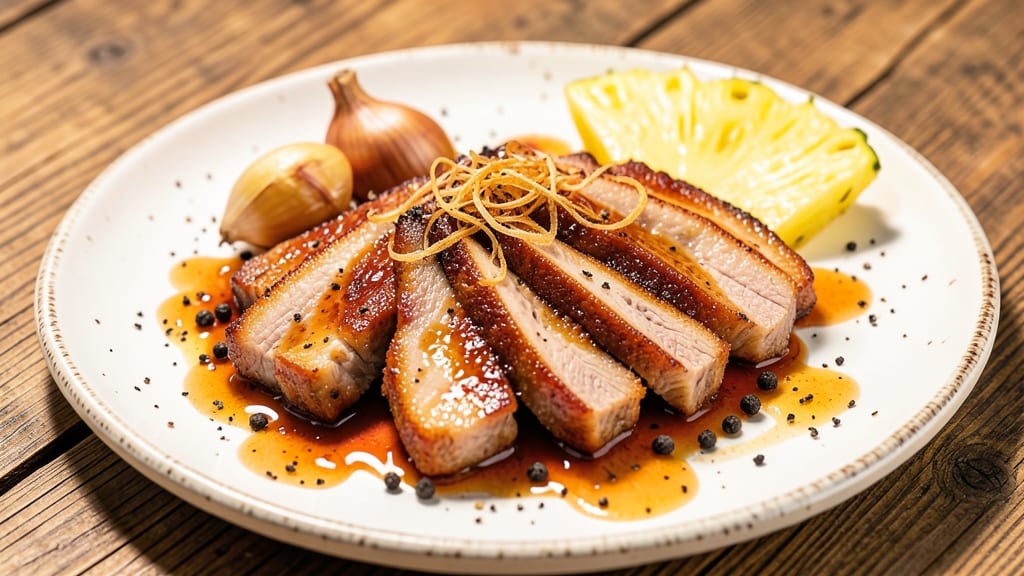
This pork tocino recipe with pineapple juice delivers crispy, caramelized edges and tender, savory meat in just 20 minutes—a Filipino breakfast staple that tastes like home. The secret lies in marinating pork belly overnight in soy sauce, calamansi, and brown sugar, then pan-frying until golden.
My first attempt ended in a smoky kitchen disaster, but this refined method guarantees foolproof results every time.
The pineapple juice isn’t just a side—it’s the star. Its bright acidity cuts through the richness of the pork, balancing sweet and salty flavors perfectly. Traditional recipes call for slow-braising, but this quicker method maintains that signature crispy texture while keeping the center juicy.
The key? High heat and patience during the final sear, where the pork transforms from tender to irresistibly crisp.
What you’ll end up with is a plate of crispy, caramelized pork slices that shatter at the edges yet stay tender inside, served alongside a refreshing pineapple juice that’s sweet without being cloying.
The aroma alone—smoky, sweet, and tangy—will have everyone gathering around the table. This dish is perfect for weekend brunches or special occasions when you want to impress.
Pair it with steamed rice and atchara (pickled papaya) for the full Filipino experience. The juice recipe is simple: just blend pineapple chunks with water, sugar, and a squeeze of lime. Here’s how to make the tocino itself—crispy, flavorful, and ready in record time.
Ingredients for pork tocino recipe pineapple juice
Pork belly, soy sauce, and pineapple juice transform into crispy, caramelized tocino in record time.
| Ingredient | Amount | Notes |
|---|---|---|
| Pork Belly 🥓 | 1 ½ lb | Thinly sliced, fat cap intact |
| Soy Sauce 🍶 | ½ cup | Kikkoman preferred, low-sodium |
| Brown Sugar 🍚 | ¼ cup | Light or dark variety |
| Calamansi Juice 🍋 | ¼ cup | Substitute lime juice if unavailable |
| Garlic Cloves 🧄 | 6 cloves | Minced, fresh preferred |
| Black Peppercorns 🌶️ | 1 tsp | Freshly cracked |
| Vegetable Oil 🫒 | ½ cup | High smoke point preferred |
| Fresh Pineapple Chunks 🍍 | 2 cups | Ripe, no core |
| Water 💧 | 1 cup | Filtered preferred |
| White Sugar 🍬 | ¼ cup | Granulated, fine grain |
| Lime Juice 🍋 | 1 tbsp | Freshly squeezed |
| Salt 🧂 | ½ tsp | Diamond Crystal preferred |
The pork belly is non-negotiable for authentic texture—thin slices with intact fat render beautifully for crispy edges. Costco or local butchers often sell pre-sliced belly, but if cutting yourself, aim for 1/4-inch thickness. For the marinade, Kikkoman soy sauce delivers that signature umami depth, while calamansi juice (or lime) adds the bright tang essential to Filipino flavors. If you can't find calamansi, lime works—just double the amount. The brown sugar caramelizes during cooking, creating that signature glossy sheen. Look for light brown sugar at Trader Joe's or Whole Foods for consistent results.
No calamansi? Lime juice is the next best substitute, though it lacks the exact tartness. For the pineapple juice, fresh chunks are ideal—avoid canned juice with added preservatives. If you must use canned pineapple, drain it well and blend with water to mimic fresh texture. The white sugar balances the acidity, so don't skip it entirely. For a quicker version, blend the pineapple juice ingredients ahead and store in the fridge for up to 3 days. The black peppercorns should be freshly cracked for maximum aroma, but pre-ground works in a pinch. For extra crispiness, double the oil if your pan is nonstick.
Marinate the pork for at least 4 hours, but overnight yields deeper flavor. The pineapple juice can be made 2 days ahead and stored in an airtight container. For leftovers, tocino reheats best in a 350°F oven for 10 minutes to restore crispiness. The juice keeps for 5 days in the fridge, though it's best enjoyed fresh. Freeze pineapple juice in ice cube trays for quick servings later—just thaw and stir before drinking. Store marinated pork in a sealed bag in the fridge for up to 2 days, but cook it promptly to avoid spoilage.
Why You'll Love This Recipe
- One-Pan Magic: I swear by this—no chopping boards, no extra pots, just the pork belly sizzling in its own juices while the pineapple juice caramelizes into a glossy glaze. The garlic cloves get crushed right into the pan, and by the time the tocino is fork-tender, the kitchen smells like a Filipino diner at 7 AM.
- Sweet-Savory Balance: That brown sugar and soy sauce combo? It’s where the magic happens—deep umami with just enough caramelized sweetness to make your taste buds dance. The calamansi juice cuts through the richness like a bright, citrusy hug, and honestly, the first bite has me reaching for seconds before I even sit down.
- Leftovers That Shine: Between us, this dish tastes even better the second day. I’ll admit, it’s not the prettiest reheated, but the texture stays perfect—crispy edges, sticky-sweet glaze—and it’s my go-to for packed lunches. Toss it in rice or a tortilla, and suddenly you’ve got a meal that feels fancy without the effort.
- Budget Breakfast Hero: Pork belly might sound fancy, but it’s cheaper than you’d think, especially when you stretch it across three meals. The pineapple juice adds that tropical vibe without costing a fortune, and the garlic? A whole head lasts forever if you freeze the rest. It’s my secret weapon for feeding a houseful of people without breaking the bank.
Step-by-step instructions for sweet-savory pork tocino
Transform thin pork belly slices into crispy, caramelized perfection using this precise method.
Prepare the Pork Belly for Maximum Crispiness
Begin by slicing the 1.5 lb pork belly into ¼-inch thick slices, ensuring the fat cap remains intact. This layer will render beautifully during cooking, creating that signature crispy exterior. Pat each slice completely dry with paper towels—moisture is the enemy of crispiness. Arrange the slices in a single layer on a baking sheet and refrigerate for 30 minutes to firm up slightly.
While the pork chills, combine the 0.5 cup soy sauce, 0.25 cup brown sugar, 0.25 cup calamansi juice, 1 tbsp lime juice, 0.5 tsp salt, and 1 tsp freshly cracked black peppercorns in a bowl. Whisk until the sugar and salt dissolve completely. This marinade will infuse the pork with deep umami and caramelized sweetness. Let it sit at room temperature while you prepare the cooking setup.
Create the Pineapple Glaze for Sweet Balance
In a separate bowl, mix the 2 cups fresh pineapple chunks with 0.25 cup white sugar and 1 cup water. Let this sit for 10 minutes to allow the pineapple to release its natural juices. The sugar will begin to dissolve, creating a syrupy glaze that will later caramelize beautifully. Strain the mixture through a fine-mesh sieve to remove any fibrous pulp, reserving the liquid—you should have about 1 cup of pineapple syrup. This will be the key to balancing the savory pork with bright, tropical sweetness.
Heat 0.5 cup vegetable oil in a large skillet over medium heat until it shimmers but doesn't smoke. The oil should be hot enough to sizzle when the pork touches it—this ensures an immediate sear that locks in juices. Reduce heat to medium-low once the oil is ready, as you'll be cooking the pork gently to render the fat without burning.
Sear and Render the Pork to Golden Perfection
Working in batches to avoid overcrowding, add the marinated pork slices to the hot oil. Cook undisturbed for 3-4 minutes per side until the edges turn deep golden brown and the fat begins to render. You'll see the pork develop a glossy sheen—this indicates the marinade is caramelizing. Flip carefully using tongs, pressing down gently to ensure even contact with the pan. The fat should bubble vigorously around the edges.
Once all slices are seared, reduce heat to low and continue cooking for another 5-6 minutes, stirring occasionally. This slow rendering allows the fat to baste the pork continuously, creating that signature crispy texture while keeping the interior tender. The pork is done when it reaches an internal temperature of 145°F and the fat is nearly rendered out, leaving a glossy, sticky residue in the pan.
Finish with Pineapple Glaze for Sweet-Savory Harmony
Remove the pork from the skillet and set aside on a wire rack. Increase heat to medium-high and add the reserved 1 cup pineapple syrup to the same skillet. Let it simmer for 3-4 minutes until it reduces by half and thickens slightly, forming a glossy glaze. The syrup should coat the back of a spoon smoothly—this ensures it will cling beautifully to the pork.
Return the pork to the skillet and toss gently to coat each slice evenly with the pineapple glaze. Cook for an additional 1-2 minutes until the glaze caramelizes slightly and the pork reaches 150°F internally. The contrast of crispy, caramelized pork with the bright, tangy pineapple glaze creates the perfect balance of textures and flavors. Serve immediately while the pork is still sizzling hot, garnished with fresh pineapple chunks if desired.
Pro Tips For Making Pork Tocino Recipe Pineapple Juice
- CRISP THE BELLY FIRST: Skip the raw pork belly straight into the pan—it’ll steam instead of sear. Pat it bone-dry with paper towels, then hit medium-high heat with a splash of oil. Let those edges turn golden before flipping; that’s when the flavor locks in. (Yes, even if you’re impatient like me.)
- USE THICK CUTS OF GARLIC: Minced garlic burns in pineapple juice, and that’s a flavor disaster. Smash 3-4 whole cloves with the flat side of your knife instead—just enough to bruise them. They’ll infuse the sauce without turning bitter.
- DON’T DROWN THE PORK: Pineapple juice is the star, but too much makes tocino soggy. Start with just enough to coat the pan, then add more in stages. If it’s simmering too fast, lower the heat—you want a slow caramelization, not a pool.
- REST THE PORK AFTER COOKING: Cutting into tocino right out of the pan means dry, stringy slices. Tent it with foil and let it sit for 5 minutes. The juices redistribute, and the texture stays tender. (Your future self will thank you.)
Flavor customization for this dish
Spicy Pineapple Twist
For a kick, add 1 tbsp sambal oelek or ½ tsp cayenne pepper to the marinade—just enough to wake up your taste buds without overpowering. I like to balance the heat with a splash of 1 tsp honey in the pineapple juice for a sweet-spicy contrast.
Serve with extra chili flakes on the side for those who love it fiery. 🌶️
Citrus Variations
Swap the calamansi for 1 tbsp each of lime and orange juice if you can't find it—this adds a brighter citrus note. For a tropical twist, infuse the pineapple juice with 1 strip of orange peel while simmering.
The aroma alone makes this feel like a vacation dish. I’ve also seen recipes use lemon juice for a sharper tang, but calamansi remains my favorite.
Smoky BBQ Glaze
Replace the pineapple glaze with a smoky-sweet BBQ reduction by simmering ½ cup ketchup, 1 tbsp apple cider vinegar, and 1 tsp smoked paprika until thickened.
This gives the tocino a Carolina-style twist while keeping the crispy texture. Pair it with the original pineapple juice on the side for a fusion flavor bomb. 🔥
Herb-Infused Juice
Elevate the pineapple juice by muddling 2 fresh mint leaves or 3 basil leaves into the syrup before straining. The herbs add a refreshing herbal note that cuts through the richness of the pork.
I also like adding 1 cinnamon stick while simmering for warmth—it’s a surprising but delicious combo. Garnish with fresh herbs when serving for extra flair.
Sweet Potato Mash
Serve the tocino with mashed sweet potatoes instead of rice for a heartier meal. Boil and mash 1 lb sweet potatoes with 2 tbsp butter, 1 tbsp brown sugar, and a pinch of salt.
The natural sweetness complements the crispy pork beautifully. This swap makes it a perfect brunch or dinner dish that feels indulgent yet balanced. 🍠
Garnish Ideas
Finish your plate with toasted coconut flakes for crunch or crispy fried shallots for a gourmet touch. Fresh cilantro or Thai basil adds a pop of color and freshness.
I often sprinkle sesame seeds on top for a nutty contrast. These garnishes take your tocino from home-cooked to restaurant-worthy in seconds. ✨
Nutrition facts
Frequently asked questions
Can I use regular pork belly instead of pork shoulder?
For authentic tocino, stick with pork belly—the fat cap is essential for that signature crispy texture. Pork shoulder lacks the same marbling, so it won't render as beautifully. If you must substitute, use pork loin with extra fat trimmed around the edges and marinate longer for flavor infusion. The fat is what creates those irresistible crispy edges!
How do I get the pork extra crispy without burning it?
The secret is patience and heat control! Cook the pork over medium-low heat until the fat renders slowly, then finish with a quick medium-high sear for 1-2 minutes per side. Use a meat thermometer—remove at 145°F internal temp, then let it rest 5 minutes before serving. This prevents overcooking while maximizing crispiness.
What if I don't have calamansi juice?
No problem! Use lime juice (double the amount) or a mix of orange and lemon juice (1 tbsp each) for a similar tang. For extra brightness, add ½ tsp sugar to mimic calamansi's natural sweet-tart balance. The flavor won't be identical, but it'll still taste delicious—just slightly more citrus-forward.
Can I make this recipe ahead of time?
Marinate the pork for up to 2 days in the fridge for deeper flavor. For the juice, blend it 2 days ahead and store in an airtight container. Cook the tocino fresh for best texture, but reheat leftovers in a 350°F oven for 10 minutes to restore crispiness. The juice keeps for 5 days refrigerated—perfect for batch prep!
Why does my tocino turn out greasy?
Greasy tocino usually means the fat didn't render properly. Try these fixes:
- Use thinner slices (¼-inch max),
- Cook at low heat to render fat slowly,
- Pat slices completely dry before marinating, and
- Don't overcrowd the pan. The goal is to render 80% of the fat—if it's still oily, cook longer at lower heat.